Sensoji is Tokyo's oldest temple and its most casually misreported: the main hall closes at 17:00, not 18:30; the "always open, always free" line appears nowhere on the temple's own pages; the famous goshuin desk isn't in the main hall; and the spring festival everyone attributes to it belongs to the shrine next door. What the temple does officially promise is better than the myths: a roughly 700-kilogram lantern, nightly illumination until about 11 p.m., and fortune slips so unsanitized the temple defends their bad-luck rate as tradition. Here's Asakusa's heart, from official sources.
Sensoji at a glance
| Item | Official answer (Aug 2026) |
|---|---|
| Main hall | 6:00–17:00 (opens 6:30 Oct–Mar) · closes 17:00 year-round · no admission fee listed |
| Illumination | Main hall, pagoda, Hozomon & Kaminarimon lit daily, sunset–about 23:00 (since 2003) |
| Kaminarimon lantern | ~3.9m tall · ~3.3m wide · ~700kg · current gate 1960, donated by Matsushita (Panasonic) |
| Nakamise | ~250m · 87 shops (association count) · hours vary by shop |
| Goshuin | At the Yogodo hall (west of main hall), not the main hall |
| Access | Asakusa Station ×4 lines, ~5 min · Toei line: exit A4 · elevator at main hall |
The approach, gate to hall:
Reading the temple: two dates on every building
Why do the great gates all say 942 and 196x?
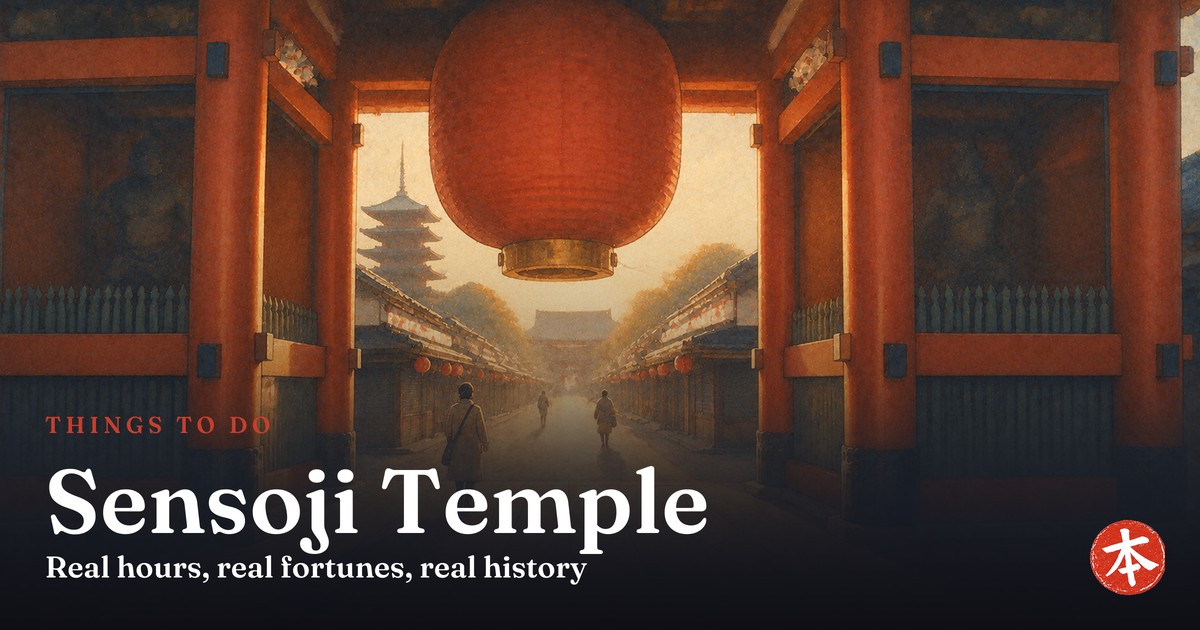
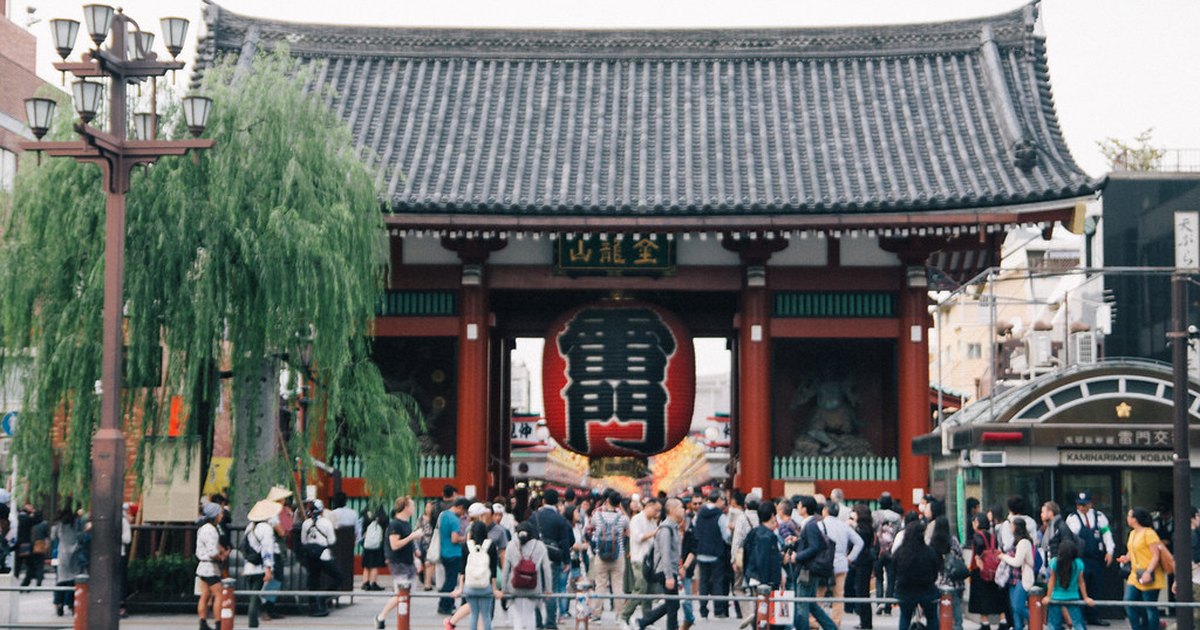
Because Sensoji wears its destruction honestly. The temple's founding story runs to 628 — two fishermen brothers and a Kannon statue drawn from the Sumida River — and the great structures were first raised in 942 by the warlord Taira no Kinmasa. The 1945 firebombing leveled them, and the rebuilt versions carry their benefactors' names openly: Kaminarimon, 1960, donated by Konosuke Matsushita — the Panasonic founder — Hozomon, 1964, by hotel magnate Yonetaro Otani; the pagoda, 1973. None of this diminishes the place: the institution, the rites and the pilgrimage seals are the ancient continuity, and the twentieth-century timber is simply the latest of many rebuildings in a fourteen-century fire history. The Kaminarimon's giant lantern — about 3.9 by 3.3 meters and 700 kilograms, per the ward's official sheet — hangs between the wind and thunder gods that give the Thunder Gate its name; the carved dragon under its base is the connoisseur's detail.
Timing the visit: dawn, dusk, or lantern-light
Is early morning really worth the alarm clock?
Yes — it's the single highest-leverage decision an Asakusa visitor makes. Before 8:00 the plaza belongs to the neighborhood: incense drifting from the cauldron, monks crossing to morning service, photographers with the Kaminarimon to themselves. Every hour after that adds a tour bus.
When does Sensoji actually feel sacred?
At the edges. The main hall's 6:00 opening (6:30 in winter months) belongs to joggers, monks and incense smoke — Nakamise's 87 shops are still painted shutters, themselves a gallery of Edo scenes — and the plaza holds maybe a hundredth of its afternoon crowd. The 17:00 close is earlier than most guides admit, which is precisely why the evening works: from sunset until about 23:00 the temple lights the hall, pagoda and both gates, and Asakusa turns into a lantern-lit film set with the crowds gone home. The pragmatic loop: arrive late afternoon, see the hall before it shuts, eat in the backstreets, return for the illumination. Slot it into a first-timer's week with our 7-day itinerary, and note the Skytree photobombs the pagoda from the east — the two-tower shot from the Sumida riverbank is Asakusa's modern postcard.
Fortunes, seals and festivals: the participatory temple
How should you walk Nakamise without hating it?
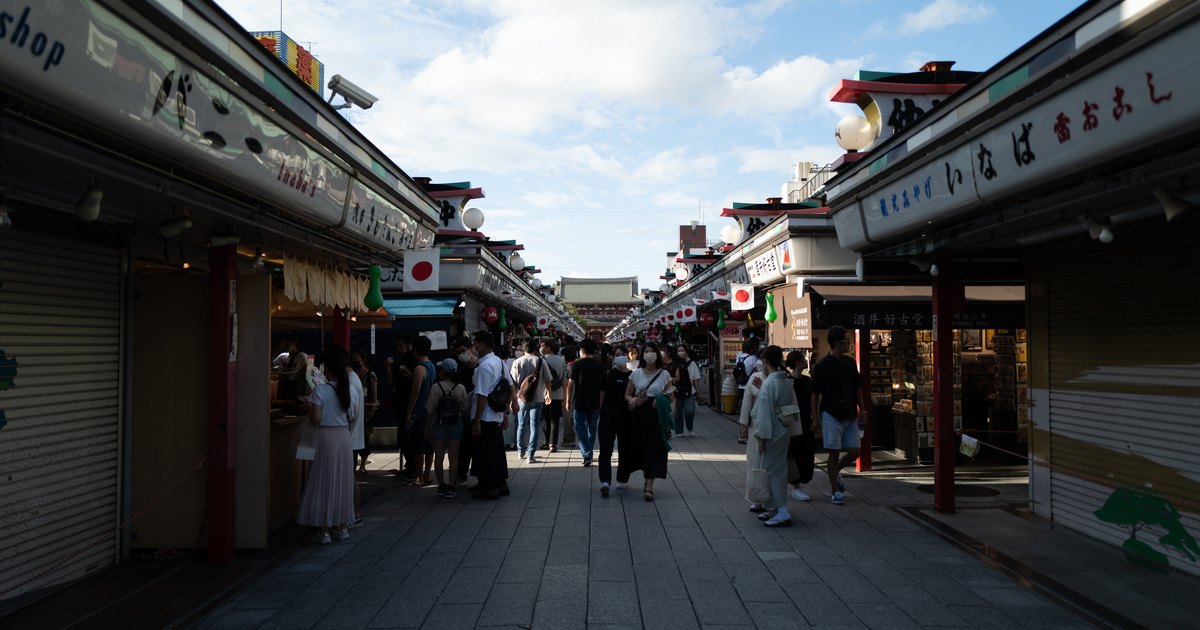
Accept what it is: a 250-meter festival that has monetized the approach to a temple for centuries, which makes it heritage rather than a tourist trap in the usual sense. The tactics: walk the parallel backstreets (Denboin-dori, one block west, keeps the Edo styling and loses two-thirds of the crowd) when the main corridor jams, save the shopping for the return leg so you're not carrying ningyo-yaki through your prayers, and eat street food standing near the shop that sold it — signs ask you not to walk-and-eat, and locals notice. Early morning and late evening, the shuttered street becomes a painted gallery of Edo scenes, which is its own argument for an off-hours visit.
What should you actually do here beyond looking?
Work the rituals in order. Waft incense smoke from the great jokoro cauldron toward whatever needs fixing, draw an omikuji from the numbered drawers (if kyo — bad luck — appears, the temple's FAQ is serene: the deck is the centuries-old original, and you tie the slip to the rack and walk away lighter), then carry your goshuin book to the Yogodo, west of the main hall, where Sensoji stamps as the first temple of the Edo Kannon circuit. The calendar rewards timing: July 9–10 is the ground-cherry market on the 46,000-day observance — one bow that morning officially outvalues a lifetime of ordinary visits — December brings the battledore market, and every 18th a Kannon service at 14:00. Just don't credit Sensoji with Sanja Matsuri: that thunderous May festival belongs to Asakusa Shrine next door. For the Shinto counterweight to all this — an emperor's forest across town — see our Meiji Jingu guide.
(One district west, Ueno Park stacks Japan's first public park with three national museums — the classic pairing with Asakusa.)
(For the tower a few minutes further east, our Skytree ticket guide covers the two observation tiers and the ticket types that pair naturally with an Asakusa visit.)
(Staying in the area? Our Asakusa View Hotel guide covers the room categories, the walking distance to Sensoji, and what the front-desk hours mean for a late arrival.)
(Planning to be here on January 1? Our hatsumode guide covers the New Year visit at temples and shrines, the etiquette that differs between them, and the 6:00 to 17:00 main-hall hours the temple publishes.)
(For a place to stay nearby: our Andon Ryokan guide covers the designer ryokan in Minowa, near Asakusa, where the private jacuzzi is given out in check-in order.)
(For a meal behind the temple: our onigiri in Tokyo guide covers Onigiri Asakusa Yadoroku, which says it has made rice balls behind the main hall of Senso-ji since 1954, and which takes cash only.)
FAQ
What are Sensoji’s actual opening hours?
What happens at night?
How old is Sensoji really — and how much is postwar rebuild?
How big is the Kaminarimon lantern?
What is Nakamise — and when do its shops open?
Why does everyone say Sensoji’s omikuji are unlucky?
Where do I get the goshuin stamp — the main hall?
Is Sanja Matsuri a Sensoji festival?
How do you get there — and is it accessible?
Bottom line (2026) — Tokyo’s oldest temple closes its main hall at 17:00 — not the 18:30 many guides claim — then lights the pagoda and gates until about 11 p.m. The Kaminarimon lantern weighs about 700kg, the goshuin desk isn’t in the main hall, and the famously frequent ‘bad luck’ fortunes are just Sensoji publishing the honest ratio.
Sources
Hours, the founding and reconstruction dates, donor attributions, illumination program and start date, omikuji FAQ answer, goshuin location and pilgrimage numbers, festival calendar, secret-buddha policy and accessibility details: Sensoji's official site (senso-ji.jp). Lantern dimensions and weight, and the district context: Taito ward's official pages. Nakamise shop count and length: the street association's official site. All read on August 19, 2026. Claims the temple does not publish — 24-hour access, free-admission wording, fortune percentages, goshuin hours — are flagged in the text rather than asserted. The embedded video is by its creator.
Some links on this page may be affiliate links, which means we may earn a commission if you book or buy through them — at no extra cost to you. See our affiliate disclosure.
Tokyo to Osaka, Tokyo to Kyushu, Tokyo to Hokkaido — day by day — plus seven places most visitors never reach.
- 12 pages, 80 photographs, every stop linked to its guide
- Every price and opening hour read from the official page
- Re-issued monthly, so it does not go stale in your inbox
Free. One email a month, plus the rare change that matters. Unsubscribe with one click in any email. By subscribing you agree to our privacy policy.