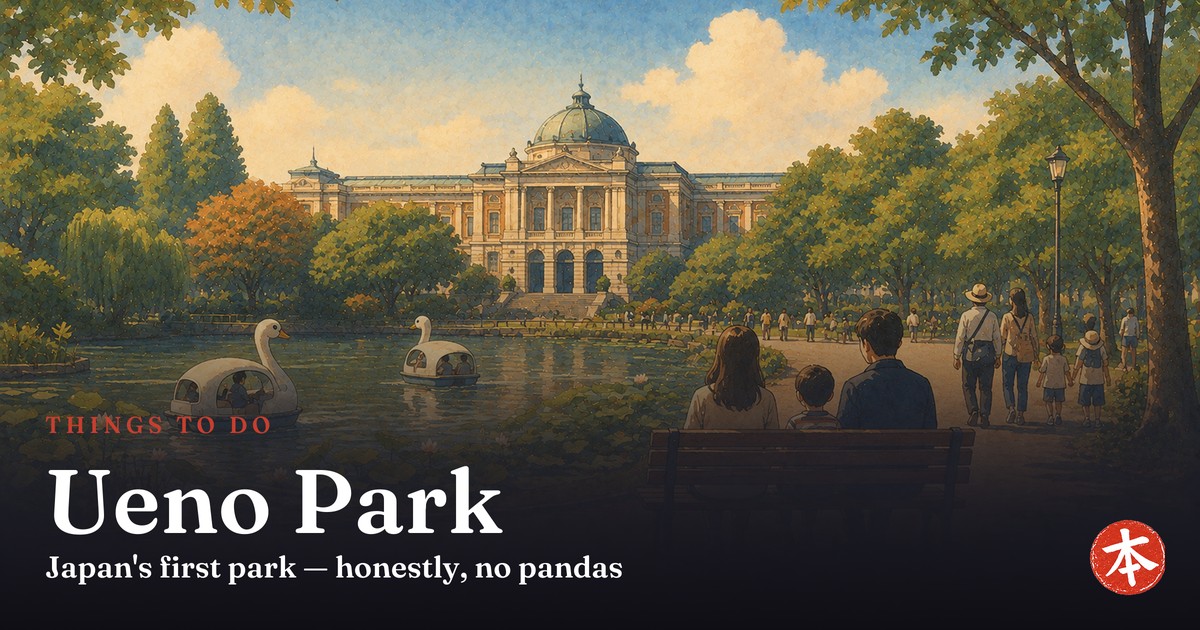
Let's clear the biggest myth first: Ueno Zoo currently has no giant pandas — the last two flew to China on January 27, 2026, and the zoo said so itself. What that leaves is what Ueno always really was: Japan's first public park (1873) stacked with a ¥600 zoo, three national museums from ¥500 (one housed in UNESCO-listed Le Corbusier), swan boats on a lotus lake, a gilded 1627 shrine, 1,200 cherry trees and the 400-shop roar of Ameyoko. Here's the whole hill, priced from official pages.
Ueno Park at a glance
| Item | Official answer (Aug 2026) |
|---|---|
| The park | Free · 5:00–23:00 (not 24h) · Japan's first public park, 1873 · ~1,200 cherry trees |
| Ueno Zoo | ¥600 · 9:30–17:00 · closed Mon · 🚨 no pandas since Jan 27, 2026 — none announced |
| Tokyo National Museum | ¥1,000 (under-18 free) · 9:30–17:00, Fri–Sat to 20:00 · closed Mon |
| Science Museum / Western Art | ¥630 (kids free) / ¥500 · Western Art's Le Corbusier hall = World Heritage · both closed Mon |
| Shinobazu boats | Rowboat ¥800 / swan & cycle ¥1,000 per 30 min · lotus peak late July |
| Ueno Toshogu / Ameyoko | Shrine ¥700 (1627, gilded) · Ameyoko: ~500m, ~400 shops, hours vary |
The park, pond and museums on foot:
The panda-shaped hole, honestly
What actually happened — and what fills the gap?
The full timeline, since English articles blur it: Xiang Xiang returned to China in 2023, her parents in 2024, and the twins Xiao Xiao and Lei Lei departed on January 27, 2026, arriving at the Ya'an breeding base a day later. The zoo director's farewell message is unambiguous — the zoo "will have no giant pandas" after the transfer — and says only that Ueno hopes to be ready if a new cooperation project becomes possible. Nothing is announced. What the zoo still is: Japan's oldest (1882), ¥600, with lions, gorillas, the five-story-pagoda backdrop and one of Tokyo's best-value family half-days — the crowds thinner now, which regulars quietly appreciate. Panda pilgrims should redirect expectations (or destinations) before arriving; everyone else loses almost nothing.
The museum hill: three national collections in a five-minute radius
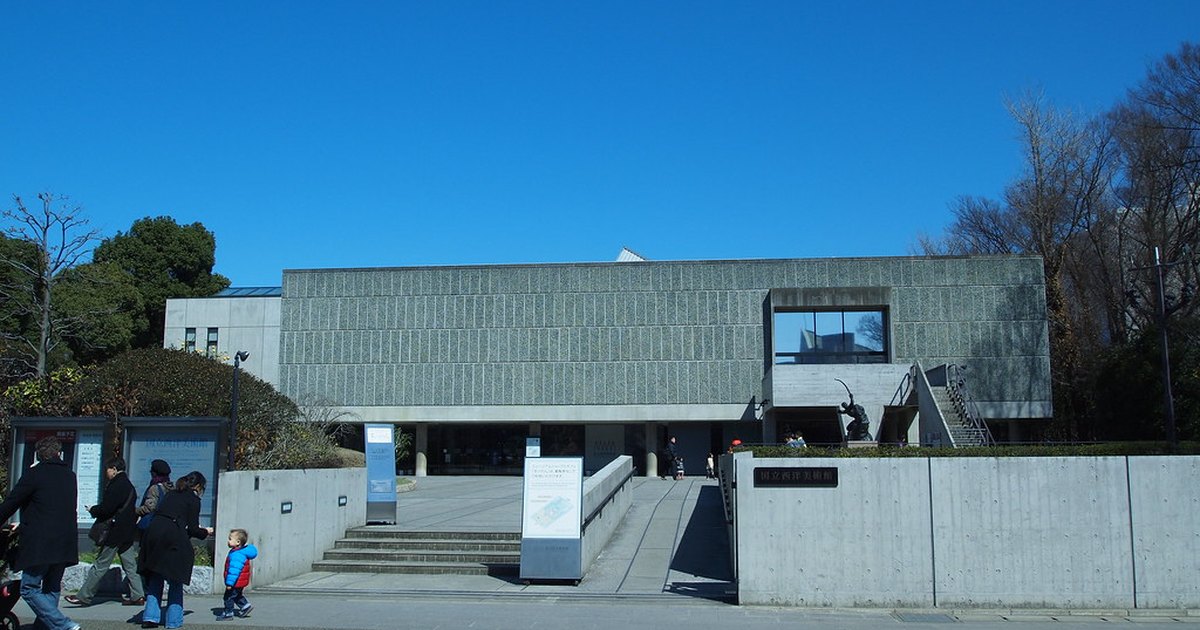
Why is the ¥500 museum the sleeper hit?
Because the building is the first exhibit. The Western Art Museum's main hall is Le Corbusier's only work in East Asia — inscribed on the World Heritage list as part of his transnational series — and the ¥500 permanent ticket buys both the architecture and a Monet-through-Rodin collection built on the Matsukata holdings. Rodin's Thinker and Gates of Hell casts sit in the free forecourt, which makes even a zero-yen walk-past worthwhile.
How do you museum-hop without burning the day?
Pick one flagship and one dessert. The Tokyo National Museum (¥1,000; free under 18) is the country's attic — swords, Buddhas, screens — and rewards two focused hours in the main Honkan building over a completionist slog. The dessert depends on your party: dinosaur kids get the Science Museum (¥630, children free), architecture people get the Western Art Museum, whose ¥500 permanent collection comes wrapped in Le Corbusier's World Heritage-listed main hall — the cheapest UNESCO admission in Tokyo. Shared fine print: all close Mondays (holiday Mondays push it to Tuesday), and TNM plus Western Art run to 20:00 on Fridays and Saturdays — the evening slot locals use to skip crowds entirely. Rainy-day note: the three buildings plus the zoo's indoor houses make Ueno Tokyo's best wet-weather district by a margin.
Pond, shrine, market: the rest of the hill
When should hanami hunters actually come?
Earlier and later than the postcard peak. The park bureau's own framing is a two-month blossom season: early-blooming kanzakura open weeks before the famous Somei-yoshino canyon down the central avenue, and late varieties linger after the tarps are gone. The peak weekend itself is a phenomenon worth seeing once — hundreds of picnic parties claimed from dawn, lanterns strung overhead — but for actually photographing trees rather than crowds, weekday mornings on the shoulder weeks win, and the groves ringing Shinobazu Pond stay calmer than the main avenue even at peak.
What does the perfect Ueno loop look like?
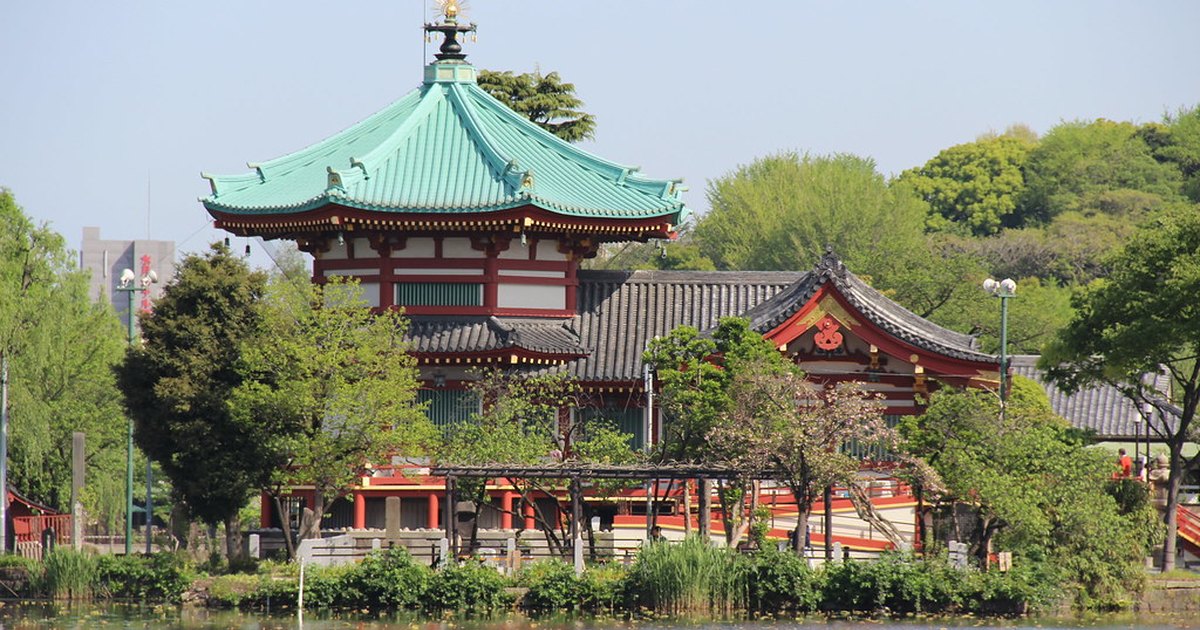
Enter from Ueno Station's park exit mid-morning, museum first while you're fresh, then lunch and the afternoon downhill — literally: the Toshogu shrine (¥700, built 1627, gold leaf that survived both the 1923 earthquake and the 1945 bombs) sits on the way to Shinobazu Pond, where swan boats (¥1,000 per 30 minutes) paddle around the 1958-rebuilt Benten-do and, in late July, through corridors of blooming lotus. Exit south into Ameyoko — officially about 500 meters and 400 shops of postwar-black-market DNA, its very name an unresolved argument between "candy alley" and "America alley" — for skewers, spice shops and the best fishmonger theater in Tokyo. One station over sits Akihabara, and the Asakusa temple district — see our Sensoji guide — is a short taxi or Ginza-line hop, making the classic old-Tokyo day: Ueno's museums to Asakusa's lanterns. Slot the whole hill into our 7-day itinerary as the culture day.
(Timing the visit? Our Japan in March guide has the JMA’s average flowering and full-bloom dates for Tokyo and the rest of the country, and the equinox holiday that falls just before them.)
(For a sweet stop in Ueno: our wagashi in Tokyo guide covers Usagiya, which bakes dorayaki until 16:00, sells them at 270 yen with tax, and takes cash only.)
FAQ
Are there pandas at Ueno Zoo right now?
Is Ueno Park open 24 hours?
What does Ueno Zoo cost — and when is it closed?
Which of the three national museums should a first-timer pick?
What’s the deal with the swan boats?
Is Ueno Toshogu worth the ¥700?
What is Ameyoko exactly?
When is cherry blossom season — and how crowded does it get?
How much should you budget for a full Ueno day?
Bottom line (2026) — Ueno Zoo has zero giant pandas — the last two left for China in January 2026, per the zoo’s director. What remains is Japan’s first public park (1873): a ¥600 zoo, three national museums from ¥500, swan boats on a lotus lake, and a ¥700 gilded shrine — plenty for a full day even without the pandas.
Sources
Panda departure and the director's message: Ueno Zoo's official news release of January 27, 2026 (read in the original). Park hours, founding date, area, cherry-tree count and history: Tokyo Metropolitan Government park bureau pages, cross-read with the Tokyo parks association. Zoo prices and hours: the zoo's official ticket page. Museum prices, hours and closure rules: the official sites of the Tokyo National Museum, National Museum of Nature and Science, and National Museum of Western Art (whose World Heritage status is stated on its own pages). Boat rates and seasons: the parks association's facility page. Toshogu hours and fee: the shrine's official site. Ameyoko figures and etymology: the street association's official site. All read on August 20, 2026. The embedded video is by its creator.
Tokyo to Osaka, Tokyo to Kyushu, Tokyo to Hokkaido — day by day — plus seven places most visitors never reach.
- 12 pages, 80 photographs, every stop linked to its guide
- Every price and opening hour read from the official page
- Re-issued monthly, so it does not go stale in your inbox
Free. One email a month, plus the rare change that matters. Unsubscribe with one click in any email. By subscribing you agree to our privacy policy.