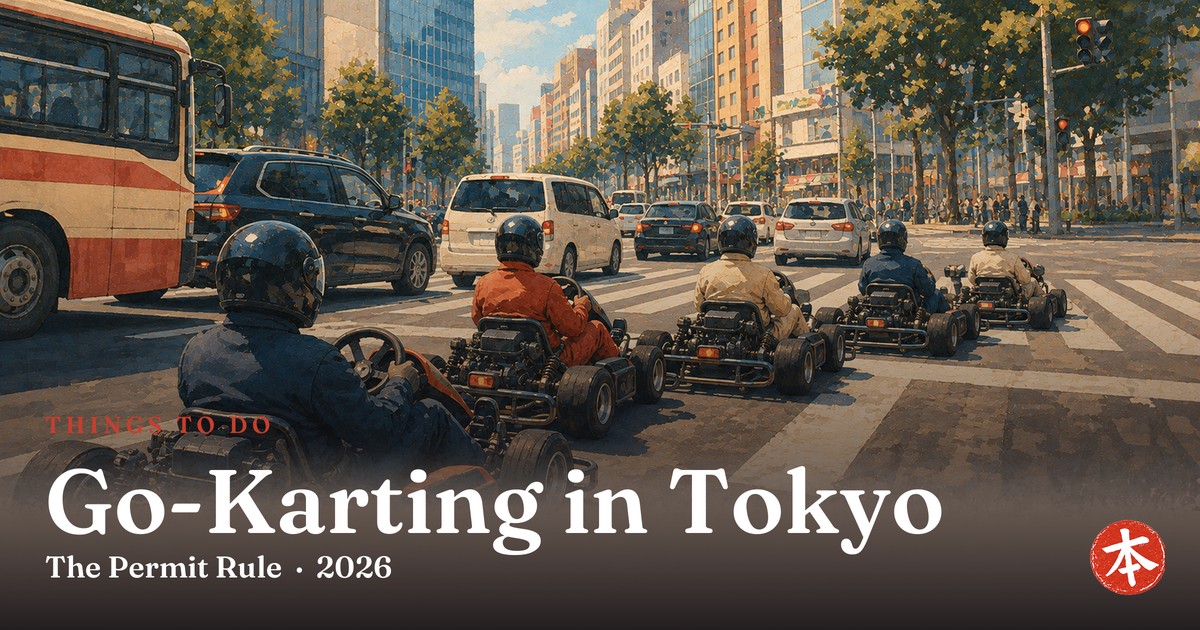
Driving a tiny open kart through Shibuya Crossing at street level is one of the few Tokyo experiences that lives up to the videos. It is also the one where the largest number of people show up, get turned away at the counter, and lose their money — because the paperwork rule is stricter and stranger than almost anyone expects.
The short version: you need an International Driving Permit issued under the 1949 Geneva Convention, as an original paper booklet. A Vienna Convention permit is worthless here even if your country also signed Geneva. And there is a list of Geneva member states whose permits still don't work in Japan — France, Belgium and Monaco among them. Every operator states in writing that turning up without the right document means no ride and no refund.
Go-karting in Tokyo at a glance
| You must have | Home license + 1949 Geneva Convention IDP, as an original paper booklet |
|---|---|
| 🚨 Does not work | Vienna Convention permits — invalid in Japan even if your country also signed Geneva |
| Minimum age | 18 (Japanese law, not an operator rule) |
| Six exceptions | Switzerland, Germany, France, Belgium, Monaco, Taiwan — official Japanese translation instead of an IDP |
| Price | About ¥14,000–18,000 for 1–2 hours · Tokyo Bay routes to ¥25,000 · off-peak slots from ¥7,000 |
| If your paperwork is wrong | No ride, no refund — stated in writing by every major operator |
| Helmets | Not legally required for this vehicle class · one operator provides them on request |
| Costumes | Provided — but no Nintendo characters since the 2020 judgment |
The permit rule, in the police's own words
That single sentence from Tokyo police is the one that catches people. Plenty of countries have signed both treaties and issue the Vienna-format permit as standard. It is a real, official, government-issued International Driving Permit — and it is not valid in Japan. Before you book, check which convention your permit was issued under, not just whether you have one.
- Original paper only. The National Police Agency is explicit: carry the original paper permit. A scan, a photo or a digital copy is not accepted, and the physical format is specified down to the dimensions — 148mm by 105mm.
- Check the vehicle column. The police note that if the categories you may drive are blank, illegible, or filled in with check marks rather than the proper entry, you will not be able to drive. This is worth inspecting the day you receive the permit, not the day you land.
- Validity is two clocks at once. The permit is valid one year from issue, and you may drive on it for one year from the date you entered Japan — whichever runs out first ends it.
- You cannot get one here. Permits are not issued inside Japan to visitors. Get it at home, before you fly.
- You must be 18. Japanese law, not a shop policy — the police state it directly, and operators repeat it.
The six-country exception — and the countries with no route at all
Six jurisdictions don't use the permit route in Japan at all: Switzerland, Germany, France, Belgium, Monaco and Taiwan. Their license holders drive on an official Japanese translation of the home license, and the police restrict who may produce that translation — the issuing authority, that country's embassy or consulate in Japan, the Japan Automobile Federation, and a small number of named organizations. The National Police Agency adds a warning worth repeating: foreign sworn translators do not count. A certified translation from home is not the same document.
France, Belgium and Monaco have the translation route above. For the rest, there is currently no route — which means no karting, and no driving in Japan at all. Check the police page for your own country before you pay for anything.
What it costs, and the money you can lose
- Standard tours run about ¥14,000–18,000 for one to two hours. One operator lists around ¥15,000 for a one-hour Akihabara route; another lists ¥16,538 for 120 minutes; a third runs ¥14,000 for its shortest route and ¥18,000 for its Shibuya and bay routes.
- Longer bay routes cost more — around ¥25,000 for a 1.5–2 hour Tokyo Bay tour that crosses the Rainbow Bridge. A night route runs ¥24,000, a custom route ¥30,000.
- Off-peak slots are much cheaper, from around ¥7,000–8,000 for shorter daytime and evening windows.
- Read what the discount costs you. One operator's cheaper rate is described as applying when you plan to share your experience — i.e. it is a review-for-discount arrangement, not a straight price cut.
- Damage has a number attached. One operator states an insurance deductible of ¥50,000 per vehicle, billed straight after the tour.
- Cancellation windows are long. Two operators require seven days' notice for a free cancellation; one allows 24 hours. Check before you lock in a date.
And the one that actually empties wallets: every major operator states in writing that wrong or missing documents means no ride and no refund. One puts it in capitals on its own FAQ. Treat the permit check as the booking, and the booking as an afterthought.
The costumes: what happened, and what you get now
The karts became famous worldwide because of the costumes, and the costumes are gone. Nintendo sued; in January 2020 the operator was ordered to pay ¥50 million plus an injunction, and in December 2020 the Supreme Court declined to take the appeal, making the judgment final. The courts found that lending out costumes of characters including Mario, Luigi, Yoshi and Bowser was unfair competition.
Today one operator states plainly that copyright law prevents it from providing costumes affiliated with Nintendo, and another's booking agreement requires you to acknowledge that the shop is unrelated to Nintendo. You will still be handed a costume — just a generic one. If the character outfit was the entire point for you, adjust your expectations before you book, not at the counter.
What the ride is actually like
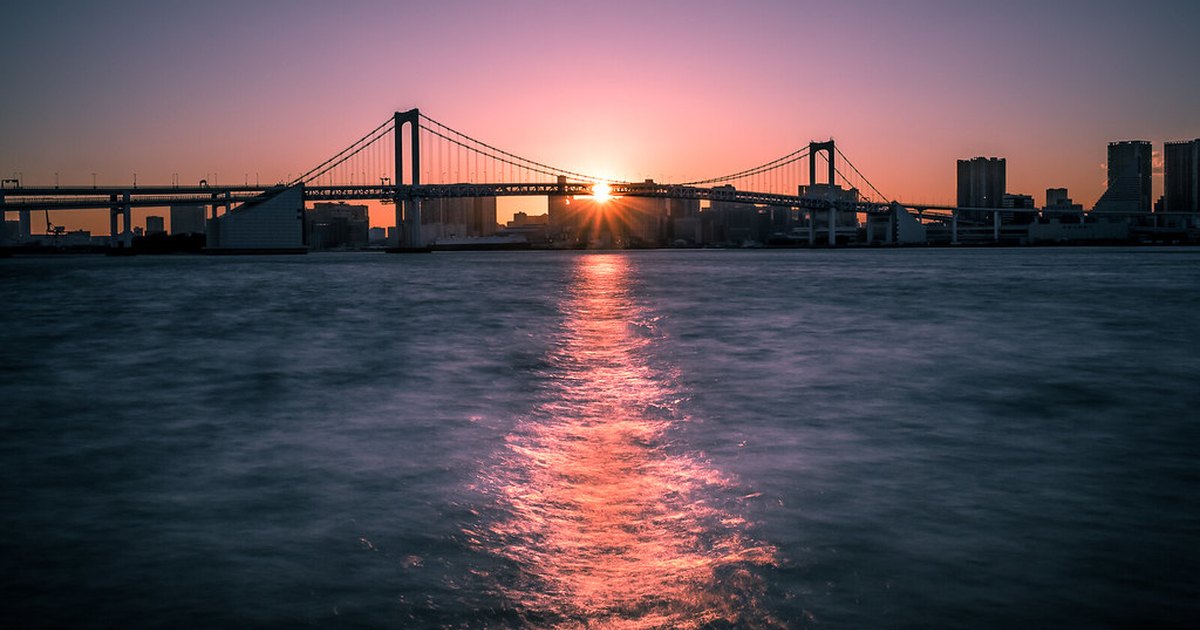
A Japanese YouTuber books a Ginza tour and films it from the seat. After the first couple of minutes it is almost all street-level footage rolling down open Tokyo avenues past Tokyo Tower with vans and taxis alongside — the clearest possible answer to how low and exposed these karts really are.
These are not toys and they are not amusement-park vehicles: they are road-legal vehicles in ordinary Tokyo traffic, at a seating height where a bus feels enormous. Japan's transport ministry tightened their safety standards in April 2018, stating openly that use by foreign visitors had grown and accidents had followed. The measures added seat belts, head restraints, high-visibility parts, night-visibility lighting and impact-absorbing steering, and banned protruding rotating parts.
- Helmets. This vehicle class is listed by police as not requiring one. One operator states helmets are not mandatory but highly recommended and are provided on request — so ask. The others don't publish a policy.
- Group size. One operator states a guide takes a maximum of six drivers, so you follow a leader rather than navigate Tokyo yourself.
- Not on expressways. The vehicle class is barred from them, and operators confirm their routes stay on ordinary roads — the Rainbow Bridge bay route being the signature exception people book for.
- Fit matters more than height. No operator publishes a minimum height. One states the real requirement functionally: if you cannot reach the pedals or drive safely, you cannot drive. If you are very short or very tall, message the operator first.
Booking it properly
The order that avoids disappointment: check your permit type → check the police list for your country → then book. Bring the original license and the original permit; both, not either. Give yourself a buffer of weeks, not days, for the permit to arrive at home.
Practically, karting slots in neatly beside the other one-to-two-hour Tokyo things: Shibuya Sky looks down on the crossing you just drove through, and Tokyo Tower sits on several of the routes. A data eSIM is worth having before you arrive so you can reach the operator if anything changes, and if you're still shaping the trip, see the 7-day itinerary and where to stay in Tokyo.
FAQ
What do I need to drive a go-kart in Tokyo?
Which countries can’t use an International Driving Permit in Japan?
How much does go-karting in Tokyo cost?
Can you still wear Mario costumes?
Is street go-karting in Tokyo safe?
What happens if I turn up without the right documents?
Bottom line (2026) — Every Tokyo go-kart operator enforces the same permit law in writing: wrong paperwork means no ride and no refund, and a Vienna Convention permit is not accepted even if your country also signed Geneva. Six jurisdictions do not use the permit route at all, and the Mario-style costumes ended after Nintendo won its suit — the operator was ordered to pay in January 2020.
Sources
Checked August 4, 2026: the Tokyo Metropolitan Police English driving-license pages and FAQ (the Geneva-only rule and the explicit invalidity of Vienna Convention permits, the one-year validity clocks, the age-18 requirement), the National Police Agency's question-and-answer document (original paper permits only, the specified dimensions, the blank-or-check-mark vehicle column) and its page on driving with a foreign license (the six-jurisdiction translation route, the closed list of accepted translators, and the warning that foreign sworn translators are excluded), plus the police list of Geneva member states that do not issue Geneva-format permits (updated July 2026); the Ministry of Land, Infrastructure, Transport and Tourism announcement of April 27, 2018 for the tightened kart safety standards and the six required measures, and the police reference material classifying this vehicle type as not requiring a helmet; Nintendo's own press releases of January and December 2020 and the court documents for the ¥50 million judgment, the injunction, the finality of the ruling and the four named characters; and the operators' own booking, license and terms pages for prices, cancellation windows, the insurance deductible, the guide-to-driver ratio, the helmet-on-request statement and the no-refund policies. Deliberately not stated: any numeric minimum height (no operator publishes one), accident statistics (officials say only that multiple accidents occurred), the exact commencement date of each safety measure, and whether every operator's karts have seat belts fitted — the rule applies to vehicle standards, not to a claim we can make about a specific fleet. Prices change; confirm on the operator's page.
Some links on this page may be affiliate links, which means we may earn a commission if you book or buy through them — at no extra cost to you. See our affiliate disclosure.
Tokyo to Osaka, Tokyo to Kyushu, Tokyo to Hokkaido — day by day — plus seven places most visitors never reach.
- 12 pages, 80 photographs, every stop linked to its guide
- Every price and opening hour read from the official page
- Re-issued monthly, so it does not go stale in your inbox
Free. One email a month, plus the rare change that matters. Unsubscribe with one click in any email. By subscribing you agree to our privacy policy.