Food & Drink– category –
What locals actually eat
-

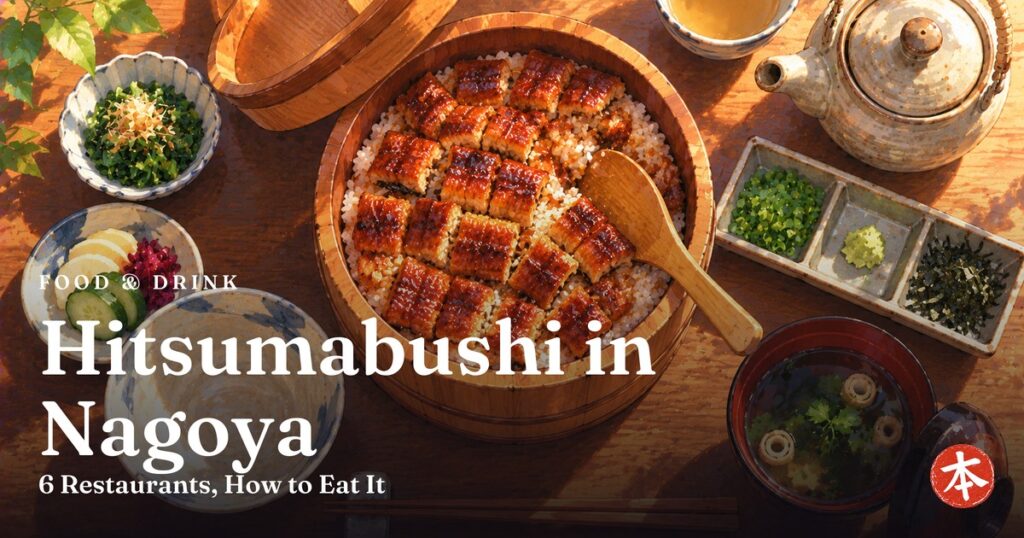
Hitsumabushi in Nagoya (2026): 6 Restaurants, How to Eat It
Where to eat hitsumabushi, Nagoya's chopped grilled eel on rice, and how to eat it in three servings. Six restaurants from their own official sites: Atsuta Horaiken, Ibasho, Shirakawa, Bincho, Maruya Honten and Unafuji, with prices from 2,160 yen, booking rules, queues and branches at Nagoya Station. -
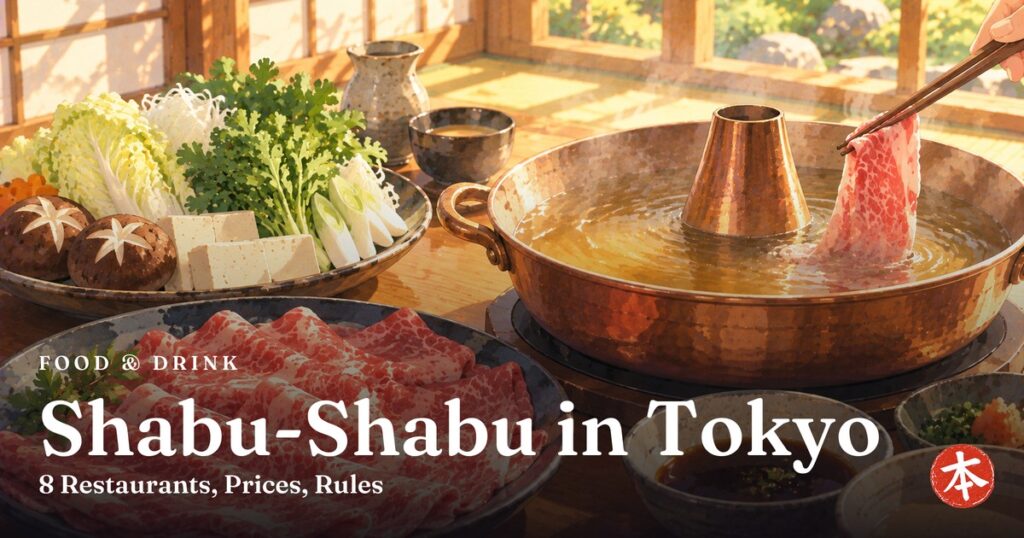
Shabu-Shabu in Tokyo (2026): 8 Restaurants, Prices, Rules
Eight shabu-shabu restaurants in Tokyo, from a 1,150 yen all-you-can-eat lunch at Tokyo Station to Kobe beef in Roppongi and Ginza, with what each one's own site says about service charges, time limits, children, booking and cancellation. Historic Imahan, Zakuro and Seryna, Kisoji, and four buffet chains including MO-MO-PARADISE and Shabuyo. -
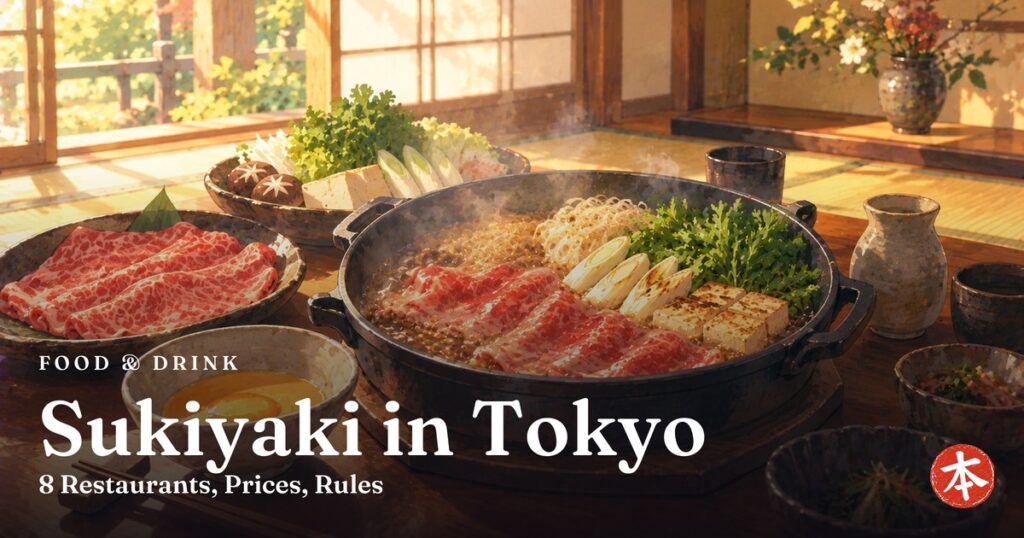
Sukiyaki in Tokyo (2026): 8 Restaurants, Prices, Rules
Eight sukiyaki restaurants in Tokyo, from a 2,750 yen weekday lunch to a 26,000 yen Matsusaka beef course, with what each one's own site says about service charges, who cooks at the table, children, reservations and cancellation. The historic Imahan and Chinya, Hiyama in Ningyocho, a 35th-floor view at Moritaya, Ginza Rangetsu, and two cheap options. -
Kosher in Japan (2026): Delivery, Not Restaurants
There is no kosher restaurant scene in Japan. There is a delivery service run by Chabad since 2005, Shabbat meals in Tokyo and Kyoto with three days' notice, one Kyoto kaiseki house certified in 2024, and a short list of supermarket facts that the rabbis themselves publish. -
Ippudo (2026): No Reservation Page, Two Bowls Explained
Ippudo's own site has no booking page, no FAQ and no prices. What it does publish: the two signature bowls use different flour and different noodle cuts, six shops carry a plant-based Akamaru, and the app earns points on every 500 yen but cannot reserve a seat. -
Okinawa Food (2026): 300 Soba Shops and 48 Distilleries
Okinawa's prefectural tourism board counts more than 300 Okinawa soba specialists and 48 awamori distilleries. Awamori itself dates to around 1470, is made from Thai rice rather than Japanese, and is the oldest distilled spirit in the country. This guide covers what to eat, what to drink, and the two dates the island puts in its calendar for it. -
Famichiki (2026): The 248-Yen Price Is Takeout Only
FamilyMart publishes Famichiki at 230 yen before tax and 248 with it - and states that the price shown is the reduced 8 percent rate, which applies to takeout. Sit down to eat it and a different rate applies. This guide has the official price of every item on the hot counter, how to order one, and the two that are not sold nationwide. -
Kochi Cafes (2026): Japan’s Densest Coffee Town, and Almost None of It Is a Chain
Kochi has more coffee shops per head than anywhere else in Japan, and 91.9 percent of them are independent. Here is where to have the local version of morning service - which involves rice balls - and what the official pages get wrong about each other. -
Coffee Shops in Japan (2026): Cafe and Kissaten Are Not the Same Word
A coffee in Japan costs 300 yen or 780 yen depending on which kind of shop you walk into, and the difference has a name. Here is what each chain charges, how the two morning-service systems differ, and why the smoking rules reversed in 2020. -
Torikizoku (2026): Everything Is 390 Yen — and There Is No Table Charge, Which Is Rarer Than It Sounds
Japan's biggest yakitori chain charges one price for every dish and drink: 390 yen including tax since May 2025. It also states outright that it does not charge for the compulsory appetizer, the seat, or late-night service — three fees that catch visitors at ordinary izakaya. Note that Torikizoku's own English FAQ still shows last year's prices. -
Sushiro (2026): The Plate Price Depends on Which Branch You Walk Into — 120 Yen or 170
Japan's biggest conveyor-belt sushi chain does not have one price. It has four, set by branch type: 120 yen in the suburbs, 170 in Dotonbori and Gion — and the branches visitors actually go to are almost all in the upper bands. Prices also rose on July 22, 2026, and the old Maido Point scheme ended in May. -
Ramen in Sapporo (2026): The Shop That Invented Miso Ramen Says the Famous Origin Story Is an Urban Legend
Every English guide tells you miso ramen began when a customer asked for noodles in pork soup. The son of the man who invented it calls that a complete urban legend on the shop's own website. Also: six of the seventeen shops in Ramen Yokocho take no card at all, and Sapporo Ramen Republic closed years ago.