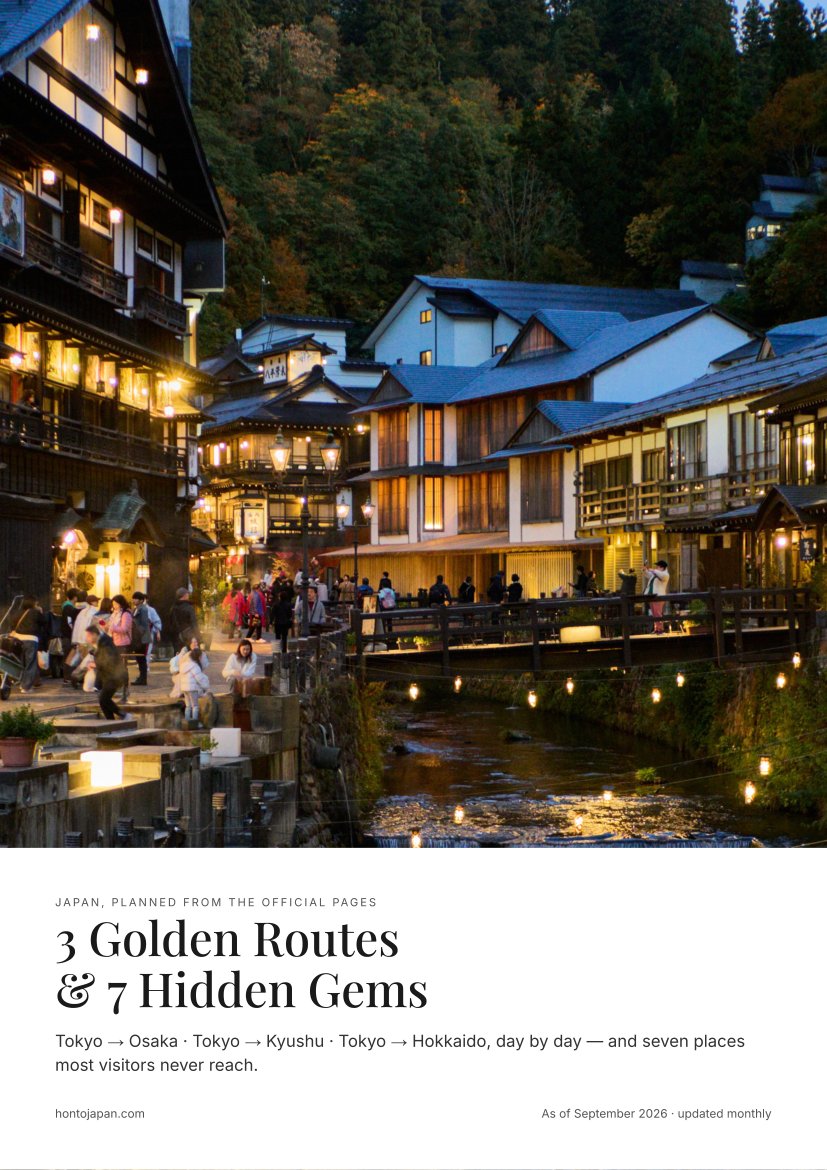
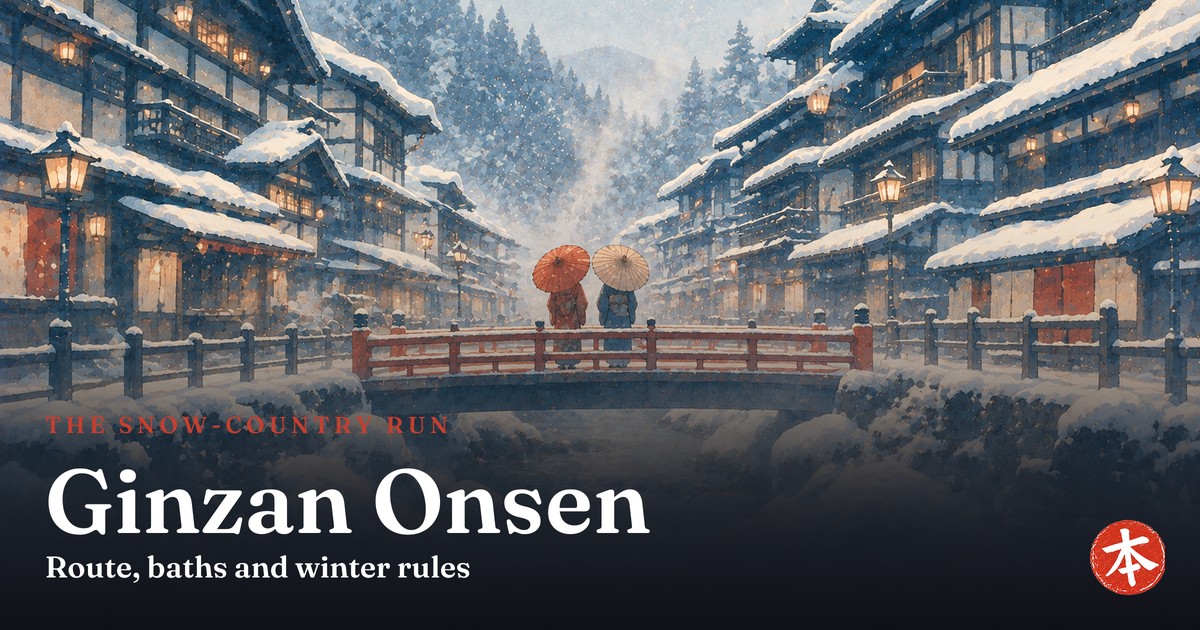
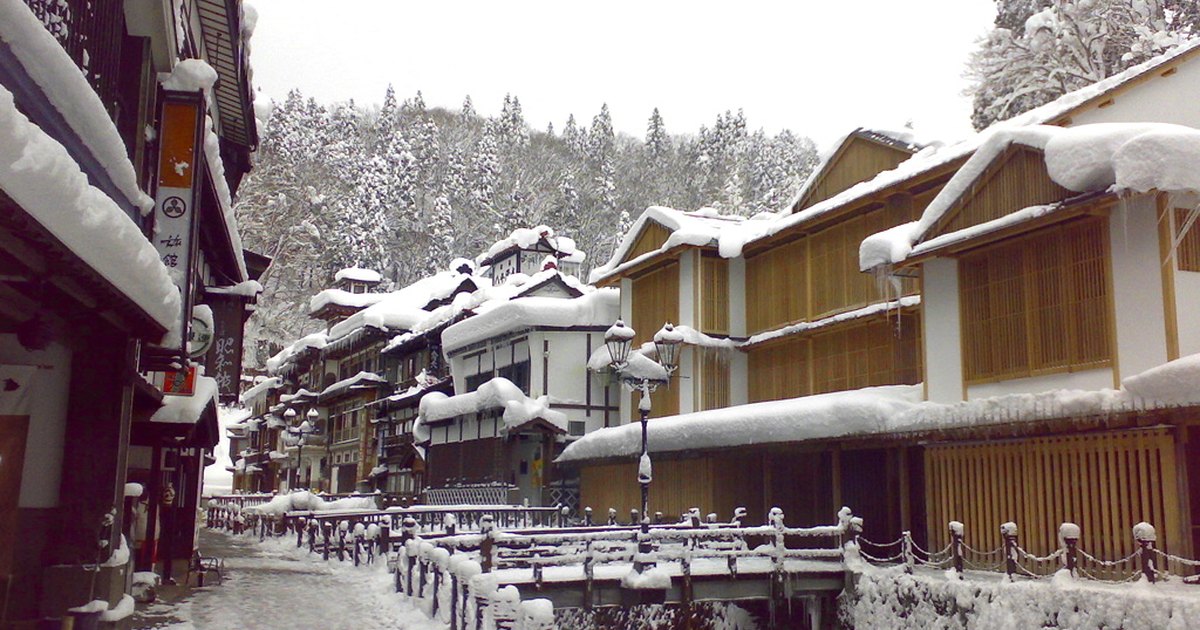
Ginzan Onsen is the image search result "Japan winter" is trying to show you: a single lane of three- and four-story wooden ryokan from the 1920s, gas lamps hissing over a steaming river, snow stacked to the eaves. Reaching it from Tokyo is a clean two-leg trip — shinkansen to Oishida, then a ¥1,000 bus — but the fine print has changed more in two years than in the previous fifty: recent winters brought car bans and priority-pass crowd control, and last season's system officially ended on March 1, 2026, with next winter's rules still unannounced. Here's the trip as the official sources actually describe it.
Ginzan Onsen at a glance
| Item | Official answer (Aug 2026) |
|---|---|
| Route | Yamagata Shinkansen → Oishida Sta. → Hanagasa bus ~36 min, ¥1,000 (5/day) or ryokan pickup |
| Winter access | 2025–26 car ban & Priority Pass ended Mar 1, 2026 · 2026–27 scheme TBA (~late Oct) |
| Day baths | No reservations, no night bathing · Shiroganeyu ~¥500 (Wed closed) · 2 ryokan ¥1,000 · free footbath 6:00–22:00 |
| Gas lamps | From ~16:30 (Nov–May) · ~17:00 (May–Oct) |
| Cars | Street is car-free year-round · park Taisho Roman-kan (free, 100 spaces) + ¥500/day shuttle |
The street in heavy snow — the hour the trip exists for:
Getting there: the two-leg route that works
Which bus do you actually catch?
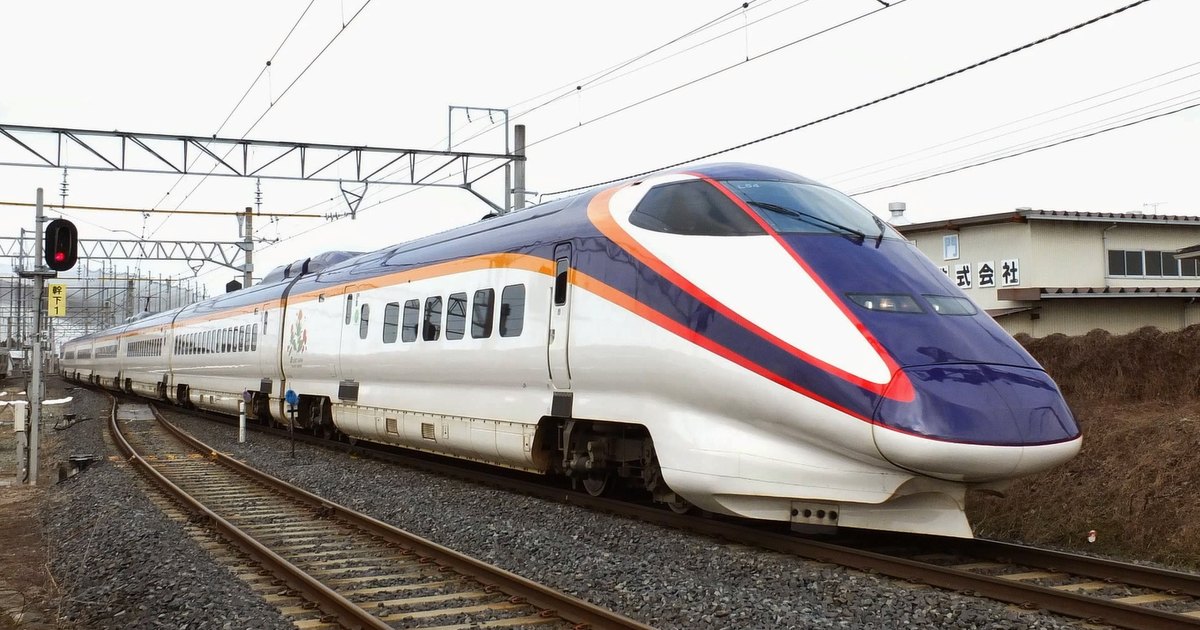
Leg one: the Yamagata Shinkansen (Tsubasa) from Tokyo to Oishida — the association's official access line is exactly that simple, and we'll leave fares and times to JR's official planner rather than quote numbers no official page publishes. Leg two: the Hanagasa bus from the station forecourt, about 36 minutes to the onsen for ¥1,000, with five daily departures on the current official timetable (9:50, 12:35, 14:10, 15:55, 17:45) — but read the fine print on the city's PDF before you commit to one: individual runs carry express, weekend-suspension or New-Year-suspension marks, so not every departure runs every day. Staying guests have the cheat code: most ryokan arrange station pickups — ask when you book. Total from Tokyo, around four hours; for calibration, that's double our Kusatsu run and it buys a fundamentally different, smaller, stiller place.
The winter question: what replaced the chaos?
What should a December–February visitor actually plan for?
Ginzan's Instagram fame broke its winter logistics, and the town answered with systems. The 2025–26 season ran a full park-and-ride car ban, visitor volume control and a paid Priority Pass (¥1,000–¥1,500 by time slot, with reserved shuttles from the Taisho Roman-kan every 20 minutes, last return 19:30) — and then, per the official notice, the whole scheme ended March 1, 2026. Nothing about 2026–27 had been announced by mid-August; last year's rules dropped on October 31. The safe planning posture: assume some crowd-control system returns, watch ginzanonsen.jp's notices from late October, and know the year-round baseline that never changes — the street itself is car-free, with the free 100-space lot at Taisho Roman-kan and a ¥500 all-day shuttle you summon by button. We log dated rule changes like this on the 2026 tracker precisely because this town rewrites its winter rules annually.
On the street: baths, lamps and the 1926 rebuild
What can a visitor without a room actually do?
The official FAQ sets expectations kindly but firmly: no day-bath reservations, no night bathing. The dependable soak is Shiroganeyu — the small architect-designed public bath, around ¥500, mornings to mid-afternoon, closed Wednesdays (official listings disagree on the exact last hour; ask at the info desk) — plus two ryokan day-bath windows (Takimikan 11:00–14:30 ex-Thursdays, Kosekiya Bekkan 11:30–13:00 weekdays, ¥1,000 each) and the free riverside footbath (6:00–22:00). Time everything toward dusk: the gas lamps light around 16:30 in the cold months, 17:00 in summer. The scenery's backstory earns the stay: a 1913 flood leveled the old inns, a 1926 borehole struck hot water so abundant the ryokan "all rebuilt at once" in the tiered wooden style of the moment, and a 1986 ordinance froze the result. The tallest of them, Notoya Ryokan (founded 1892, a registered cultural property), is the one the association says is "said to be" a Spirited Away model — a legend the ryokan itself politely declines to claim. For how this stacks against nearer escapes, the day-trips hub keeps the comparisons honest.
For a first-hand second opinion on the overnight question, Robert Schrader’s Is Ginzan Onsen Worth Visiting? on Japan Starts Here describes the town as really a single street and, after a rainy January night there, comes down in favor of a day trip that stays until after dark.
Booking the night: how to actually get a room
Why is a Tuesday in January harder than a Saturday in June?
The street holds only a dozen-odd ryokan, most with fewer than twenty rooms, and winter weekends sell out months ahead — the town's whole crowd-control saga exists because demand outgrew a lane you can walk end to end in five minutes. Booking realities: many houses open reservations around six months out and fill the snow-season Saturdays within days; weekday January nights are the achievable version of the dream; and the pickup service from Oishida is worth requesting at booking time, because the last bus in (17:45) cuts it close for standard check-ins. If the calendar defeats you, the consolation strategy is real: a night in Yamagata city or at nearby Oishida, the morning bus in, a full lamp-lit evening, and the late bus out — not the ryokan fantasy, but every photograph without it.
(Weighing a branded stay against an independent inn? Our Hoshino Resorts guide lays out the price ladder and what the cancellation terms do and do not say.)
FAQ
How do you get to Ginzan Onsen from Tokyo?
Can you do Ginzan Onsen as a day trip from Tokyo?
What was the winter entry-restriction system — and is it still running?
Can you bathe without staying overnight?
When do the gas lamps come on?
Is Ginzan Onsen really the Spirited Away bathhouse?
Why does the street look like that?
Can I drive to Ginzan Onsen?
Which bus rules should I double-check?
Bottom line (2026) — Ginzan Onsen is one shinkansen plus one ¥1,000 bus from Tokyo, per the Obanazawa City Tourism Association. Last winter’s crowd-control system (car bans and Priority Pass) officially ended March 1, 2026, and next winter’s rules have not been announced. The Obanazawa bus timetable (April 2023 revision) and ginzanonsen.jp’s official notices remain the primary sources.
Sources
Access route, gas-lamp hours, day-bath rules and venues, and car-free street guidance: the Obanazawa City Tourism Association's official pages and FAQ. Bus timetable, fare table and per-run suspension marks: Obanazawa City's official PDFs (April 2023 revision). Winter 2025–26 restriction details, Priority Pass terms and the March 1, 2026 end notice: ginzanonsen.jp's official notices and the official restriction site. Street history and the 1926 rebuild: ginzanonsen.jp's official history page. Notoya facts: the ryokan's official site. All read on August 18, 2026. JR times and fares are not quoted; the 2026–27 winter scheme was unannounced at reading. The embedded video is by its creator.
Some links on this page may be affiliate links, which means we may earn a commission if you book or buy through them — at no extra cost to you. See our affiliate disclosure.
Tokyo to Osaka, Tokyo to Kyushu, Tokyo to Hokkaido — day by day — plus seven places most visitors never reach.
- 12 pages, 80 photographs, every stop linked to its guide
- Every price and opening hour read from the official page
- Re-issued monthly, so it does not go stale in your inbox
Free. One email a month, plus the rare change that matters. Unsubscribe with one click in any email. By subscribing you agree to our privacy policy.