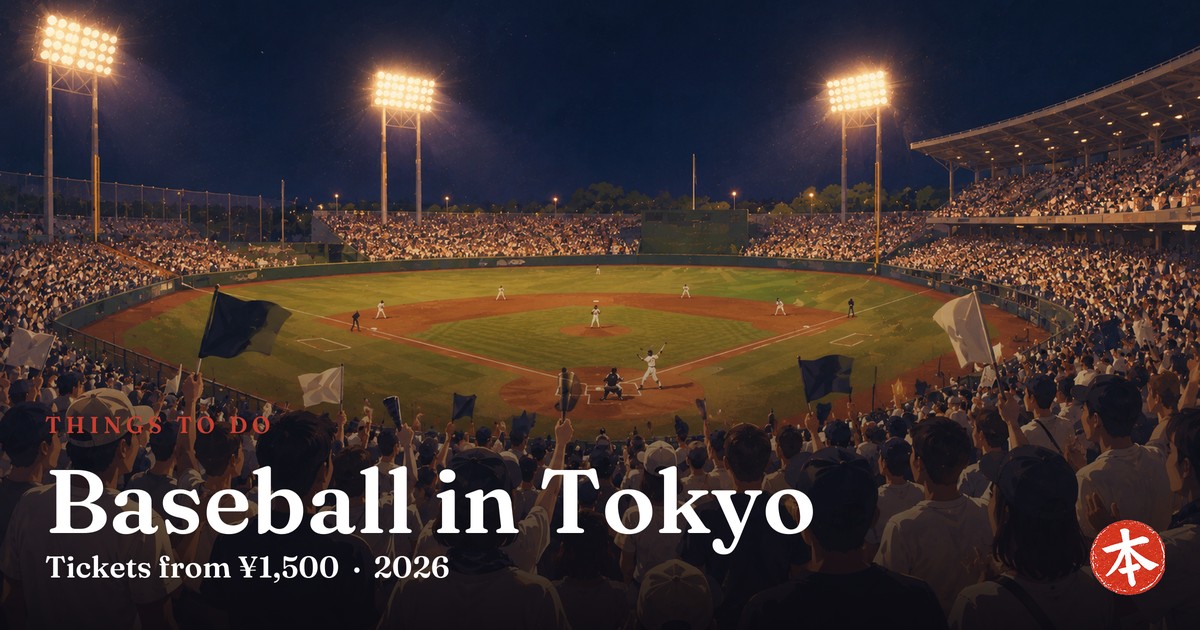
A Japanese baseball game is, per yen spent, probably the best night out in Tokyo. Standing room at Tokyo Dome officially costs ¥1,500; a child's outfield seat at Jingu starts around ¥800. What you get for that is three hours of continuous, organized, brass-band-driven noise that has almost nothing in common with watching baseball anywhere else on earth.
The catch is that Japanese stadiums run on rules foreign fans don't know about — you cannot wear the wrong team's jersey in the wrong section, the two Tokyo stadiums have nearly opposite drink policies, and a rained-out game can leave overseas visitors unable to claim a refund at all. All of it below, from the official sources.
Tokyo Dome vs Jingu, at a glance
| Tokyo Dome (Giants) | Jingu (Swallows) | |
| Vibe | Indoor spectacle · ~43,500 seats · giant LED · new turf in 2026 | Open-air, oldest park in Tokyo (1926) · turns 100 in Oct 2026 |
| Cheapest | ¥1,500 outfield standing · ¥2,200 reserved | ~¥2,100 outfield adult · ~¥800 child |
| Pricing | Fixed tiers (Saturdays cost more) | Dynamic pricing from 2026 |
| Drinks | PET under 1,000 ml OK · no outside alcohol | PET & flasks OK · no stated alcohol ban |
| English tickets | Via club English pages (details unverified) | Full English site — Apple Pay / Google Pay only |
| Access | Suidobashi / Korakuen / Kasuga stations | Gaienmae exit 3, ~5 min walk |
The jersey rule — read this before you buy
The trap is obvious once stated: a visitor buys "the cheapest outfield seat," turns up in the away team's cap because it looked nice, and gets asked to remove it or move. Before buying, check whether your seat is home-side or visitor-side. At Jingu the two sides even queue at different gates — home fans to the right-field side, visitors to the left.
What you can bring in (it differs by stadium)
Tokyo Dome: no bottles, no cans, nothing frozen, nothing over 1,000 ml — and no alcohol brought from outside, full stop. An unfrozen plastic bottle under a liter is fine. Jingu: no bottles, cans or cooler boxes, but plastic bottles and thermos flasks are explicitly permitted, and there's no stated alcohol prohibition.
One shared change worth knowing: both stadiums have discontinued the old decant-into-a-paper-cup service (Jingu notes it ended in 2020). So if you turn up with a banned container, the only option at the gate is the bin. Buy inside instead — which is the point, given that Jingu's official gourmet site maintains a public directory of its beer vendors, complete with nicknames, years of service and, genuinely, their MBTI types.
Buying tickets as a visitor
The Swallows are the easy path: the club runs a full English ticket site — choose a game, pay, and the ticket lives on your phone; no convenience-store pickup, no Japanese phone number. The one catch is payment: Apple Pay and Google Pay only, so register your card in one of those before you start. Same-day tickets are sold at the stadium ticket box (gate 9 from 14:00, gate 7 from 16:00), though not if the game has sold out in advance.
For the Giants, the club points overseas visitors to its English ticket pages. Tokyo Dome also sells at the window beside gate 22, where you'll need to show a club ID or write your name and contact details, with a limit of eight tickets per person per game. Payment at the window covers cash, all major cards including UnionPay, e-money and QR codes.
Three rules that can cost you money
- Resale is a criminal offence. Giants tickets fall under Japan's ticket-resale law: unauthorized resale (or buying for resale) carries up to a year's imprisonment or a ¥1,000,000 fine. Tickets bought on auction sites can be refused at the gate with no refund. The Swallows run an official resale service instead — use that if your plans change.
- Rain-out refunds are hard for overseas visitors. Swallows QR tickets refund via a Japanese bank transfer service — the purchaser must claim it personally, people who received a shared ticket can't, and the right expires after a deadline. Practically: an overseas fan may be unable to collect.
- Tokyo Dome is normally no re-entry — with an exception for Giants and Nippon-Ham home games, which do allow it with the proper procedure. The venue is also entirely cashless inside and completely non-smoking.
The atmosphere (and why it's the real product)
Thirteen minutes shot from the Yakult Swallows right-field stand at Jingu — the entire section in light blue, chanting in sync with the band, which is the thing that is genuinely hard to explain in text and obvious in ten seconds of video.
Japanese baseball crowds cheer in organized shifts: the home fans sing continuously while their team bats, then fall silent and let the visitors take over. Every player has a personal song. Trumpets and drums are everywhere — officially they require club permission and belong to sanctioned supporter groups, and the league is explicit that this isn't a ban on instrument-led cheering, just a licensing rule. At Jingu, fans famously raise umbrellas and sing after their team scores, a tradition the club highlights on its own English pages.
Sit in the outfield if you want to be inside that machine; sit in the infield if you want to watch the baseball. Either way, the noise is the attraction — and unlike almost everything else on a Tokyo itinerary, it costs less than lunch.
Practical planning
The 2026 season opened March 27 and regular-season games run through the end of September, with the Japan Series from October 24. Weeknight games start at 18:00, weekends at 14:00 or 15:00. Both stadiums are central — Jingu is five minutes from Gaienmae, Tokyo Dome sits on several subway lines — so either works from any Tokyo base, and both are simple hops with an IC card. Eat inside; stadium food in Japan is a genuine cuisine, and if you want the wider picture of Japanese eating on the move, the street food guide covers the outside-the-park version.
(For a hotel near Tokyo Dome: our Hotel Niwa Tokyo guide covers a hotel about a 5-minute walk from Tokyo Dome City and about 4 minutes from the East Exit of JR Suidobashi Station, with no car or bicycle parking.)
FAQ
How much are baseball tickets in Tokyo?
Can foreigners buy Japanese baseball tickets online?
What can I bring into a Japanese baseball stadium?
Can I wear any team’s jersey at a Japanese baseball game?
Tokyo Dome or Jingu Stadium — which should I choose?
When is the Japanese baseball season?
Bottom line (2026) — A Tokyo baseball game is the city’s best-value night out, with standing tickets from ¥1,500, but wearing the wrong jersey in the wrong section gets people moved and the two stadiums have opposite drink policies. The 2026 season opened March 27 and runs through late September, with the Japan Series from October 24; weeknight games start at 18:00, weekends at 14:00 or 15:00.
Sources
Official sources checked August 4, 2026: Tokyo Dome's ticket, venue and prohibited-items pages (2026 price tiers, the 1,000 ml and alcohol rules, re-entry policy, cashless and non-smoking rules, the air-supported structure and 54 revolving doors, the 2026 turf replacement); Jingu Stadium's rules, access and English pages (permitted flasks and plastic bottles, cheering-section rules, gate queuing sides, the 1926 opening and centenary); the Swallows' club site (English ticketing, Apple Pay/Google Pay limitation, dynamic pricing, refund procedure, official resale service, ticket-resale penalties) and NPB's 2026 schedule. Not verified: the Giants' English ticketing payment options (their site blocks automated access) and Climax Series dates, which weren't published when we checked. Jingu's rules page notes it reflects the 2025 season; confirm current details at the gate.
Some links on this page may be affiliate links, which means we may earn a commission if you book or buy through them — at no extra cost to you. See our affiliate disclosure.
Tokyo to Osaka, Tokyo to Kyushu, Tokyo to Hokkaido — day by day — plus seven places most visitors never reach.
- 12 pages, 80 photographs, every stop linked to its guide
- Every price and opening hour read from the official page
- Re-issued monthly, so it does not go stale in your inbox
Free. One email a month, plus the rare change that matters. Unsubscribe with one click in any email. By subscribing you agree to our privacy policy.