There is no law about coin laundries in Japan. There is a guidance note, issued by the health ministry on March 29, 1983 and amended on December 27, 2022, addressed to prefectural governments. It is administrative advice about hygiene measures at coin-operated cleaning facilities, and it is the closest thing to a rulebook these places have.
That matters more than it sounds, because the guidance is unusually specific about things you can check from the doorway. It asks operators to clean machine surfaces and handles every day and disinfect them as appropriate. And it asks them to post, somewhere visible, the name and contact details of a named hygiene manager.
So the useful trick for a traveler is not a review score. It is a notice on the wall. A facility that has bothered to post a hygiene manager is a facility following a document most customers have never heard of — and that tells you something about the parts you cannot inspect.
What the guidance asks operators to do
| Area | What the guidance says |
|---|---|
| Posting | How to use the washers, dryers and hot water equipment; fabric suitability and washing and drying precautions; for dry-cleaning machines, the solvent types and their health hazards; a prohibition on contaminated items and clothing from infectious disease |
| Hygiene manager | Designate one for each facility, and post their name and contact details in a visible place inside |
| Cleaning | Clean daily and keep the place clean |
| Machines | Surfaces and handles washed or cleaned daily, disinfected as appropriate with chlorine agents or surfactants |
| Filters | Removed and cleaned periodically |
| Water | Should be clean; meeting the Water Supply Act quality standards is described as desirable |
Guidance, not law — and why that changes what you should do
Does that mean coin laundries are unregulated?
It means they are guided rather than policed, at least by this document. The ministry cared enough to write and then amend it — the original dates from 1983 and the amendment from 2022, which is a long time for a piece of paper to stay in service. But we are not going to tell you which statute, if any, sits behind it. The guidance we read does not mention the Cleaning Business Act, and inferring a legal status from silence is how wrong facts get into English guides.
Why was it amended in 2022?
The amendment is recorded in the ministry’s own document trail with a date, December 27, 2022, and a notification number. We are reporting that it happened rather than characterising why, because the reasoning is not in the text we read.
The wall notice is the thing to look for
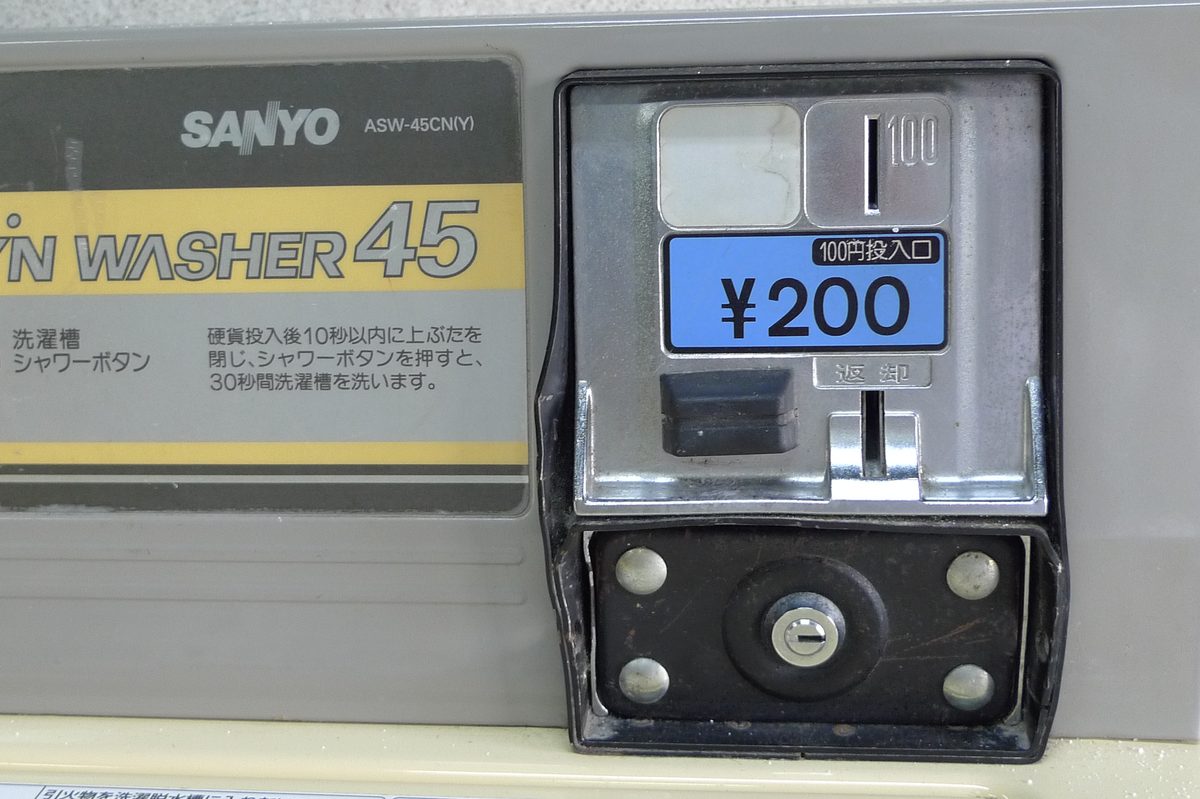
Of everything in the guidance, the hygiene manager posting is the one a visitor can verify in three seconds. The requirement is specific: designate a manager for each facility, and display the name and contact details in a visible place inside.
What does its presence tell you?
That someone has read the guidance. The notice costs nothing to print, which is precisely why its absence is informative — an operator who skipped the free, visible obligation is unlikely to be doing the daily handle disinfection that nobody can see.
What if something is wrong with a machine?
The notice is also the answer to that. It exists so there is a named person and a contact number rather than an anonymous unit in a shed. That is genuinely useful if a machine takes your coins or stops mid-cycle in a place with no staff.
Are these places staffed?
Usually not, which is the whole point of the format and the reason the guidance leans so heavily on posted information. Everything the operator wants you to know has to be on a wall, because there is nobody to ask.
What you are not supposed to bring
One of the required postings is a prohibition on contaminated items and on clothing associated with infectious disease. It is the only line in the document aimed squarely at the customer rather than the operator, and almost nobody reads it.
Is that enforced?
There is no one there to enforce it. It is a posted rule in an unstaffed room, which makes it a norm rather than a control — and which is also a reasonable argument for running an empty cycle if a drum looks or smells wrong before you put clothes in it.
Should I worry about the previous user?
Worry is too strong; awareness is right. The guidance asks for daily cleaning of surfaces and handles and periodic filter cleaning, which means the interval between you and the last load is not covered by anything. Look in the drum. Check the lint filter in a dryer.
Practical: how a laundry stop actually goes
Where do I find one?
Residential streets and near stations, more than in tourist districts. They are built for people who live in small apartments without space for a dryer, so they follow housing rather than sightseeing. If you are staying somewhere residential this is easy; if you are in a hotel district it can take a walk.
Do I need cash?
Assume yes. The category name is literally coin-operated, and small independent operators in Japan still lean on cash generally — our cash and ATM guide covers where to get it. Some newer facilities take cards or IC, but treat that as a bonus rather than a plan.
How much time should I budget?
Enough to sit with it. A wash and a dry back to back is not a quick errand, and these rooms are not designed for waiting in. On a longer trip it is worth building the stop into a slow morning — the kind of gap a seven-day itinerary usually has somewhere around day four.
Is my accommodation a better option?
Often, and it depends entirely on the property. Capsule hotels, hostels and many budget hotels have machines on site precisely because their guests stay longer than a weekend. We have not surveyed which ones do, so ask at booking rather than arriving with a bag of washing and a hope.
Laundry in Japan FAQ
Are coin laundries in Japan regulated?
What should be posted on the wall?
How often are the machines supposed to be cleaned?
Is the water safe?
Can I take anything I want to a coin laundry?
How much does a wash cost?
How many coin laundries are there in Japan?
What should I actually look for when choosing one?
Bottom line. Japan’s coin laundries run on a 1983 health ministry guidance note, amended in 2022 — advice to prefectures rather than a law. It asks for daily cleaning of machine handles and for a named hygiene manager posted on the wall. Look for that notice. It is free to print, so its absence tells you more than its presence does. Bring coins, check the drum, and do not bring anything the posted rules exclude.
(If you would rather wash in the room, our Tokyu Stay guide covers the apartment-style hotel chain whose rooms have a washer-dryer, with detergent supplied, and a microwave and mini-kitchen in some.)
Sources
The posting requirements, the hygiene manager rule, the daily cleaning and disinfection wording, the filter and water provisions and both dates were read in Japanese off the Ministry of Health, Labour and Welfare’s guidance on hygiene measures for coin-operated cleaning facilities — issued March 29, 1983 and amended December 27, 2022 — on September 9, 2026. The facility counts of 15,985 for fiscal 2011 and 16,693 for fiscal 2013 come from the ministry’s own survey of coin-operated cleaning facilities. Guidance is updated; check the ministry’s site if you need the current text.
Tokyo to Osaka, Tokyo to Kyushu, Tokyo to Hokkaido — day by day — plus seven places most visitors never reach.
- 12 pages, 80 photographs, every stop linked to its guide
- Every price and opening hour read from the official page
- Re-issued monthly, so it does not go stale in your inbox
Free. One email a month, plus the rare change that matters. Unsubscribe with one click in any email. By subscribing you agree to our privacy policy.