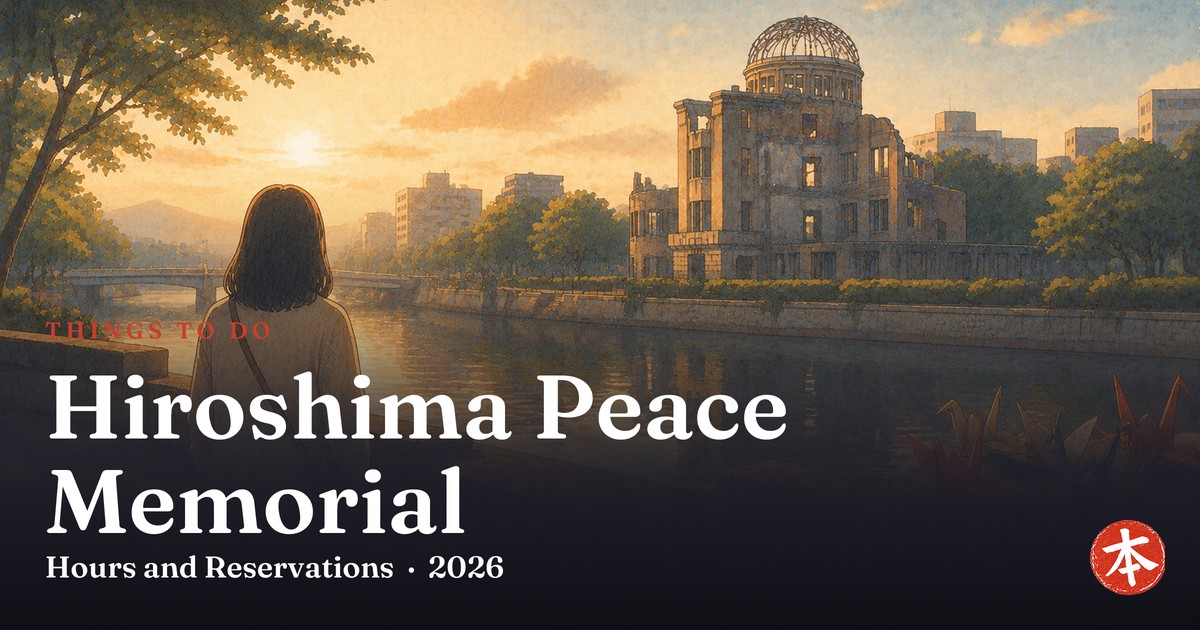
The Hiroshima Peace Memorial — the park, the museum, and the skeletal dome UNESCO lists as a world heritage of humanity's conscience — is the most important visit in Japanese travel, and it deserves accurate logistics as much as the right frame of mind. The practical facts have shifted: the museum now opens at 7:30, but the first hour is online-reservation only; admission remains a deliberate ¥200; and August 6 operates under rules of its own. What follows is the current system from official sources, and the respect the place asks in return.
The Peace Memorial at a glance
| Item | Official answer (Aug 2026) |
|---|---|
| Museum | ¥200 (HS ¥100 · JHS & under free · 65+ ¥100) · from 7:30 · closes 19:00 (Mar–Jul, Sep–Nov) / 20:00 (Aug) / 18:00 (Dec–Feb) |
| 🚨 Reserved windows | 7:30–8:30 and the evening extension hours = online web ticket only · 8:30 onward: normal entry · busiest 11:00–15:00 (official) |
| Atomic Bomb Dome | Exterior viewing only · open ground, all day, free · UNESCO 1996: "Hiroshima Peace Memorial (Genbaku Dome)" |
| Getting there | Hiroden tram ¥240 flat to Genbaku Dome-mae · Meipuru-pu loop bus ¥240 / day ¥600 (JR Pass valid) |
| Aug 6 | Ceremony 8:00–8:50 (silence 8:15) · open to public · 🚨 2026: park closed to general entry 5:00–9:00 · museum opens 9:45 that day |
| Testimony | Free 60-min survivor sessions · book ≥1 month ahead · not on Aug 6 · free online sessions for overseas participants |
The museum and park, walked quietly:
The museum: how the new entry system works
Why did a ¥200 museum adopt timed tickets?
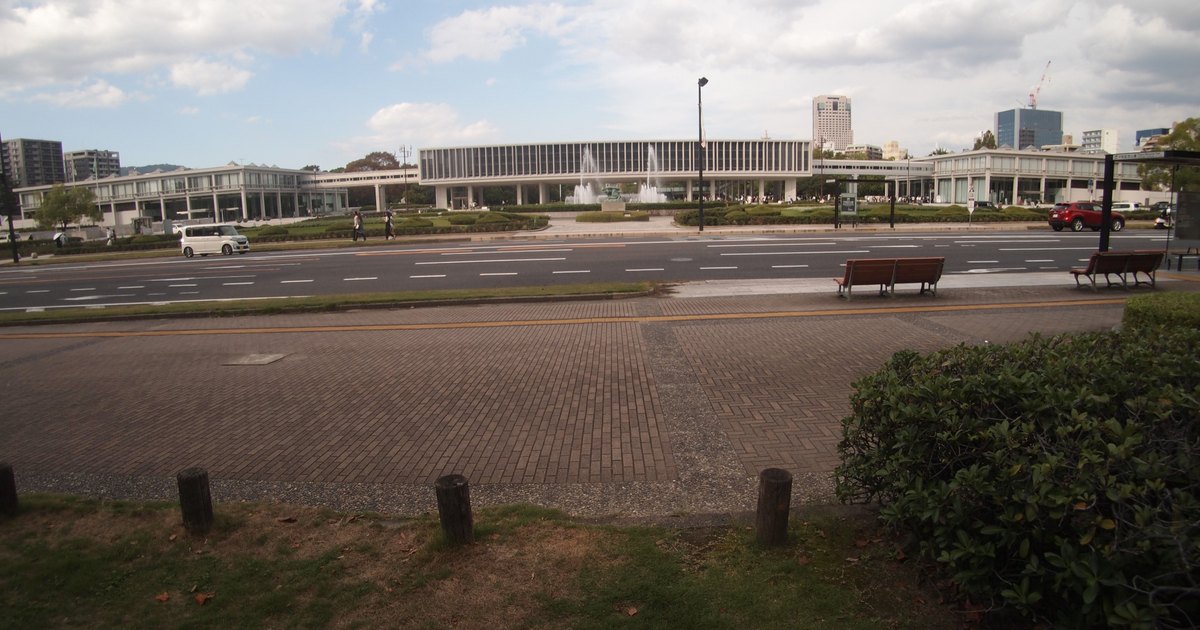
Because the world came. The museum's response to record visitation was not a price increase — admission stays at ¥200, a figure that reads as policy, not revenue — but a redesign of the day's edges: opening moved up to 7:30, closing extended seasonally, and the first hour plus the evening extension became limited-capacity, online-reservation slots, while the long middle of the day (8:30 onward) admits everyone through machines and windows as before. The official flyer is candid about why: 11:00–15:00 is the crush. The practical translation — reserve the 7:30 slot and walk the main exhibits in near-silence, or come after 17:00 with a reservation when the tour groups have gone. Inside, the audio guide (¥500, 15 languages, ~70 minutes) deepens the captions; free Peace Volunteer guides cover museum and park; and a new annex — the former Hiroshima Post Office outpatient building, a surviving witness structure — opened free to visitors in May 2026. Photography without flash is allowed; the images you'll carry out don't need a camera.
The park: three memorials and their exact words
What is the new annex building?
A survivor itself: the former Hiroshima Post Office outpatient wing — a building that stood through August 6 — opened as the museum's annex in May 2026, free of charge (9:00–17:00, closed Mondays except holidays and August 6). It adds a walkable witness structure to the visit, distinct from the reconstructed exhibits of the main halls.
What do the inscriptions actually say?
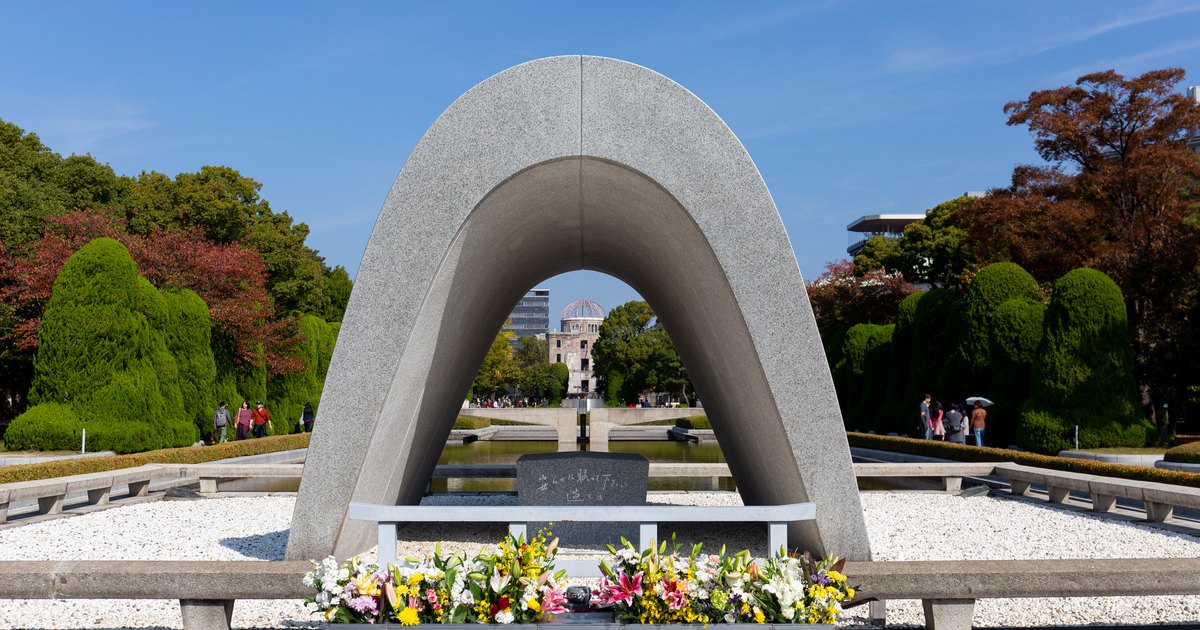
The park's architecture speaks in aligned sight-lines: stand at the Cenotaph — Kenzo Tange's 1952 saddle-shaped vault holding the register of the dead, nearly 298,000 names and counting — and its arch frames the Flame of Peace and the Dome in a single axis. The Cenotaph's inscription, in the official English rendering: "Let all the souls here rest in peace; For we shall not repeat the evil." The Flame, lit in 1964 on a pedestal shaped as joined palms opening skyward, burns by official commitment until the last nuclear weapon leaves the earth. And the Children's Peace Monument carries the story the world knows through Sadako Sasaki — exposed at age two, gone at twelve — built in 1958 through the contributions of more than 3,100 schools in Japan and abroad, ringed today by millions of folded cranes, its plaque reading: "This is our cry. This is our prayer. To build peace in the world." The Dome itself — Jan Letzel's 1915 exhibition hall, 160 meters from the hypocenter — stands exactly as August 6, 1945 left it, unenterable and unforgettable, its UNESCO citation calling it "a stark and powerful symbol" of both destruction and the hope for peace.
Visiting well: timing, transit and bearing
Is the memorial appropriate for children?
Families visit constantly — Japanese school groups are the park's most numerous pilgrims — and the fee structure (junior high and under free) is an explicit invitation. The museum's main exhibits are unflinching, though, and parents know their own children best: the park, the Dome and the Children's Monument work for any age, while the museum's hardest rooms may warrant a parent walking ahead. The official 30-minute route exists partly for exactly this calibration.
How does Hiroshima fit an itinerary — and how should you carry yourself?
Logistics first: Hiroshima sits on the Sanyo shinkansen west of the Tokaido corridor, and the memorial anchors the city day in our 10-day and two-week route frameworks — typically paired with Miyajima across the bay. From Hiroshima Station, the ¥240 tram or the JR-Pass-valid Meipuru-pu loop reaches the park in 17–25 minutes. Give the whole site an unhurried half day: museum at the 7:30 reserved slot, park and Dome after, the river walk to decompress. Bearing matters more than any checklist: the park is entirely non-smoking by rule and entirely a memorial by nature — photograph the Dome across the water, not yourself before it; let the Cenotaph's queue move at its own pace; and if a school group presents folded cranes while you're there, stop and let the moment be theirs. Visitors consistently call this the day that reframes the whole trip. It earns that quietly.
(The island half of the standard Hiroshima day has its own guide — Miyajima, including the tide rule that decides whether you can walk to the torii.)
(Working out how the city fits together? Our Hiroshima map guide covers the tram platforms that moved into the station building and the loop bus route that was scrapped.)
(Most people pair this with the island: our Hiroshima to Miyajima guide sets out every route between the two, with the 2026 fares.)
FAQ
Do I need a reservation for the Peace Memorial Museum?
What are the museum’s hours and admission?
Can you go inside the Atomic Bomb Dome?
How long should I plan for the museum?
What should I see in the Peace Memorial Park itself?
Can I attend the August 6 ceremony?
Can I hear a survivor’s testimony?
How do I get there from Hiroshima Station?
What etiquette does the site ask of visitors?
Bottom line (2026) — The Peace Memorial Museum now opens at 7:30, but the first hour is online-reservation only — a system most guides haven’t caught. Admission is ¥200, and the A-Bomb Dome is viewed from outside at any hour. Book the timed web ticket for the quiet early slot; visit the park itself with respect.
Sources
Museum admission, seasonal hours, closure days, the timed web-ticket system, peak-hours notice, audio-guide terms, photography rules and the testimony program's conditions: the Peace Memorial Museum's official site and current official English flyer. The Dome's viewing status and hours: Hiroshima's official tourism pages. UNESCO name, 1996 inscription and citation: the official UNESCO World Heritage listing. Memorial histories and inscriptions: the Hiroshima Peace Culture Foundation's and city's official pages. 2026 ceremony access rules: Hiroshima City's official notices. Tram and loop-bus fares: Hiroden's and the operator's official pages. Orizuru Tower pricing: its official site. All read on August 20, 2026. The embedded video is by its creator.
Some links on this page may be affiliate links, which means we may earn a commission if you book or buy through them — at no extra cost to you. See our affiliate disclosure.
Tokyo to Osaka, Tokyo to Kyushu, Tokyo to Hokkaido — day by day — plus seven places most visitors never reach.
- 12 pages, 80 photographs, every stop linked to its guide
- Every price and opening hour read from the official page
- Re-issued monthly, so it does not go stale in your inbox
Free. One email a month, plus the rare change that matters. Unsubscribe with one click in any email. By subscribing you agree to our privacy policy.