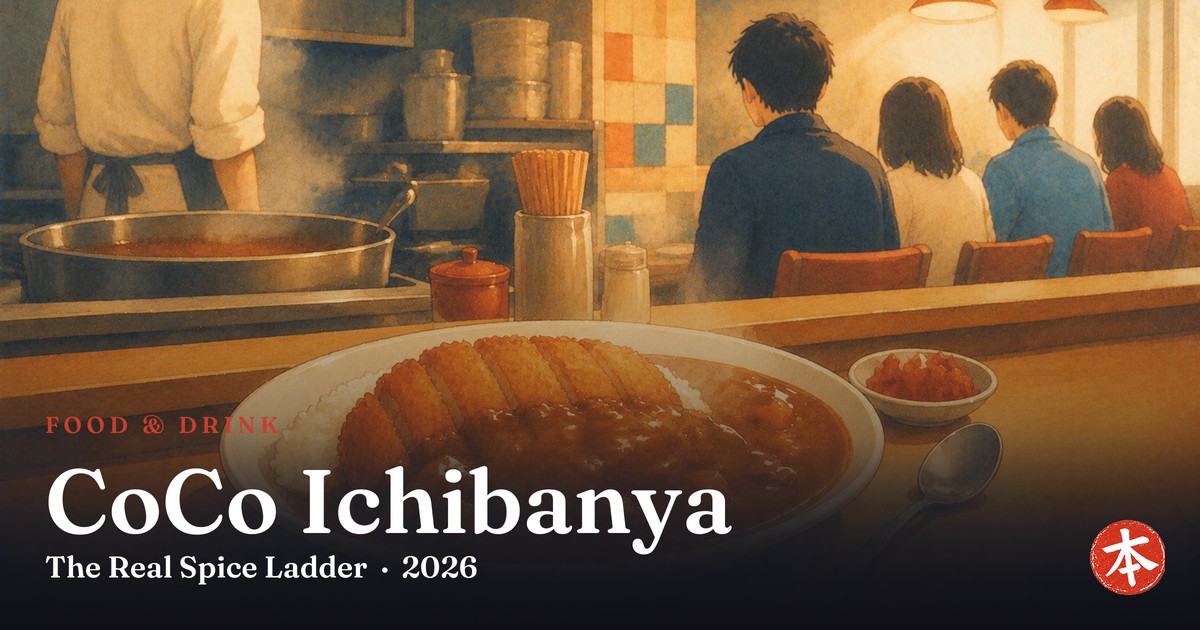
CoCo Ichibanya — CoCo Ichi to everyone — is Japan's curry operating system: a build-your-own machine of 5 sauces, rice from 150 to 400 grams, nearly 40 toppings and a spice ladder that now climbs to Level 20, with gates you must literally earn (finish 5 to order 6–10; finish 10 for 15; finish 15 for 20). The internet's version of the rules is a generation old — as is its halal advice, which our check of the official store database says is now wrong. Here's the 2026 manual, from official pages.
CoCo Ichi at a glance
| Item | Official answer (Aug 2026) |
|---|---|
| Base prices | Pork curry ¥646 · loin katsu ¥1,055 · Vege ¥683 · 🚨 Tokyo/Kanagawa/Osaka run ~¥21 higher · takeout +¥54 |
| Rice | 150–400g in 50g steps (300g standard) · 100g steps beyond 400g |
| Spice | Sweet 1–5 · Hot 1–20 (+¥25/level to 5) · 🚨 gates: 6–10 need a finished 5 · 15 needs 10 · 20 needs 15 |
| Diet | Vege curry = plant-based (official) · allergen chart for 28 allergens (Aug 2026) · 🚨 halal: zero stores in today's official locator |
| Languages | Menu books in 9 languages (EN/中2種/韓/タイ/越/露/アラビア/葡/西) |
| Scale | 1,285 domestic group stores · 218 stores / 12 countries overseas (Feb 2026) · 24h stores: just 10 |
The ordering flow, demonstrated by the chain itself:
The build: sauce, rice, heat, toppings — in that order
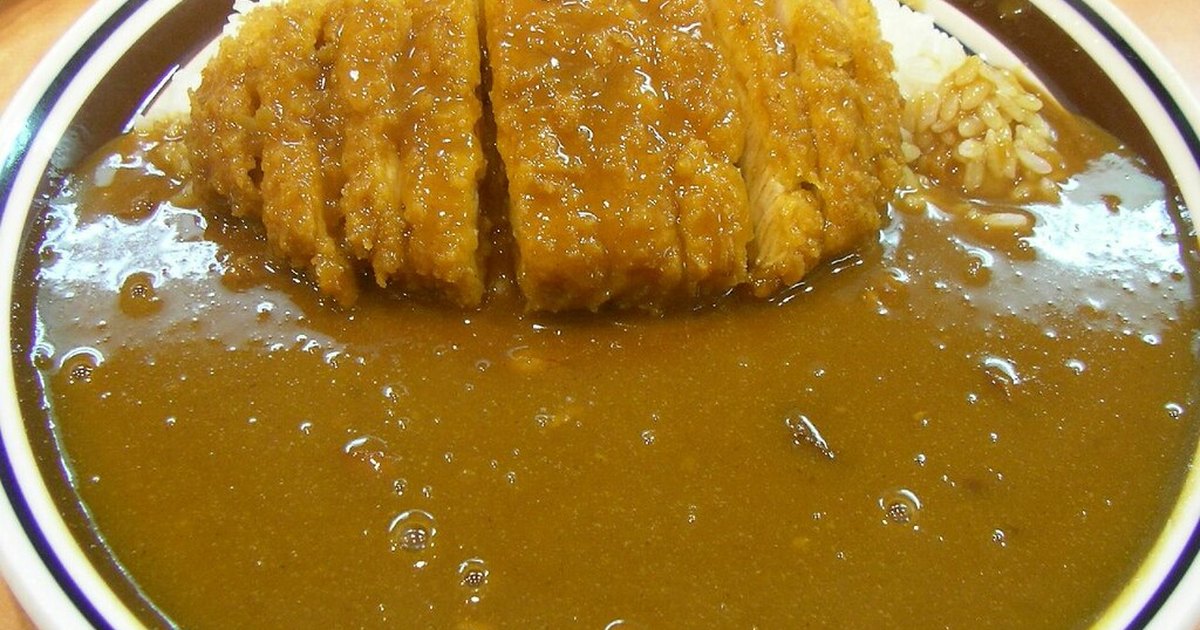
What's the optimal first-timer configuration?
Pork sauce, 300g rice, Level 1 or 2, one protein topping — then iterate on future visits, which is the entire point of the format. The official mechanics reward understanding: Level 1 already sits at "standard hot" on the Japanese scale (the mild default without a number is genuinely gentle), each step to 5 costs just ¥25, and the official multipliers escalate fast — Level 5 is described as roughly 12× Level 1. Rice is the underrated dial: 150g turns the same order into a light lunch, and upsizing costs pocket change (+~¥65 at 350g). Toppings — "nearly 40 varieties" per the official English site, from katsu and cheese to natto and spinach — stack freely; the classic error is doubling rice when doubling toppings is the better meal. Sweet-side note for families: the 1–5 sweet levels use a honey sauce, officially off-limits under age 1.
The ladder to 20: Japan's most bureaucratic spice system
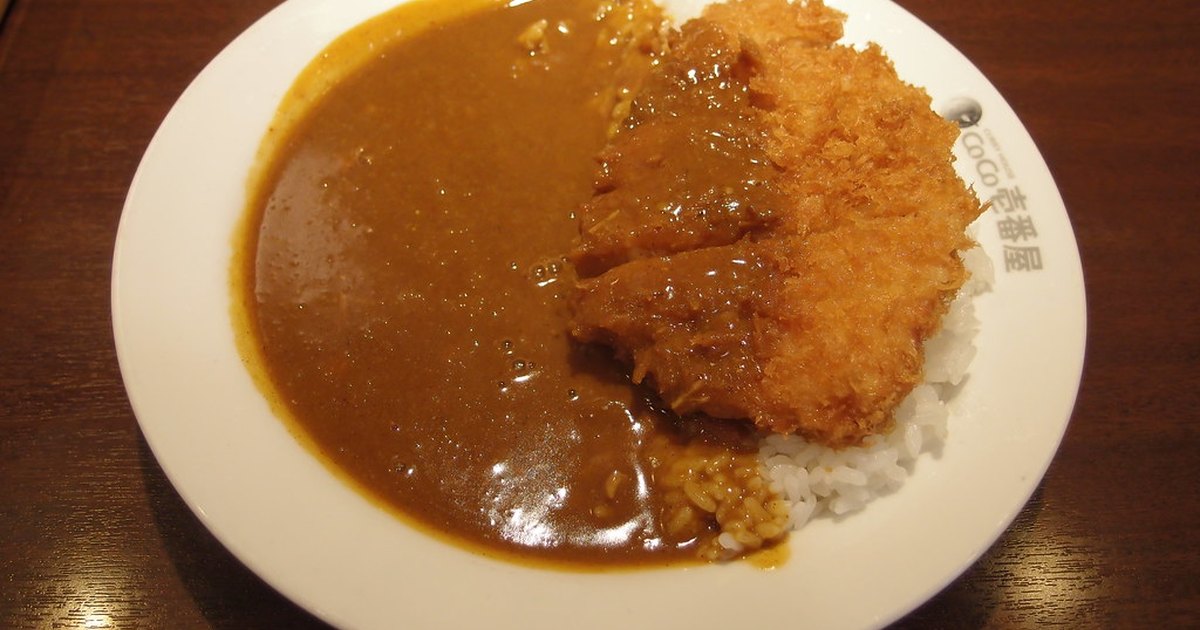
What does each price band on the ladder buy?
The math is tidy: Levels 1–5 add a flat ¥25 per level (so a Level 3 pork curry runs ¥721), the gated 6–10 band jumps to a ¥150 surcharge, 15 to ¥175, and 20 to ¥200 — meaning the entire heat spectrum from mild to maximum costs at most two coffees more than the base bowl. Budget drama, not budget damage.
How do the completion gates actually work?
Like a martial-arts belt system, and the official simulator spells it out: Levels 6–10 are "limited to those who have finished Level 5"; 15 requires a finished 10; 20 requires a finished 15 — surcharges climbing from ¥150 to ¥200. Enforcement is the honor system plus the server's judgment, but the structure is real and current — and it replaced the older "finish Level 1 before ordering 5+" rule that most English guides still quote, from an era when the scale stopped at 10. Calibration honesty for chili tourists: Japanese "hot" runs milder than Thai or Sichuan scales at the bottom, but the top of this ladder is a legitimate ordeal — Level 10 defeats most confident visitors, and 20 exists for content creators and the genuinely chili-adapted. The graceful play: order your honest level, take the tobikara spice on the side where offered, and escalate across visits like the regulars do.
Diets, languages and logistics: the 2026 facts
Why does CoCo Ichi work so well for nervous first-time Japan eaters?
Because it removes every ordering anxiety at once: menu books in nine languages with photographs, a build system where you control exactly what lands on the plate, spice that starts genuinely mild, solo counter seating everywhere, and prices printed tax-included. For travelers with children, picky companions or first-night jet lag, it's the softest possible landing into Japanese chain dining — and the curry is, honestly, the point rather than the compromise.
What changed that old guides haven't caught?
Three things our official-source check surfaced. Halal: the often-recommended halal branches are no longer findable — the official store database returned zero halal-flagged stores among 1,233 at our check, while the English site's halal PDF still dates from 2020; treat that chapter as closed unless official search says otherwise. The vegetarian lane is real: the plant-based Vege curry (¥683) is an official fixture (not at every store), backed by a 28-allergen chart updated this month and browsable on store tablets. The always-open era ended: exactly 10 of 1,233 stores run 24 hours now — check your branch's hours in the official locator. Menu books span nine languages, payments vary by store (cards and e-money widespread since 2016, QR since 2020 — carry cash backup), and four delivery platforms cover the craving-at-the-hotel scenario. Where CoCo Ichi sits in the bigger food itinerary: beside the conveyor-chain economics of our Kura Sushi guide, the noodle counters of Tokyo Station's ramen street, and the broader cheap-eats map in our Tokyo food tour.
FAQ
How does ordering at CoCo Ichibanya work?
How does the spice ladder really work in 2026?
How much does it cost?
Is CoCo Ichibanya halal?
Is there a vegetarian option?
What’s the deal with rice sizes — and the ‘Grand Mother Curry’ lore?
Are stores open 24 hours?
How do I pay — and can I get delivery?
How big is CoCo Ichibanya really?
Bottom line (2026) — CoCo Ichibanya’s spice scale now runs to Level 20, with gates at 5, 10 and 15 you must earn by finishing the previous tier. The base pork curry is ¥646 — ¥21 more in Tokyo and Osaka than most of Japan. Rice runs 150–400g, with nearly 40 toppings and a plant-based option.
Sources
Ordering system and sauce rules: the official "how to enjoy" pages, Japanese and English. Spice levels, gates and surcharges: the official topping simulator, read in raw form. Prices and regional notes: the official menu list and its 2024 pricing note. Vege curry and allergen chart: official menu pages and the allergen PDF dated August 7, 2026. Halal status: the official English halal pages (PDF dated June 2020) cross-checked against the complete official store database (zero halal flags, August 20, 2026). Store counts, 24-hour flags, payment rollouts and delivery partners: official corporate pages, releases and the store database. All read on August 20, 2026. The embedded video is the chain's own ordering guide.
Tokyo to Osaka, Tokyo to Kyushu, Tokyo to Hokkaido — day by day — plus seven places most visitors never reach.
- 12 pages, 80 photographs, every stop linked to its guide
- Every price and opening hour read from the official page
- Re-issued monthly, so it does not go stale in your inbox
Free. One email a month, plus the rare change that matters. Unsubscribe with one click in any email. By subscribing you agree to our privacy policy.