Nikko works as a day trip from Tokyo, which is more than can be said for most places people try to do in a day. About 1 hour 50 minutes each way on a direct limited express, and the shrines are a ten-minute bus ride from the station. You can leave after breakfast and be back for a late dinner.
But three things have changed recently enough that most English guides have not caught up, and all three will affect your day. The Akechidaira Ropeway — the viewpoint on every "best of Nikko" list — has been shut since January 2026 and is not due back before September 2027. The combined ticket for the shrines and temple is suspended. And the temple stops selling its own set ticket at 14:30, hours before it closes.
Here is what is actually open, what it costs, and the version of the day that works.
Nikko at a glance
| Getting there | Asakusa → Tobu-Nikko, about 1 h 50 min direct. ¥3,050 one way in normal season |
|---|---|
| Last train back | Limited express from Tobu-Nikko shows as 19:43, into Asakusa 21:35 |
| 🚨 Akechidaira Ropeway | CLOSED January 16, 2026 – August 31, 2027 · reopening planned September 2027, may be extended |
| 🚨 Combined ticket | Suspended. Buy each site separately — about ¥2,900 for the main three |
| 🚨 The 14:30 rule | The temple's set ticket stops selling at 14:30 (13:30 Nov–Mar) |
| Shrine area buses | ¥220–¥350. Loop bus roughly every 13 minutes, 08:17–17:37 |
| Up to Lake Chuzenji | ¥1,250, about 45 minutes — in normal traffic. In autumn, far longer |
| NIKKO PASS | ¥8,000 all-area (4 days) or ¥3,000 shrine-area (2 days) · foreign travelers only, buy in Tokyo |
🚨 The ropeway is closed, and it is on every list you have read
The operating company states that it suspended service after the last day of operation on January 15, 2026 for reconstruction, and that reopening is planned for September 2027. The city tourism association gives the suspension as January 16, 2026 to August 31, 2027 — about one year and seven months. The railway's own English notice says the same dates and adds a warning in its own words: "The suspension period may be extended depending on the scope of construction work."
So do not plan around a September 2027 reopening either. Treat it as closed and check before you go.
One more thing worth knowing, because it shows how this error spreads: at least one official tourism page still displays the old fares — ¥1,000 adult round trip, ¥600 one way, 09:00 to 15:30 — right alongside the closure notice. Those are historical figures. You cannot ride it at any price.
What to do instead: the free ground-level observation deck at Kegon Falls is still there, and the paid elevator takes you to the bottom of the falls. It is a different view — up at the water rather than down over the lake — but it is the one that still exists.
Getting there: the two routes, and the one that voids your pass
| Route | Fare + surcharge | Total | Time |
|---|---|---|---|
| Asakusa → Tobu-Nikko (normal season) | ¥1,400 + ¥1,650 | ¥3,050 | ~1 h 50 min direct |
| Asakusa, peak season | ¥1,400 + ¥1,850 | ¥3,250 | Same |
| Asakusa, off-peak | ¥1,400 + ¥1,450 | ¥2,850 | Same |
| Shinjuku → Tobu-Nikko (JR through-service) | ¥2,040 + ¥2,100 | ¥4,140 | ~2 hours direct |
The seasonal pricing is worth a moment. The surcharge moves ±¥200 by a published calendar while the base fare stays flat, so travel dates change your cost by up to ¥400 each way. Early August is peak season — as are most of Golden Week, the autumn weekends and the year end. June and early September are largely off-peak.
A second quirk of the Shinjuku route: it is not sold at the operator's own ticket machines, and the seasonal discount never applies to it.
Is a day trip realistic? Yes — with one line drawn
On the timetable in force since March 14, 2026, the last limited express shown out of Tobu-Nikko is 19:43, with the last arrival into Asakusa at 21:35. We would treat 19:43 as the last departure shown rather than a guaranteed daily service, because individual trains in that timetable carry their own operating-day notes and we could not tie those to specific columns.
For what one full day looks like on the ground, Mad Hatters NYC’s Where Nature and Culture Collide: My Magical Day Trip From Tokyo to Nikko starts with the 8:03 limited express from Kitasenju, spends a little over two hours at Rinno-ji and Toshogu, then rides the bus up to Kegon Falls and Lake Chuzenji, about 12 hours door to door.
🚨 The combined ticket is suspended — and the English page does not say so
The temple states it on its own Japanese page: the combined shrines-and-temple ticket "has been suspended for the time being for various reasons." No resumption date is given.
🚨 The temple's English page omits this notice entirely. It lists the individual hall fees and says nothing about the suspension. That is precisely why the error persists in English — the English source is not wrong so much as silent.
Budget for separate tickets instead.
| Site | Adult | Child | Notes |
|---|---|---|---|
| Toshogu | ¥1,600 | ¥550 | Plus Treasure Museum as a set: ¥2,400 / ¥870 |
| Toshogu Treasure Museum alone | ¥1,000 | ¥400 | The 1st floor, with a café, is free |
| Toshogu Art Museum | ¥800 | ¥400 | A separate third charge |
| Rinnoji: two main halls | ¥900 | ¥400 | Or ¥1,000 / ¥500 including the treasure hall and garden |
| Rinnoji halls individually | ¥400 / ¥550 | ¥200 / ¥250 | Main hall / mausoleum |
| Futarasan shrine garden | ¥300 | ¥100 | Precinct itself is free |
That comes to roughly ¥2,900 per adult for Toshogu, the temple's two main halls and the shrine garden — the standard three.
The two clock times that decide your morning
- 🚨 The temple stops selling its combined ticket at 14:30 from April to October, and at 13:30 from November to March. The gates close at 17:00 and 16:00 respectively — so the ticket window shuts two and a half hours before the site does. An early-afternoon arrival can find everything open and the ticket unavailable. We have not seen this stated anywhere in English.
- The temple opens at 08:00, a full hour before Toshogu's 09:00. So an early train is not wasted time — start at the temple and be at Toshogu's gate when it opens.
- Both sites close reception 30 minutes before the gates, and Toshogu runs 09:00–17:00 from April to October, 09:00–16:00 from November to March.
Nikko City's own published request is blunter than most tourism advice: it asks visitors to travel off-peak, avoiding Saturdays, Sundays and public holidays between 09:00 and 15:00. That is not a restriction — it is the city telling you when its own roads stop working.
🚨 Irohazaka and the traffic, measured
If you are going up to the lake, this section is the one that matters, because the numbers are published and they are worse than the guidebooks imply.
On the busiest day of autumn 2024, it took 168 minutes.
On the busiest day of autumn 2025, it averaged 53 minutes in the morning and 127 minutes across the whole day.
The mechanism is stated openly: there are ten car parks around the lake holding 749 vehicles, and when they fill, the queue backs down onto the mountain road.
On autumn 2026 specifically, we are going to decline to predict. As of August 5, 2026 neither the prefecture, the city nor the bus operator has announced any traffic measures — historically these land in late September or late October. And last autumn's headline measure was closing the Akechidaira car park, which is moot now that the ropeway it served is shut. Autumn 2026 will not look like autumn 2025. Check before you travel.
Buses, passes, and the change-machine advice that is now wrong
Japanese, but it walks through NIKKO MaaS on screen — the digital pass that replaced the paper-and-coins routine most English guides still describe. Watch the phone, not the narration.
| From Nikko Station to | Fare | Time |
|---|---|---|
| Shinkyo (the shrine area) | ¥220 | A few minutes |
| Nishi-sando (temple side) | ¥350 | A few minutes |
| Chuzenji-onsen (the lake) | ¥1,250 | 45 min in clear traffic |
| Ryuzu Falls | ¥1,600 | About 1 hour |
| Yumoto Onsen | ¥1,950 | 77–85 min |
The World Heritage loop bus is the one you will actually use: 45 departures a day from JR Nikko, 08:17 to 17:37, roughly every 13 minutes, a full loop in about 30 minutes.
That matters because "Japanese buses need exact change — use the change machine before your stop" is standard advice in every guide, and here it is out of date. Transit IC cards, contactless cards, QR and cash all work.
Two exceptions that run the other way: the small Green Slow Mobility shuttle is completely cashless and takes no cash at all, and the Mt Nantai climbing fee is cash only — ¥1,000 for adults, with the gate open 25 April to 11 November and reception only 06:00 to noon.
On passes: the ALL AREA pass at ¥8,000 for four days covers the Asakusa round trip, every Tobu bus in Nikko, the Lake Chuzenji cruise and the low-emission bus into the car-free valley. Since the bus to Yumoto alone is ¥1,950 each way, it earns its keep the moment you go up the mountain. The world heritage area pass at ¥3,000 for two days covers only the buses inside the shrine area — not the lake, which is the trap. Both are sold only to foreign travelers, and only in Tokyo before you set off. Neither includes the limited express surcharge or any admission.
If you skip the rail passes, the local bus passes are bought on arrival at the station tourist center — but note it is open 08:20 to 16:20, so a late arrival cannot buy one. And a detail buried in a map footnote: the Hangetsusan line and the line to the boat pier are not covered by any bus pass, which catches people heading for the lake cruise.
At the lake: what is open, what it costs
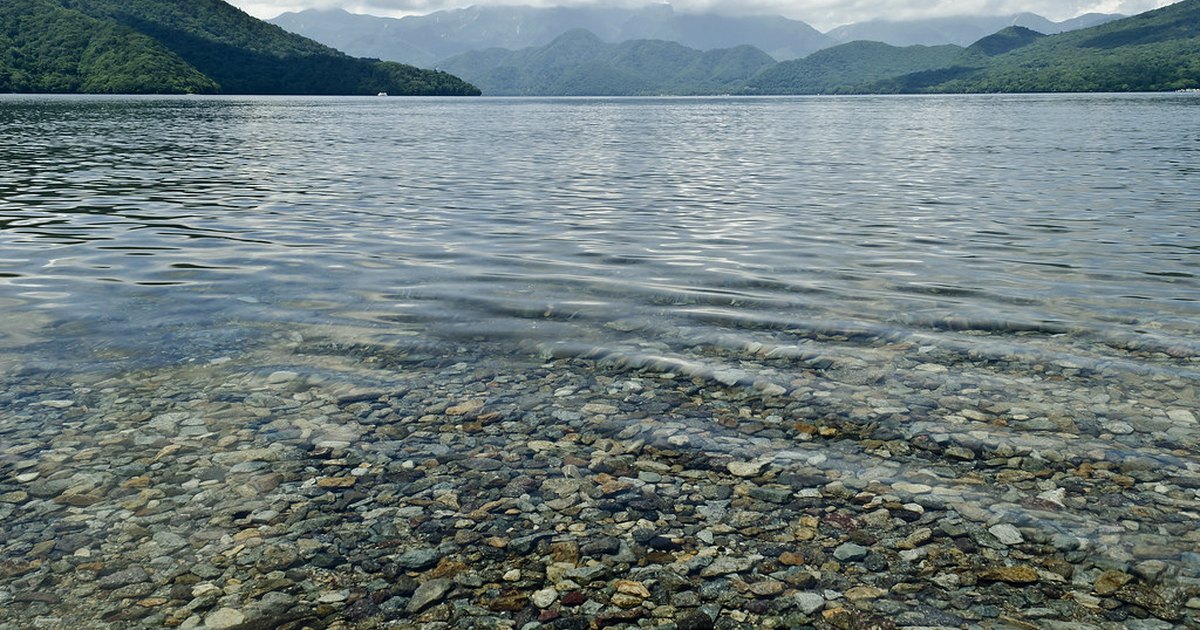
- Kegon Falls elevator: ¥600 adult, ¥400 elementary, round trip. No reservation, first come first served, open 08:00–17:00 from March to November and 09:00–16:30 in winter, with no closing days. It drops 100 meters through the bedrock in about a minute. The ground-level observation deck is free and has a ramp, though the ramp is steep enough that a helper is advised.
- 🚨 The lake cruise changed its fares on April 17, 2026 and now has two tiers. The hop-on hop-off loop pass is ¥2,000 off-peak and ¥2,200 in peak season — and peak covers mid-July through August and the autumn foliage window, so most visitors pay the higher rate. Boats run daily from mid-April to November 30, weather permitting.
- The valley beyond Akanuma is closed to private vehicles — and has been since 1993, under a national parks designation that covers cars, motorcycles and bicycles. The low-emission bus is the way in: ¥500 flat, or ¥450 with a Tobu pass, running April 25 to November 30, 2026.
Also dated: helicopter material lifts on August 18–20, 2026, when walkers and traffic on the main road will be held by marshals, and part of the Sanbonmatsu car park is unusable August 18–25.
On bears: there is no area closure and no ban. The Ministry of the Environment runs a sightings log and standing advice rather than restrictions, and its wording is worth carrying: sightings now happen in daylight regardless of time or weather, and the single most important thing is to wear a bear bell so you never surprise one. Avoid dawn and dusk, and do not walk alone.
What is under restoration — and what is not
This is the section where we are going to be less certain than we would like, and say so.
The preservation body's published project for Toshogu — its "Reiwa restoration" — ran from April 2020 to March 2026 and covered seven structures: the east and west transparent fences, the rear gate, the lower storehouse, a fence, the bell house and the emergency gate. Read that list again, because of what is not on it: the Yomeimon, the Sleeping Cat, the three monkeys, the five-story pagoda, the main hall and the front gate were never in scope. The famous things were not being wrapped.
(Coming up on the shinkansen? Our Tokyo Wide Pass guide covers the pass that includes the Utsunomiya leg and connects to the Tobu route into Nikko.)
(Timing an autumn visit? Our Japan in October guide uses the JMA’s maple map to show that October color is a Hokkaido and high-altitude matter, with the lowland cities turning only at the end of November.)
(For a night near the shrines: our Nikko Kanaya Hotel guide covers a hotel whose FAQ puts Nikko Toshogu, Futarasan Shrine and Rinnoji within about a 15-minute walk.)
Frequently asked questions
Is Nikko doable as a day trip from Tokyo?
How much does the train from Tokyo cost?
Is the NIKKO PASS worth buying?
Can I still go up the Akechidaira Ropeway for the view?
What does it cost to see the shrines and temples?
What time should I arrive?
How bad is the traffic to Lake Chuzenji really?
Do I need cash for the buses?
Bottom line (2026) — Nikko works as a day trip from Tokyo — about 1 hour 50 minutes each way. But the Akechidaira Ropeway is closed until at least August 2027, the combined shrine ticket is suspended, and the temple’s set ticket stops selling at 14:30. The paper-and-coins bus routine has been replaced by NIKKO MaaS.
Sources & what we deliberately did not state
Rail fares and the seasonal calendar come from the railway's own fare tables and its pass pages; admission and hours from each shrine's and temple's own site; bus fares, the farebox change and the loop-bus frequency from the bus operator; congestion measurements and the one-way road rule from Tochigi Prefecture; the trail closure and the bear guidance from the Ministry of the Environment; the off-peak request from Nikko City. All read on August 5, 2026. The ropeway closure was checked against three independent official sources rather than taken from one.
Deliberately not stated: whether scaffolding is currently up at Toshogu; the Shinkyo bridge crossing fee (the ticket system is behind a security block and the bridge's own site has not been updated since 2010); JR fares from Utsunomiya, because that operator blocks automated access entirely; autumn 2026 traffic measures, because none have been announced; and the exact 2026 start date of the lake cruise season, because the operator publishes only "mid-April". Two figures here — the pagoda interior supplement and the shrine garden fee — rest on the city tourism association rather than the institutions' own pages, and we have flagged them rather than presenting them as equally solid. Prices, hours and closures change. Where a number matters to your plan, check the official page on the day.
Some links on this page may be affiliate links, which means we may earn a commission if you book or buy through them — at no extra cost to you. See our affiliate disclosure.
Planning more of Japan? Our 7-day Japan itinerary shows where a Nikko day fits, Hakone is the other great mountain day trip from Tokyo, when to visit covers the seasons, and the JR Pass guide explains why it does not help you get here.
Tokyo to Osaka, Tokyo to Kyushu, Tokyo to Hokkaido — day by day — plus seven places most visitors never reach.
- 12 pages, 80 photographs, every stop linked to its guide
- Every price and opening hour read from the official page
- Re-issued monthly, so it does not go stale in your inbox
Free. One email a month, plus the rare change that matters. Unsubscribe with one click in any email. By subscribing you agree to our privacy policy.