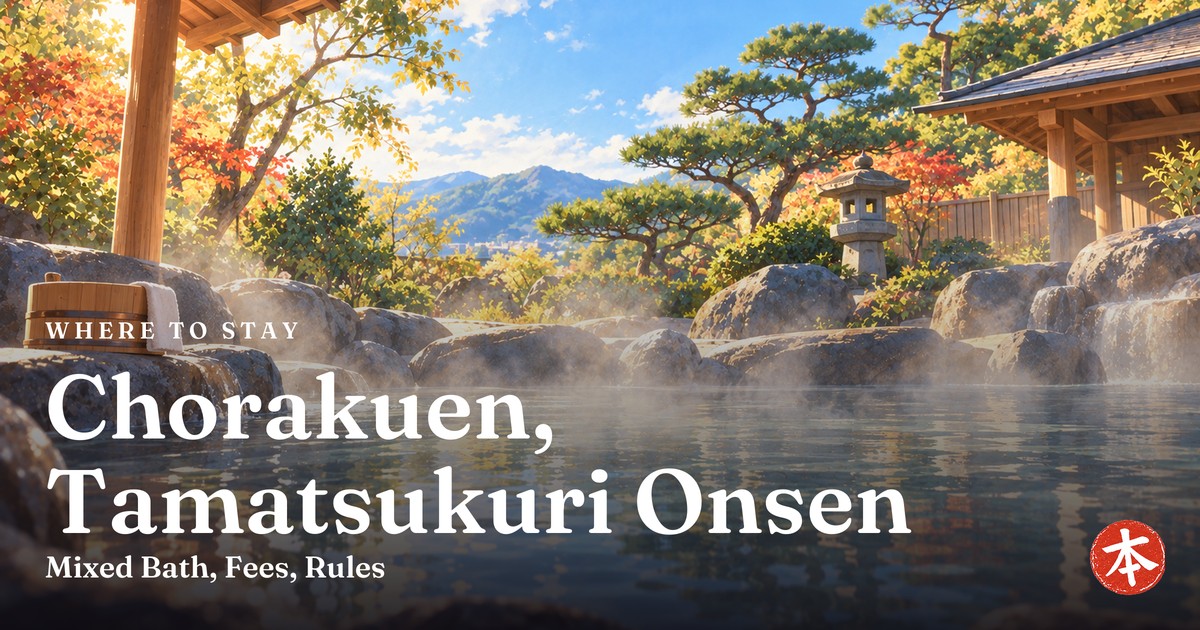
Chorakuen, the “Yunosuke’s inn,” has stood at the center of Tamatsukuri Onsen outside Matsue since 1868, run by the descendants of the Edo-period keeper of the springs, and it owns the thing every other inn in the valley pipes in: the source itself. Its best-known feature is Ryugu-no-Yu, a 395-square-meter mixed-gender open-air bath from 1909 that the inn calls Japan’s largest. The rules around it are worth knowing before you book: check-in 15:00 and no later than 18:00, checkout 10:00, cancellation 30 percent from three days out, no day-use bathing at all, bath wear provided for the mixed bath, meals in the dining rooms only, and a building that went fully non-smoking in February 2026.
Everything below is from the inn’s official English page and its Japanese FAQ and access page. Room rates are not here; the fees, hours and rules the inn prints are.
Chorakuen at a glance
| Item | Official rule |
|---|---|
| Check-in / check-out | 15:00 (18:00 at the latest) / 10:00. |
| Cancellation | 2-3 days before 30%, day before 50%, same day 100%, no-show 100%; by email procedure or phone only. |
| Day use | None. No day-use bathing, no day-use lunch. |
| Mixed open-air bath (Ryugu-no-Yu) | 5:30-9:30 and 15:00-23:30; bath wear provided; women’s changing room has a private bath. |
| Separate baths | Kasen (women), Keisen (men), indoor baths swap by gender: 5:30-9:30 and 15:00-24:00. |
| Private bath (Seisen) | 45 minutes, on the hour 16:00-21:00, reservation and extra charge. |
| Meals | Dining rooms only; private dining room 3,300 yen per room. |
| Smoking | Entire building non-smoking since Feb 1, 2026; booth by the front desk and outdoor spots. |
| Parking / shuttle | Free parking; courtesy bus to and from JR Tamatsukuri-Onsen Station by request the day before. |
| Rooms | 62 Japanese rooms (2 with private open-air baths) + 5 Japanese-Western rooms; hot-spring water in every room bath. |
| Cards | JCB, Visa, Amex, UC, Mastercard, Diners. |
What is Chorakuen at Tamatsukuri Onsen, and why does the source matter?
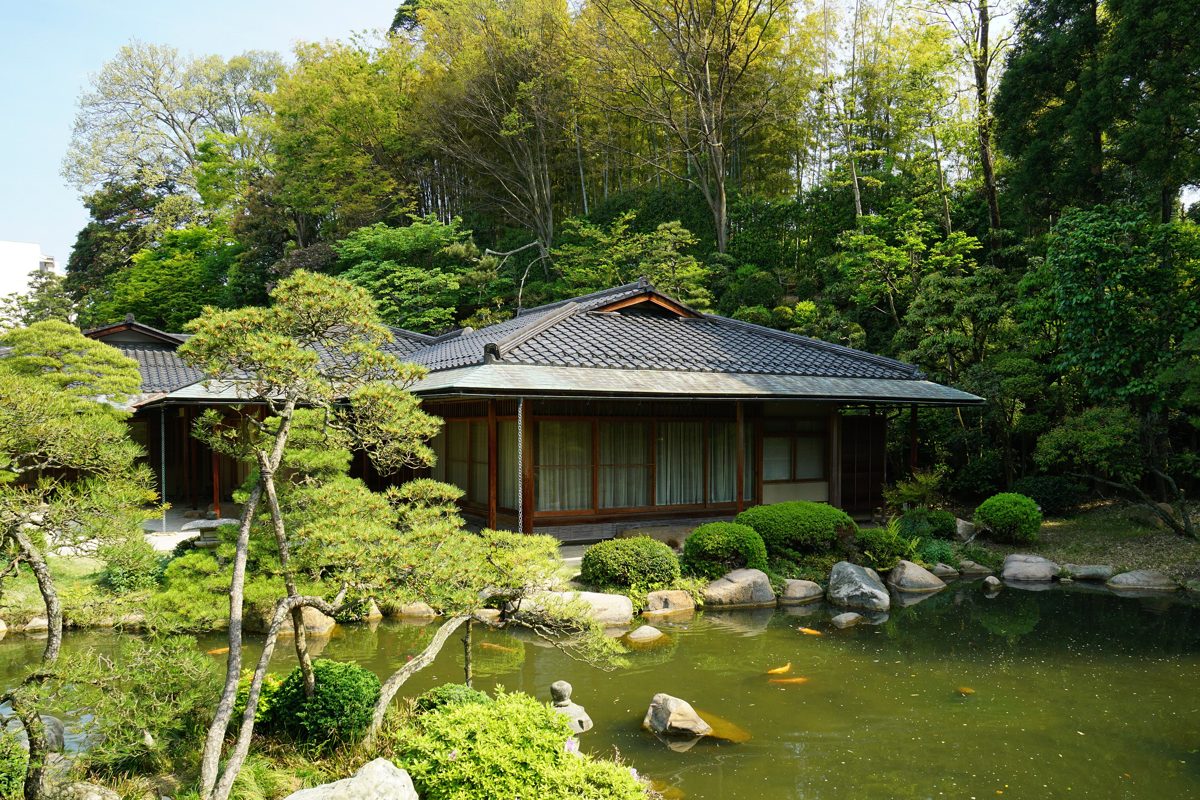
An inn of 62 Japanese-style rooms and five Japanese-Western rooms set in a 33,000-square-meter garden at 323 Tamatsukuri, Tamayu-cho, Matsue, on the Tamayu River where the hot-spring town lines the banks. The family that runs it descends from Yunosuke, the Edo-period manager of the Tamatsukuri springs, and the inn holds the source: the water in the big bath, the separate baths, every in-room bath and, the inn says, even the taps is hot-spring water flowing straight from it, with water added in the private baths only because the source is too hot. The spring is a sulfate-chloride water that the Izumo Fudoki of 733 credited with beautiful skin after one soak and cured ailments after two, a claim the inn repeats as the origin of the “divine hot spring” name. Our ryokan guide explains how an inn like this differs from a hotel, and Izumo Taisha, the shrine most guests are here for, is west along the lake.
Which room should I book?
The standard rooms in the Taisenkaku and Gyokusenkaku wings are pure Japanese: 10 to 14.5 tatami mats, futon, a wide veranda, an indoor bath and a washlet toilet, for one to four people, looking onto the garden or the town. Corner rooms Souseika and Oukouka put two semi-double beds in a 10-mat room. The villas sleep two: Kotobuki (10 plus 8 mats) and Tokiwa (8 plus 6) with private gardens and open-air baths, Washuntei with an indoor rock bath, Chishin-an with a Showa-retro open-air bath, and the renovated 90-year-old Bihada Premium annex Aioi with an open-air bath, a footbath, a powder room and a skin-care-themed menu. Two universal rooms have three single beds, handrails and a ramped entrance, and Hakuginka on the fourth floor has four beds, wheelchair access and a private bar counter with wine and chilled sake. Rooms come with a TV, air conditioning, an empty refrigerator, a safe and a phone; Japanese tea and cakes are set out on arrival.
Check-in at 15:00, the 18:00 cutoff, and checkout at 10:00
Why is 18:00 the latest check-in?
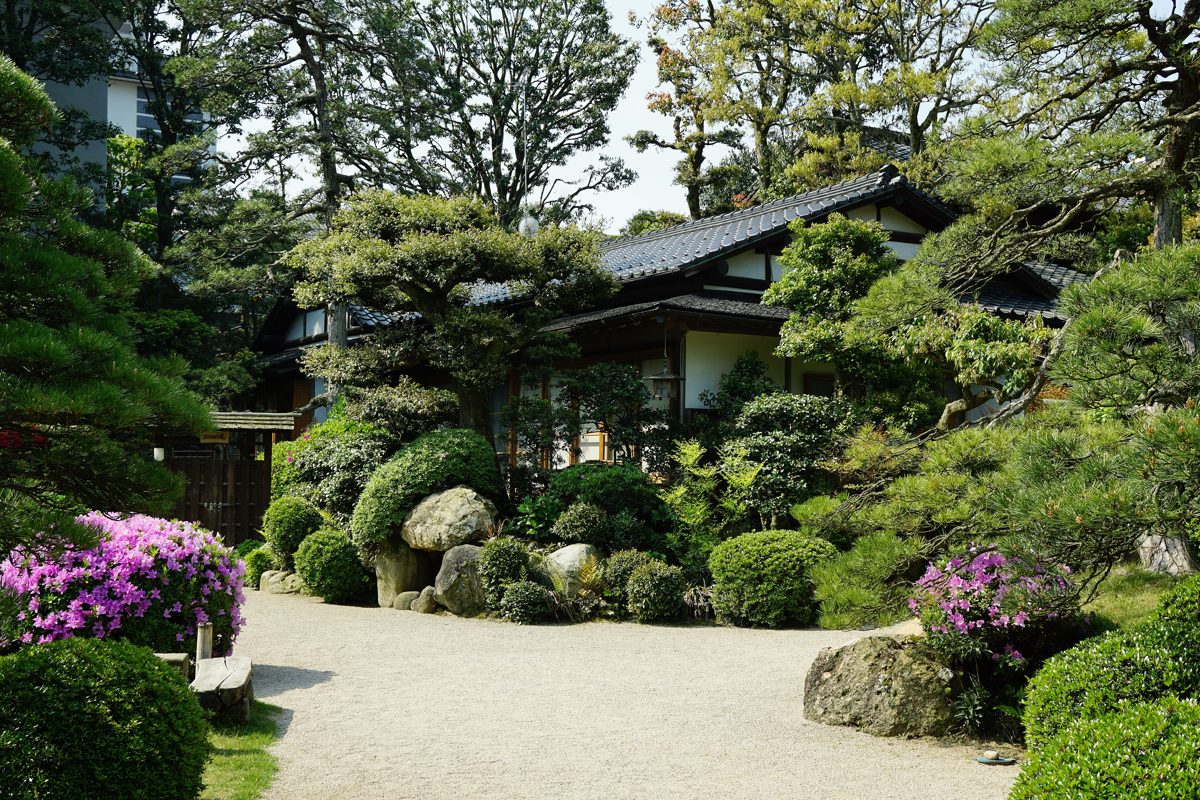
Because dinner is a course meal served in the dining rooms, the inn lists 15:00 as check-in and 18:00 as the latest, and its courtesy bus from the station runs only between 15:30 and 18:30. Checkout is 10:00, earlier than a city hotel, with the bus back to the station between 7:30 and 10:30. If a train delay pushes you past six, call the inn.
How do I cancel?
By the procedure in the confirmation email or by telephone; the inn will not treat other messages as cancellations, asks that the person who booked make the call, and suggests noting the staff member’s name. The fees: 30 percent two to three days before check-in, 50 percent the day before, 100 percent on the day and for a no-show. Some plans carry their own charges.
The Tamatsukuri Onsen baths: mixed, separate and private
What happens in the mixed bath?
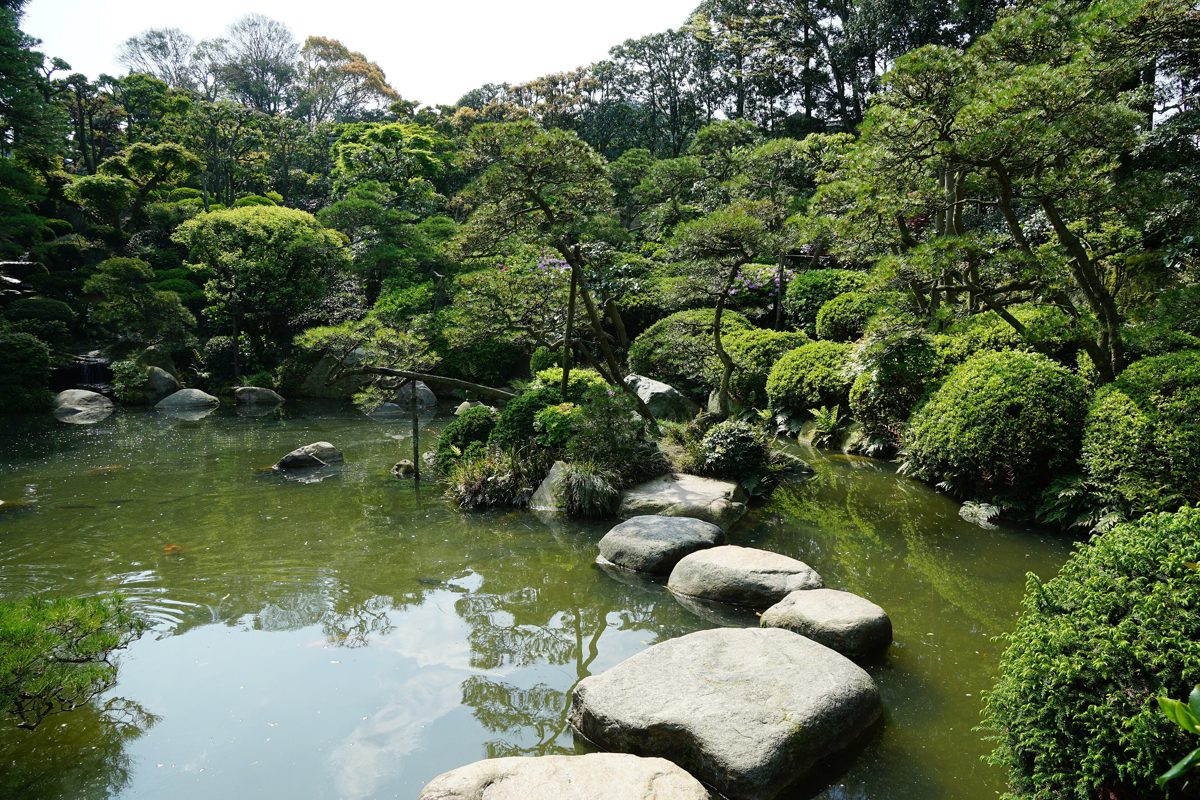
Ryugu-no-Yu is the point of the inn: a 395-square-meter open-air bath finished in 1909, fed directly from the source, never heated or diluted, and shared by men and women. The changing rooms hand out bath wear, paper trunks for men and a wrap cloth for women, so nobody bathes naked, and the women’s changing room has a private bath of its own for anyone who would rather not go out at all. The inn notes that after dark the steam hides most of the bath. Hours are 5:30 to 9:30 and 15:00 to 23:30. Our onsen rules guide explains why mixed bathing survives at inns like this and not at new ones.
What if I want to bathe alone or with my own sex?
Kasen is a women-only open-air bath and Keisen the men’s, and the indoor baths swap between men and women, all open 5:30 to 9:30 and 15:00 to 24:00. The private bath Seisen is booked in 45-minute slots starting on the hour from 16:00 to 21:00, with a 15-minute cleaning gap between, for an additional charge the site does not state. The special rooms and villas have their own baths fed from the source. Tattoos are not mentioned anywhere on the site, so ask; our tattoo and onsen guide covers how.
Can I come for the day?
No. The inn offers no day-use bathing and no day-use lunch, and says so as a matter of policy: it wants every guest to spend an unhurried full day. Every bath, including Ryugu-no-Yu, is for staying guests.
Meals: kaiseki in the dining rooms, crab in winter
Can I eat in my room?
No. Meals are not served in guest rooms. Dinner and breakfast are in one of the dining venues, Ran, Hana or Furusato, the tatami room Wakakusa or the banquet hall, chosen by plan, menu and party size; the banquet and private rooms are set with chairs and tables, with Wakakusa the tatami exception. A private dining room costs 3,300 yen per room including tax and is limited, so ask when booking.
What is on the menu?
A monthly changing kaiseki of San-in produce: Matsuba crab from November to March (with a whole-crab course, an all-you-can-eat crab course and a branded-crab course in winter), rosy seabass, Shimane wagyu, Lake Shinji shijimi clams and handmade Izumo soba, cooked with the inn’s own spring water and, the inn says, as little chemical seasoning as possible; the prefecture certifies it as a Shimane local-cuisine restaurant. Breakfast is Japanese, with clam red-miso soup, medicinal rice porridge, grilled fish and the local ago-no-yaki fish cake. A children’s lunch of udon, fried shrimp, chawanmushi, karaage, hamburger steak, rice balls and pudding is available. Allergies and dislikes are handled with advance notice, and extra dishes must be ordered at booking. For crab season timing, see Japan in November.
Smoking, Wi-Fi, parking and getting there
Is smoking allowed anywhere?
Since February 1, 2026, the whole building is non-smoking, guest rooms and dining rooms included. Smoking is confined to the booth beside the front desk on the first floor and outdoor spots in the Japanese garden and near the Ryugu-no-Yu side entrance. There are, by design, no game corner and no bar; the inn says it wants guests to talk to each other instead.
How do I get there?
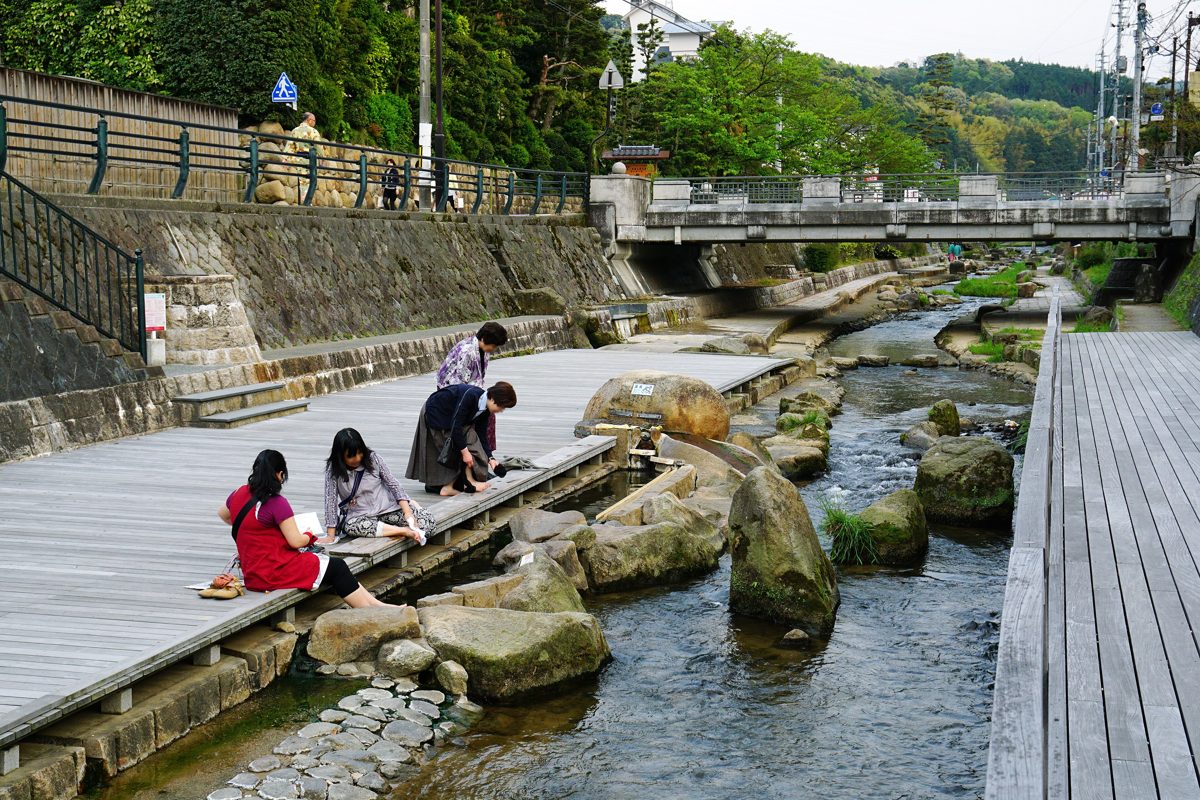
From Tokyo: Haneda to Izumo Airport in about 85 minutes, the airport bus to Matsue Station in about 25, and the JR San-in line to Tamatsukuri-Onsen Station in 9. From Osaka: the Nozomi to Okayama in 51 minutes and the Yakumo limited express to Tamatsukuri-Onsen in 162, or about 200 minutes by car to the Matsue-Tamatsukuri interchange. From the station, the inn’s courtesy bus runs station-to-inn between 15:30 and 18:30 and inn-to-station between 7:30 and 10:30, by request the day before with your time and head count; the Japanese access page also shows a shuttle timetable linking the station, the inn and the Tamatsukuri Kokusai Hotel. Drivers should know that the riverside street through the onsen town is one-way from 15:00 to 24:00, that some car navigation systems point to the back of the building, and that parking is free if you tell the inn how many cars to expect. Our Hiroshima map covers the other end of a San-in and San-yo loop.
Wi-Fi, cards and gift vouchers
The English page lists Wi-Fi in the first-floor lobby and the Japanese FAQ adds all guest rooms; ask the front desk for the connection. Cards accepted are JCB, Visa, American Express, UC, Mastercard and Diners. JTB Nice Gift vouchers are accepted as they are, JTB Nice Trip vouchers are not (exchange them for accommodation coupons at a travel agency first), and JAL coupons work only on bookings made through the inn’s site or by phone. Cherry blossoms along the Tamayu River usually run from about March 25 to April 10, and the inn says snow rarely settles on the plain in winter.
Who Chorakuen is for
Travelers who want the source of one of Japan’s oldest recorded springs, a genuinely large mixed bath with the modesty problem solved by bath wear, and a full kaiseki inn stay, and who can arrive by 18:00 and leave by 10:00. Not for a day-trip dip, which the inn does not offer, and not for anyone who wants a bar after dinner.
Frequently asked questions
What time is check-in and check-out at Chorakuen?
What is the cancellation policy?
Can I visit just for the bath?
How does the mixed-gender bath work?
Are meals served in the room?
Is smoking allowed?
How do I get there, and is there a shuttle?
What are the rooms like?
Bottom line (2026). Check in from 15:00 and by 18:00, out by 10:00. Cancellation is 30 percent from three days out, 50 the day before, 100 on the day, by email procedure or phone. No day-use bathing. The mixed bath runs 5:30-9:30 and 15:00-23:30 with bath wear provided. Meals are in the dining rooms; a private room is 3,300 yen. Non-smoking throughout since February 2026. Free parking and a station shuttle by request. As of September 18, 2026.
Sources
Rules and figures are from Chorakuen’s official English page, its Japanese FAQ and its access page, read on September 18, 2026. Rates and rules change; confirm on the official site before you book.
Some links on this page may be affiliate links, which means we may earn a commission if you book or buy through them — at no extra cost to you. See our affiliate disclosure.
Tokyo to Osaka, Tokyo to Kyushu, Tokyo to Hokkaido — day by day — plus seven places most visitors never reach.
- 12 pages, 80 photographs, every stop linked to its guide
- Every price and opening hour read from the official page
- Re-issued monthly, so it does not go stale in your inbox
Free. One email a month, plus the rare change that matters. Unsubscribe with one click in any email. By subscribing you agree to our privacy policy.