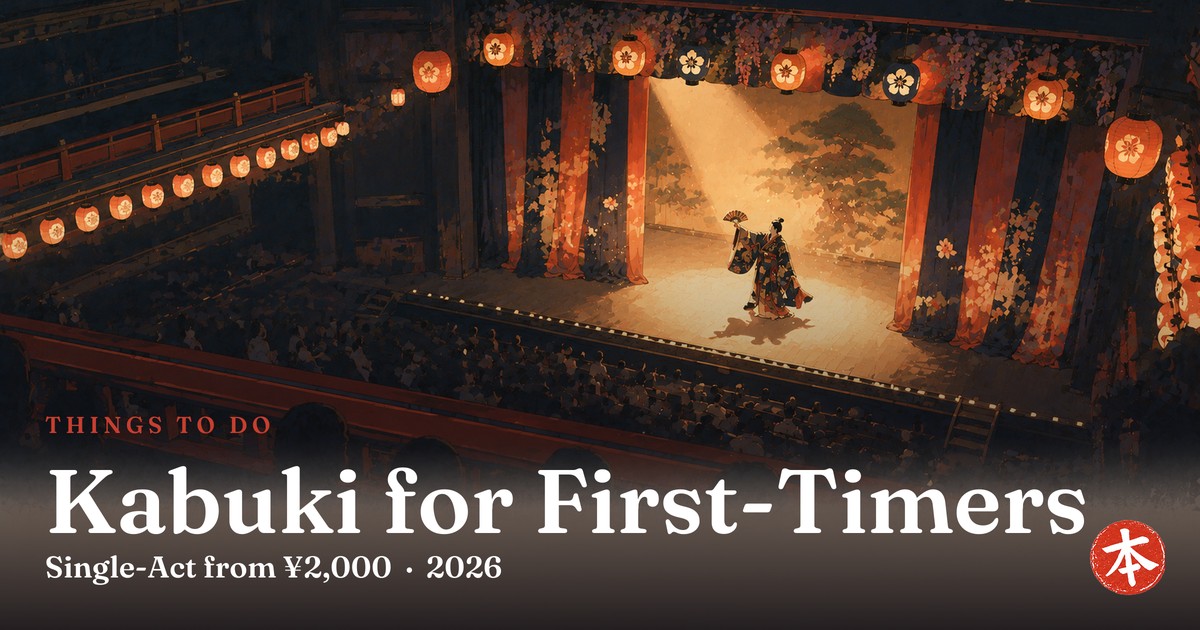
Most visitors skip kabuki for the same two reasons: it sounds like a four-hour commitment in a language they don't speak, and the tickets look expensive. Both problems have the same solution, and almost nobody outside Japan knows about it — single-act tickets, sold per act rather than per program, from around ¥2,000, with an English captioning device for ¥1,000 more.
The catch is that they're deliberately awkward to buy: a separate website that your regular ticket account doesn't work on, a separate entrance, and a rule about not being able to leave once you've scanned in. Here's the whole system.
Kabuki at a glance
| Full program | Roughly ¥4,500–17,000 by seat grade · about 4 hours per part in two-part months |
|---|---|
| Single act (4th floor) | ¥2,000–3,500 (Aug 2026, varies per act) · 30 min to 2 hours |
| Reserved single-act | From 12:00 noon the day before · dedicated site only · card only · ~70 seats |
| Unreserved single-act | Same-day from 10:00 at a dedicated window · cash only · ~20 seats · 1 per person |
| English | Captioning device ¥1,500 full / ¥1,000 single act — cash only · Kabukiza only |
| Dress code | None (official). No photography, phones silent, hats off |
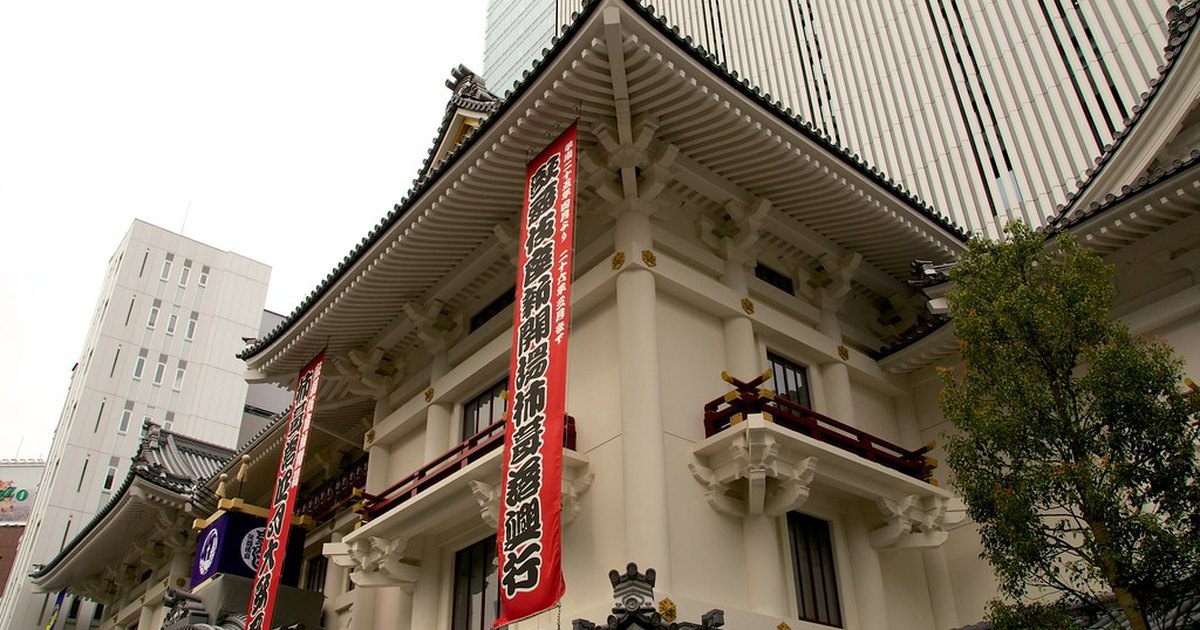
| Access | Higashi-Ginza Station Exit 3, direct — single-act holders use a separate side entrance |
The single-act system, decoded
The Kabukiza sells the fourth floor by the act. Two flavours, and they work completely differently. Reserved seats (about 70) go on sale at 12:00 noon the day before, online only, on a dedicated single-act site — your regular Shochiku ticket account does not work there, which is exactly where most people get stuck. Card payment only, up to four tickets, plus a ¥110 system fee per ticket. Unreserved seats (about 20) are sold on the day from 10:00 at a dedicated window, cash only, one per person per act.
Both are strictly non-refundable and non-changeable. And note the fourth floor's physical realities, which the theater states openly: seats are closer together than the lower floors, the front row has a handrail in the sightline, and it's the furthest point from the stage — parts of the stage and the hanamichi walkway may not be visible. You're trading the view for the price and the flexibility.
Three rules that catch people out
② Once you scan in, you can't leave. The official wording is explicit: after your QR code is scanned you may not exit the building — if you genuinely need to, you must ask staff for a re-entry pass. Eat and use the bathroom before you scan.
③ Acts clear the house completely. Every act ends with everyone leaving the seating area, even if you hold tickets for the next one — and with unreserved seats you cannot hold your seat between acts (leaving belongings gets them collected as lost property).
Making it understandable
The English captioning device is the difference between watching a beautiful thing you don't follow and actually enjoying a play. It costs ¥1,500 for a full program or ¥1,000 for a single act, cash only, and it's picked up at a window — the fourth floor has its own. One honest caveat straight from the official pages: the English audio guide is described as "brief description and synopsis only", so it's a lighter product than the detailed Japanese commentary. English synopses also appear in the back of the paid program booklets sold at the theater.
Worth knowing: the captioning service is a Kabukiza thing. Other kabuki venues may not offer it — one theater's official listing states plainly that no English guide is available. If understanding the plot matters to you, the Kabukiza is the venue.
For a first-hand night at the theater, Shaopeng’s At Kabukiza: A Time-Traveling Experience to Edo Japan weighs the English audio guide against the printed program notes for following the plays, from a seat near the hanamichi.
Which act should a first-timer pick?
Pick by length and price rather than by title. A 60-to-90-minute act in the ¥2,000–3,000 range is the sweet spot: long enough to see the costumes, the stylized poses and at least one dramatic reveal, short enough that you leave wanting more rather than checking the time. Dance pieces are the most immediately legible to newcomers — you don't need the plot to enjoy the movement and the music. And check the schedule the day you go: the theater repeatedly warns that curtain times can change, and months alternate between two-part and three-part formats with rest days that vary each month.
Practicalities
- Getting there: the theater connects directly to Exit 3 of Higashi-Ginza Station (Hibiya and Asakusa lines) — no walking outside, useful in rain or August heat. It sits in Ginza, walkable from the Tokyo Station area.
- Cash matters here. Unreserved tickets, the captioning device and some services are cash-only — an odd holdout in an increasingly cashless city.
- Eating: the theater has restaurants and a famous bento culture, and you may eat at your seat during intermissions of a full program — but remember, single-act holders can't reach those floors. Eat before, or plan a Ginza dinner after (street food guide for the casual end).
- Children: from age four they need their own ticket.
- Pairing: kabuki slots neatly into a Ginza afternoon in a 7-day Tokyo itinerary, and pairs thematically with a tea ceremony if you're collecting traditional experiences.
FAQ
How much does kabuki cost in Tokyo?
How do I buy single-act kabuki tickets?
Is kabuki understandable if I don’t speak Japanese?
How long is a kabuki performance?
Is there a dress code for kabuki?
Where is the Kabukiza and how do I get in?
Bottom line (2026) — You do not need four hours or ¥16,000 to see kabuki: the Kabukiza sells its fourth floor by the act, with single-act tickets from around ¥2,000, going on sale from noon the day before. They use a separate entrance, are sold on a site nobody links to, and once you scan in you cannot leave.
Sources
Shochiku and Kabukiza official pages checked August 4, 2026: the single-act ticket pages and dedicated sales site (sale timing, payment methods, seat counts, purchase limits, the ¥110 system fee, no-refund policy), the theater's ticket and service pages (grade pricing for the August 2026 program, captioning device fees and cash-only rule, the English audio guide description), the visitor manners pages (no dress code, photography ban, age-four ticket rule) and the venue information pages (Exit 3 direct access, separate single-act entrance, fourth-floor seating caveats, the re-entry pass rule). Deliberately not stated: upgrade-seat pricing, opera-glass rental fees and whether overseas-issued cards are accepted — none are published officially. Single-act prices change monthly; curtain times can change on the day.
Tokyo to Osaka, Tokyo to Kyushu, Tokyo to Hokkaido — day by day — plus seven places most visitors never reach.
- 12 pages, 80 photographs, every stop linked to its guide
- Every price and opening hour read from the official page
- Re-issued monthly, so it does not go stale in your inbox
Free. One email a month, plus the rare change that matters. Unsubscribe with one click in any email. By subscribing you agree to our privacy policy.