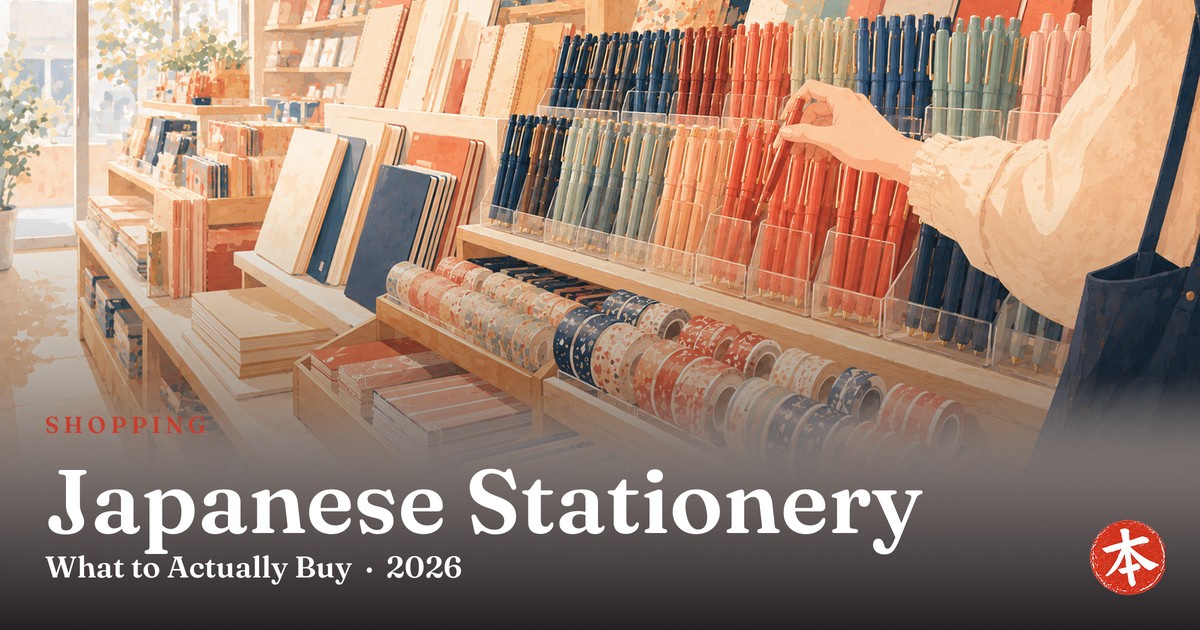
Ask people what they regret not buying more of in Japan and the answer is rarely electronics or clothes. It's pens. Japanese stationery occupies a strange position in world retail: objectively the best in several categories, obsessively engineered, and priced like disposable commodities because that's what they are domestically. A pen that Japanese office workers treat as a throwaway sells abroad at import markup, if it's sold at all.
This guide covers why the quality gap exists, where to shop at each budget level, and — the part most guides get wrong — what's actually worth the space in your luggage.
Where to shop, by budget
| ¥100 shops | Daiso, Seria — volume buying, gifts for coworkers, surprisingly capable basics. Start here if you want quantity |
|---|---|
| Variety stores | Loft, Tokyu Hands — the best range-to-effort ratio. Whole floors of stationery, curated, English-friendly signage |
| Specialists | Dedicated stationery shops (Ginza, Shinjuku) — fountain pens, fine paper, ink, the deep inventory. Go if you care about writing instruments |
| Department stores | Stationery floors — gift-quality, beautiful packaging, tax-free counters on site |
| Late night | Don Quijote — chaotic selection, open absurdly late, fine for last-minute grabs |
Why the quality gap actually exists
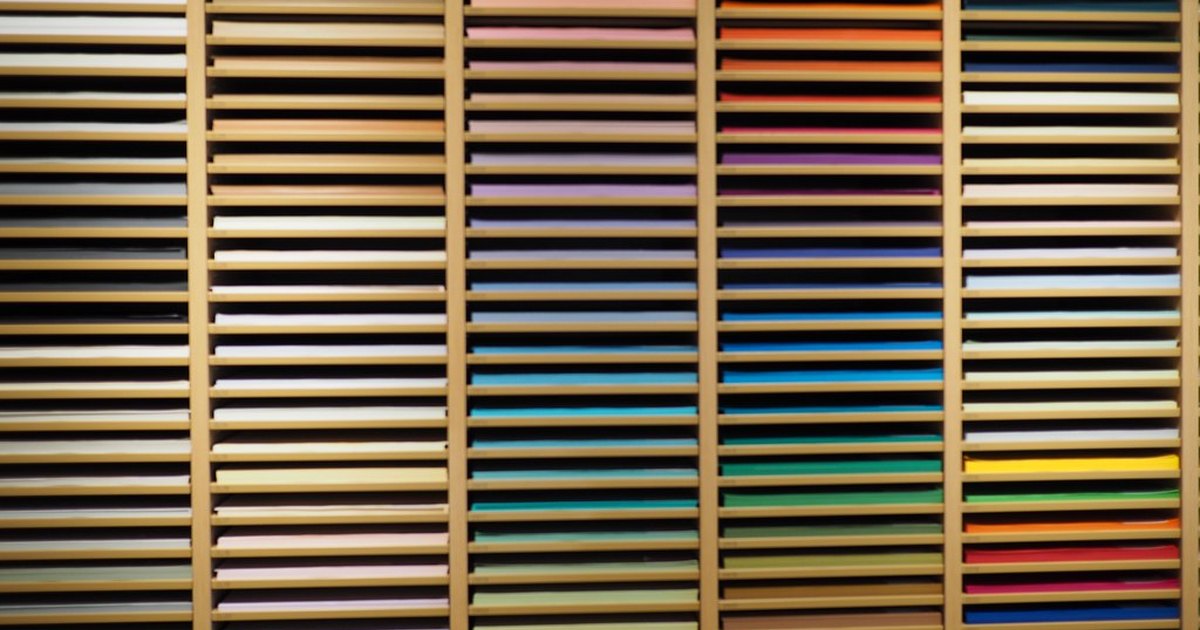
It's not mystique, it's three concrete things. Paper: Japanese notebook stock is engineered to handle fountain pen ink without bleeding through or feathering — the reason writers overseas import it by the case. Pens: the domestic market settled on 0.28–0.38 mm gel and needle tips as normal, a fineness that barely exists in Western retail, and refined them across decades of competition. Market pressure: Japanese consumers notice if a cap clicks wrong, so even ¥100 products get real design attention. Combine those and you get tools that outclass their price bracket internationally, sold at domestic commodity prices.
What to actually buy
- Gel pens in fine tips — the single highest value-per-gram item in this country. Buy more than you think; they're the gift everyone back home actually appreciates.
- Fountain-pen-friendly notebooks — thin, smooth paper that doesn't bleed. Weightless, flat-packing, unavailable at this price abroad.
- Washi masking tape — endless patterns, seasonal designs, weighs nothing, and makes an excellent small gift.
- Mechanical pencils with lead-rotation mechanisms — the kind that keep the point sharp automatically. A genuinely Japanese piece of over-engineering.
- Seasonal and limited editions — sakura-season inks, regional designs, collaborations that never leave the domestic market. This is the stuff you cannot buy at home at any price.
- Skip: bulky desk items, anything orderable from home, and "Japan-themed" souvenir pens made for tourists rather than for writing.
Two practical notes
Tax-free needs consolidation. Stationery purchases are small, so hitting the tax-free minimum usually means buying everything at one larger store rather than spreading it across shops — see our tax-free guide for the current rules.
Fitting it into your trip
The good news is stationery shopping needs no planning. Variety stores sit in every major district — near your hotel, whichever area you chose — and ¥100 shops are effectively everywhere. Budget an hour, not a day. The trap isn't finding shops, it's underbuying on day one and having to hunt again before your flight; almost everyone comes home wishing they'd bought triple the pens.
(Two of the biggest stationery hunting grounds now have full guides: Loft — including how its refund-counter tax-free works — and Daiso for the ¥110 end of the pen wall.)
🚨 Traveling after October 2026? Japan's tax-free system changes on November 1, 2026. Instead of the tax being taken off at the register, you will pay the full price in store and claim the consumption tax back at customs when you leave, within 90 days of purchase — the retailer refunds it after that check. Until October 31, 2026 the system described here still applies. Our tax-free shopping guide has the detail.
FAQ
Why is Japanese stationery considered the best?
Where should I buy stationery in Tokyo?
What Japanese stationery is actually worth buying?
Is stationery cheap in Japan?
Can I get tax-free on stationery?
Is Kappabashi a stationery street?
Bottom line (2026) — Japan’s pens and paper are world-class and often cost less than an airport coffee, with ¥100 shop items that outclass souvenirs ten times the price. The domestic norm runs to 0.28–0.38 mm tips and paper that handles fountain-pen ink, and shops are described by type rather than address because small stores move and hours change.
Sources
Product characteristics (paper performance with fountain pen ink, the domestic prevalence of 0.28–0.38 mm tips, washi tape variety) are stable, widely documented features of the Japanese stationery market. Shop categories are described by type rather than by individual address, deliberately — small shops move and hours change; check any specific store's own page before a special trip. Tax-free procedure details live in our dedicated guide. As of August 2026.
Tokyo to Osaka, Tokyo to Kyushu, Tokyo to Hokkaido — day by day — plus seven places most visitors never reach.
- 12 pages, 80 photographs, every stop linked to its guide
- Every price and opening hour read from the official page
- Re-issued monthly, so it does not go stale in your inbox
Free. One email a month, plus the rare change that matters. Unsubscribe with one click in any email. By subscribing you agree to our privacy policy.