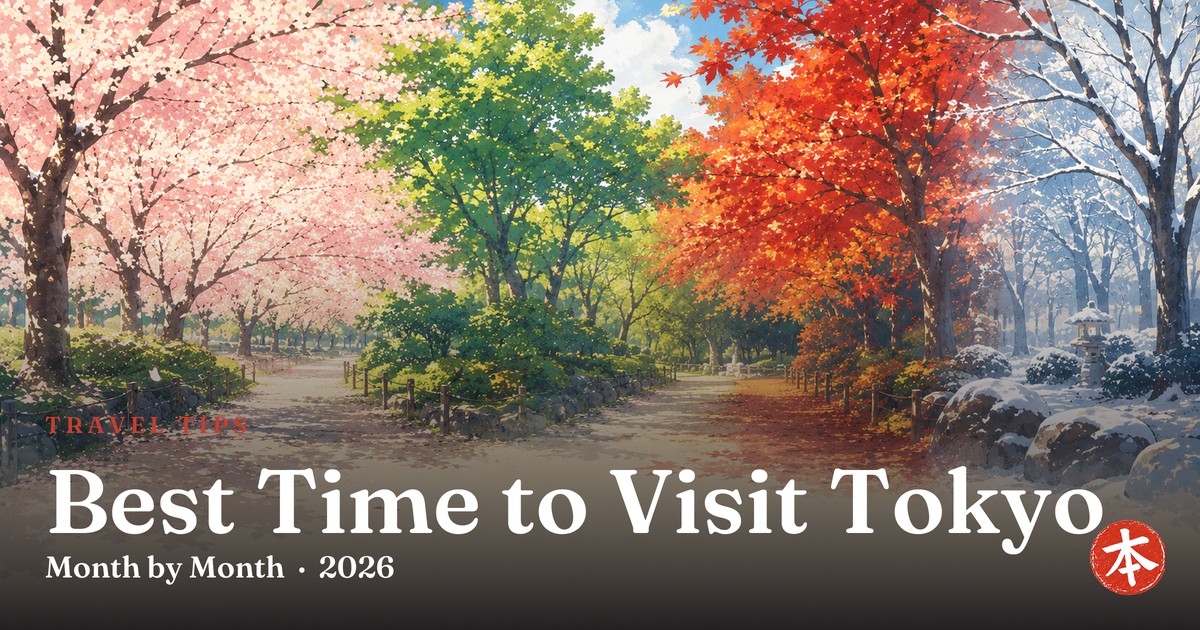
Quick answer: the best time to visit Tokyo is generally spring (late March–April) for cherry blossoms and autumn (October–November) for fall color and comfortable weather — these are the two mildest, most pleasant windows. Summer is hot and very humid with a June rainy season and typhoons later on; winter is cold but dry, sunny and quiet. The "best" month really depends on what you're optimising for — scenery, cost, or fewer crowds.
Here's Tokyo month by month using official climate data, an honest season-by-season breakdown, and the crowds and costs to plan around.
Tokyo weather, month by month
Average temperature and rainfall for Tokyo, JMA normals (1991–2020):
| Month | Avg temp (°C) | Rain (mm) | Feel |
|---|---|---|---|
| January | 5.4 | 60 | Cold, dry, sunny |
| February | 6.1 | 57 | Cold, dry |
| March | 9.4 | 116 | Warming; late blossoms |
| April | 14.3 | 134 | Mild, lovely |
| May | 18.8 | 140 | Warm, pleasant |
| June | 21.9 | 168 | Rainy season |
| July | 25.7 | 156 | Hot, humid |
| August | 26.9 | 155 | Hottest; typhoons begin |
| September | 23.3 | 225 | Warm, wet, typhoons |
| October | 18.0 | 235 | Mild; rain eases late |
| November | 12.5 | 96 | Cool, autumn color |
| December | 7.7 | 58 | Cold, dry, sunny |
Season by season
Spring (March–May): the postcard season
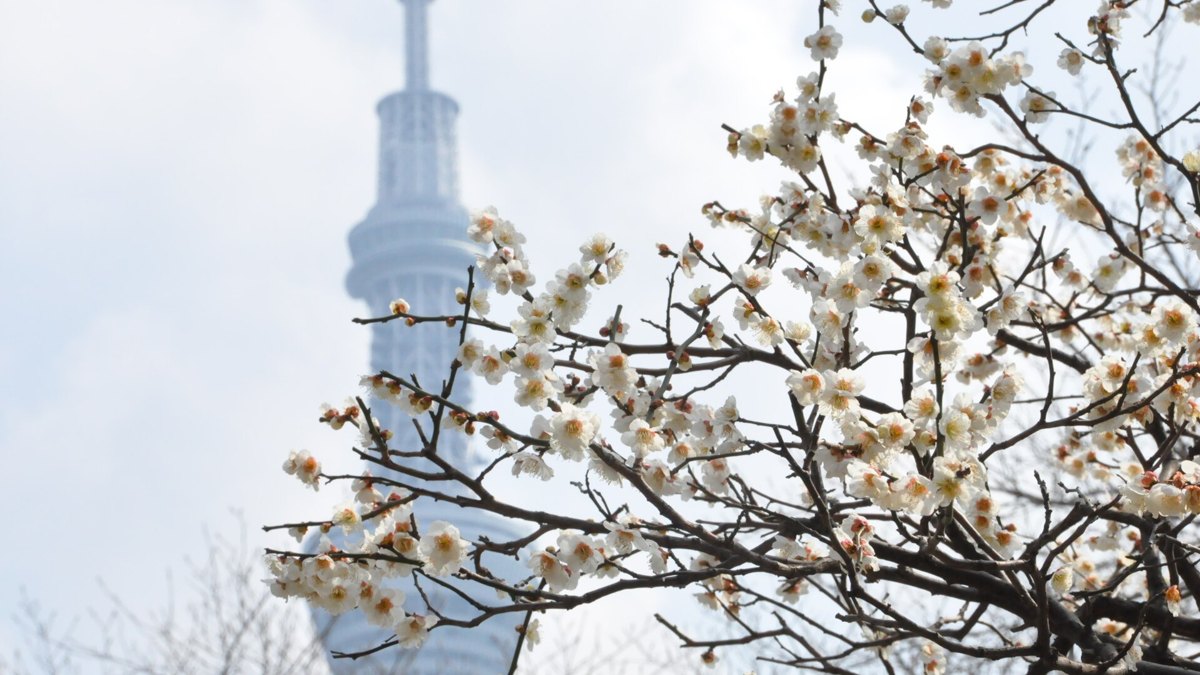
The headline draw is the cherry blossoms, which in Tokyo typically flower in late March and hit full bloom around the end of March to early April. Weather turns genuinely lovely — April averages about 14°C and May around 19°C. The catch is crowds and prices: the blossom weeks and Golden Week (late April–early May) are the busiest, most expensive time to be in the city. Worth it for many, but book early. (See where to go in our cherry blossom spots guide.)
Summer (June–August): hot, humid, festive
Summer in Tokyo is, honestly, hot and intensely humid — August averages nearly 27°C with high humidity on top. It opens with the June rainy season and brings typhoons later. But it's also festival season: fireworks (hanabi) and traditional summer celebrations are everywhere, and it's a great time for an authentic, sweaty, lively Tokyo. Stay hydrated and plan indoor breaks in the afternoon heat.
Autumn (September–November): the other sweet spot
Early autumn is still warm and, notably, the wettest part of the year in Tokyo (September–October rainfall is the annual peak, thanks to autumn rains and lingering typhoons). But by late October and November it settles into comfortable, clear weather — around 18°C in October, 12–13°C in November — with autumn foliage usually peaking late November into early December. Many travelers rate this the best all-round season.
Winter (December–February): cold, clear and quiet
Tokyo winters are cold (January averages 5.4°C) but, on the Pacific side, come with little snow and many bright, dry, sunny days. It's the quietest and often cheapest season for a city trip, with winter illuminations lighting up the districts. Pack a warm coat, but don't write winter off — clear skies mean great views (and better odds of spotting Mt Fuji).
The rainy season and typhoons
Two weather patterns are worth planning around. The rainy season (tsuyu) in the Tokyo area normally runs from around early June to mid or late July — long-term averages put it near June 7 to July 19, though the exact end is only confirmed after the fact and moves each year. It's humid with showery spells rather than constant rain. Then typhoon season peaks around August and September; a storm can disrupt trains and flights for a day or two, so keep a little slack in a late-summer itinerary and watch the forecast.
Cherry blossoms and autumn leaves
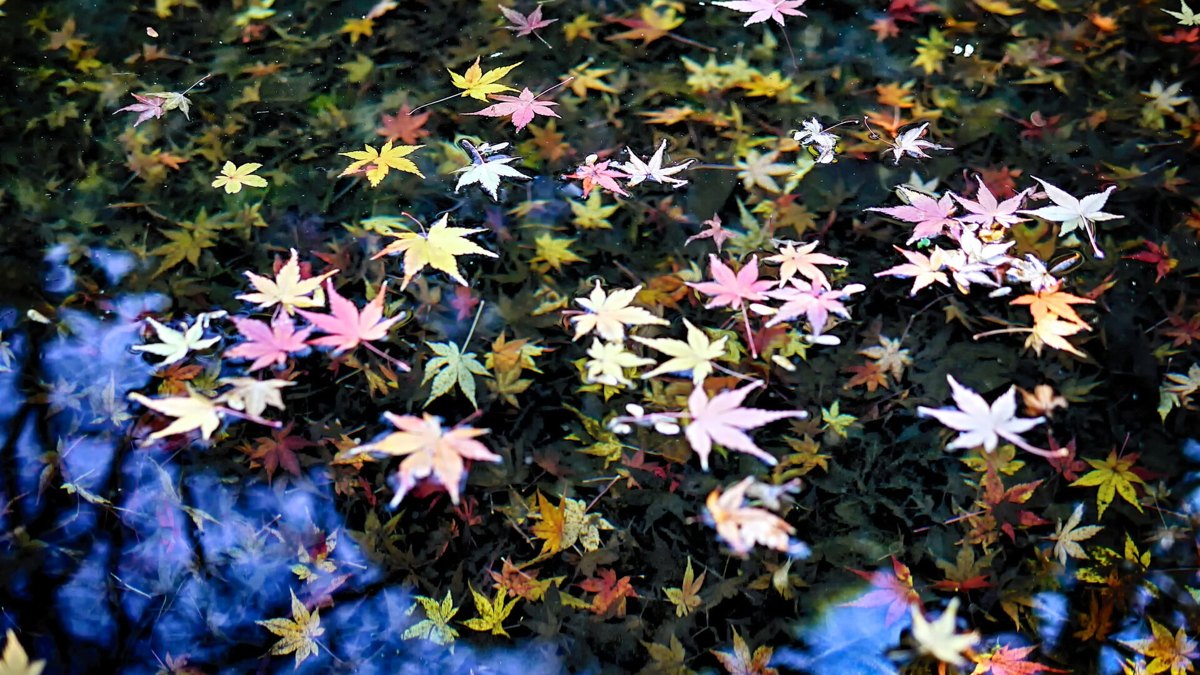
If you're timing a trip around the scenery: in Tokyo, cherry blossoms average flowering on March 24 and full bloom on March 31 (JMA), and autumn leaves usually peak from late November into early December. Both vary by year, so don't lock a non-refundable trip to a single "peak" date. Our sakura full-bloom guide explains how long full bloom lasts and how to read the forecast so you land in the right week.
When Tokyo gets crowded and expensive
So, when should you go?
- Cherry blossoms: late March–early April (crowded, pricey, unforgettable).
- Best all-round weather: late October–November (mild, clear, autumn color).
- Fewest crowds / lowest cost: winter (December–February, minus New Year) — cold but dry and quiet.
- Festivals & energy (if you can take the heat): summer — just dodge the worst of the June rain and watch for typhoons.
- Whenever you go, sidestep Golden Week, Obon and New Year for a smoother, cheaper trip.
(Traveling in August or September? Typhoon season is more about trains stopping in advance than about danger — and Japan renamed its weather warnings in May 2026.)
(Winter has one thing no other season offers: Hakuba is under three hours from Tokyo by shinkansen and bus.)
(Planning a day out of the city? Yokohama works in any season — though two of its best-known attractions have closed since 2024.)
FAQ
What is the best time of year to visit Tokyo?
What is the weather like in Tokyo?
When is the rainy season in Tokyo?
Does Tokyo get typhoons?
When do the cherry blossoms and autumn leaves happen in Tokyo?
When is Tokyo most crowded and expensive?
Bottom line (2026) — Spring and autumn are Tokyo’s sweet spots for comfortable weather, cherry blossoms and fall color, but each season has trade-offs on crowds and cost. Plan around two patterns: the rainy season and typhoon activity. Temperature and rainfall figures use JMA normals (1991–2020).
Sources
Checked July 28, 2026: Japan Meteorological Agency 30-year climate normals for Tokyo (1991–2020, temperature and rainfall), the JMA's rainy-season and typhoon averages and its Tokyo cherry flowering/full-bloom normals, and JNTO's seasonal weather guidance (summer heat and humidity, autumn foliage, winter clear skies, and the Golden Week / Obon / New Year travel peaks). Weather is an average and specific dates change every year — the JMA is the live source for the current season.
Some links on this page may be affiliate links, which means we may earn a commission if you book or buy through them — at no extra cost to you. See our affiliate disclosure.
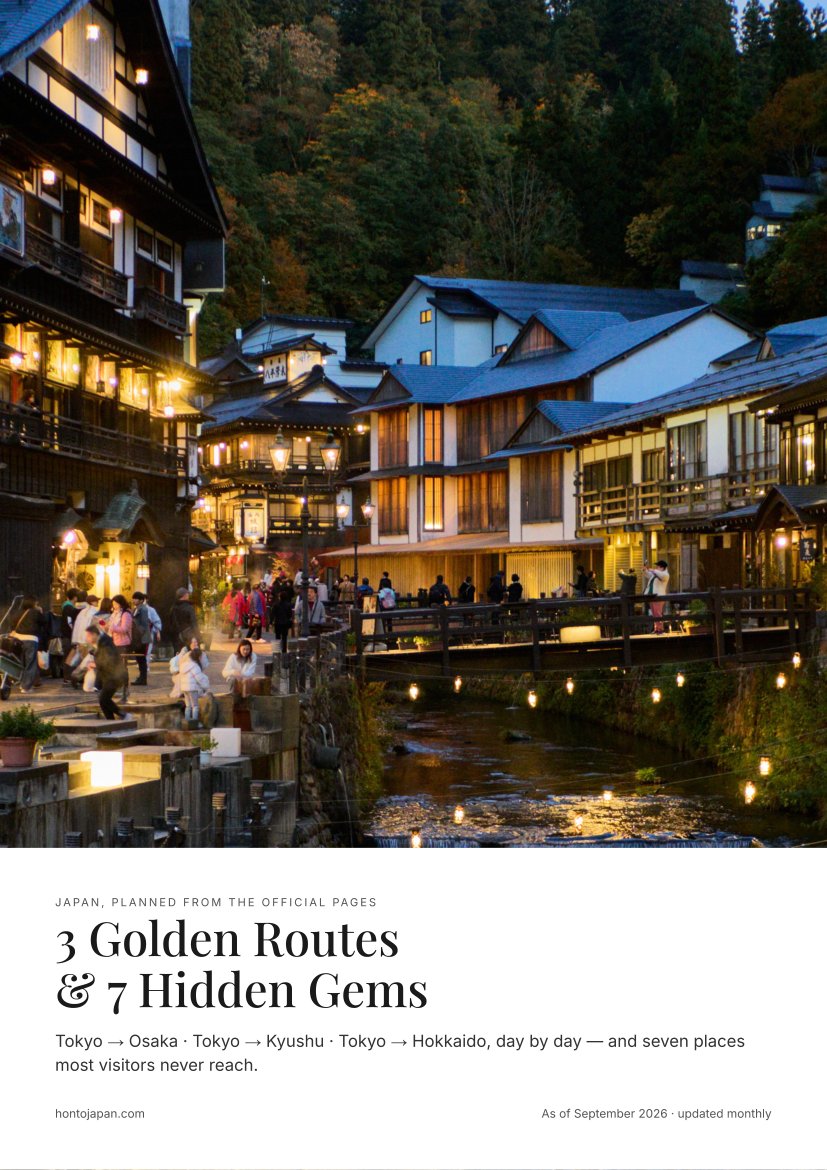
Tokyo to Osaka, Tokyo to Kyushu, Tokyo to Hokkaido — day by day — plus seven places most visitors never reach.
- 12 pages, 80 photographs, every stop linked to its guide
- Every price and opening hour read from the official page
- Re-issued monthly, so it does not go stale in your inbox
Free. One email a month, plus the rare change that matters. Unsubscribe with one click in any email. By subscribing you agree to our privacy policy.