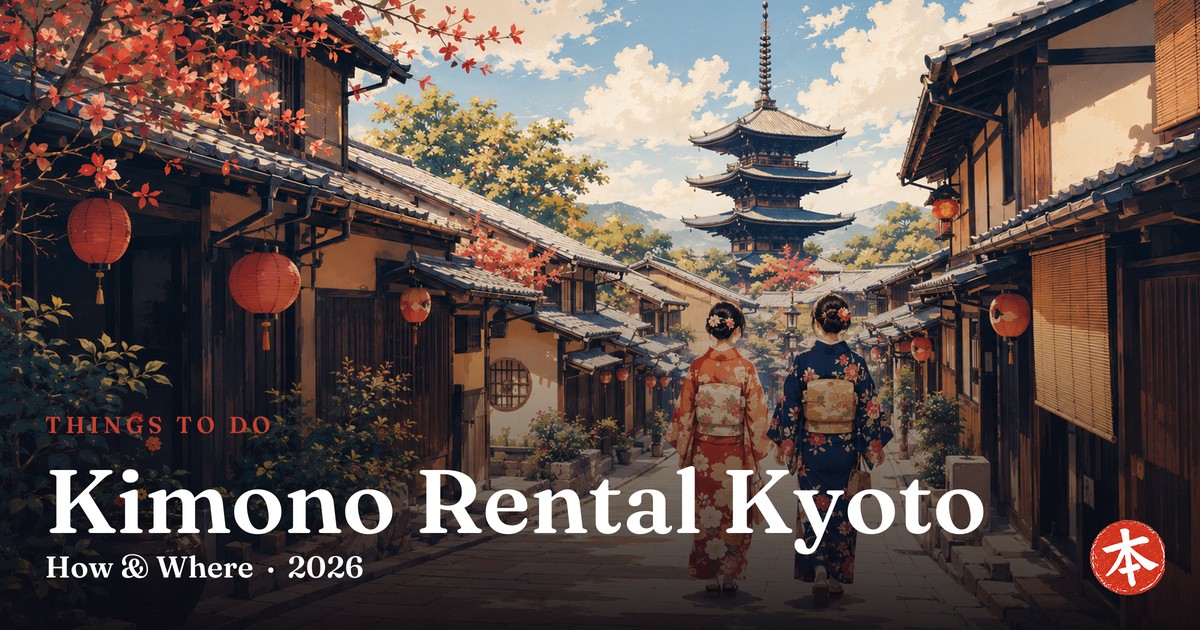
Renting a kimono in Kyoto is cheaper than most people expect — a basic plan starts around ¥3,080 — and it's the single best thing you can do for photos in the old streets of Higashiyama. But the number that actually shapes your day isn't the price. It's the return time.
Most rentals are same-day return: you have to bring the kimono back by the shop's evening cut-off. Which means that instead of wandering freely, you spend the afternoon watching the clock and doubling back. There is a way around it — and almost nobody tells you before you've already booked the plan that doesn't have it.
So this guide leads with the return-time trap, then does the rest: the real 2026 prices by plan, what's actually included, hair styling, and where in Kyoto to rent.
Kyoto kimono rental at a glance (2026)
| 🚨 Return time | Usually same-day, by an evening cut-off. Next-day / hotel-return plans exist — pick one for a relaxed day |
|---|---|
| Basic plan | From ¥3,080 — the affordable sightseeing option |
| Men’s / yukata | ¥4,180 · full-option ¥8,250 · couple yukata ¥8,000 |
| Hakama / premium | Women’s hakama from ¥7,150 · premium furisode from ¥16,500 |
| Hair styling | Usually extra — budget and book separately |
| Booking | Reserve in peak seasons (spring blossoms, autumn colors) |
| Where | Higashiyama (Gion, Kiyomizu, Yasaka) — the photogenic cluster |
A Japanese visitor who rented yukata for three at a Kyoto shop and wore them to Yasaka Shrine — the obi and the little accessories, she says, were all adorable. This is the shared-plan experience the ¥3,080 tier gets you.
The return-time trap — read this before you book
Here is what nobody warns you about. A standard kimono rental is same-day return: you collect it in the morning and must bring it back to the shop by its evening cut-off. On paper that's fine. In practice it means you spend your Kyoto afternoon navigating back to the shop on time instead of drifting through Gion at golden hour — which is exactly when you'd most want to be out in it.
2026 prices, by plan
Using Yumeyakata — an English-speaking shop that also assists in Chinese and Korean — as a concrete reference, from their official plan page in July 2026:
| Basic plan | From ¥3,080 — the cheapest sightseeing kimono |
|---|---|
| Men’s kimono | ¥4,180 |
| Yukata (summer) | ¥4,180 · couple yukata ¥8,000 |
| Full-option | ¥8,250 |
| Women’s hakama | From ¥7,150 · vintage from ¥7,700 |
| Premium furisode | From ¥16,500 |
Two things to add to the number. Hair styling is normally a separate add-on — most people get it done for the photos, so budget for it. And the cheapest plan includes less than the full-option one, so check what comes with the specific plan rather than assuming they're all the same kimono for less.
What’s included, and hair
A standard plan generally covers the kimono, the obi (sash), the small accessories, zori sandals and a bag — plus the dressing help to put it on, because a kimono genuinely can't be self-tied. What's usually not in the base price:
- Hair styling — an add-on, and the stylists book up at the same peak times the shop does.
- A later or next-day return — the plan upgrade that saves your afternoon (see above).
- Premium fabrics — vintage, furisode and hakama step up in price for the nicer material and cut.
Where and when to rent
The Higashiyama district — Gion, the lanes below Kiyomizu-dera, Yasaka Shrine and the Yasaka Pagoda — is where people actually wear rented kimono, because it's the most photogenic stretch of old Kyoto and the shops cluster right there. Rent near where you'll walk; unfamiliar zori sandals across the whole city is not the memory you want. Arashiyama in the west is the other popular base.
On timing: spring (late March–April) and autumn (November) are peak, both for crowds and for the backdrop — book ahead then. In summer, the lighter yukata (roughly May–September) is far more comfortable than a full kimono.
Browse Kyoto kimono rentals → Affiliate link — see disclosure.
Make a day of it in Higashiyama
A kimono day and a tea ceremony sit naturally together — both are in the same eastern hills. See our Kyoto tea ceremony guide for how to pair them, and since you'll be moving around the city, our Suica & IC card guide covers the easiest way to ride the trains.
Three friends in rented kimono at Kinkaku-ji, the Golden Pavilion. The tag reads Kyoto kimono rental, Kyoto stroll — exactly the day the rental is for.
Tips for foreign visitors
- Book a next-day or hotel return if you want a relaxed day — same-day return runs your afternoon.
- Add hair styling deliberately. It's usually extra and it books up.
- Rent in Higashiyama and walk from there — Gion and Kiyomizu are the backdrop.
- Reserve in blossom and autumn seasons. Walk-in is fine off-peak, painful at peak.
- Summer? Choose yukata. Lighter and cooler than a full kimono, and cheaper.
- Men and couples too. It isn't a women-only thing.
(For lunch in Arashiyama: our yudofu in Kyoto guide notes that Yudofu Sagano’s yudofu set is 4,400 yen with tax, and that the restaurant closes for the day when its tofu runs out.)
FAQ
How much does it cost to rent a kimono in Kyoto in 2026?
What time do I have to return a rented kimono?
Do I need to book a kimono rental in advance?
Is hair styling included in a Kyoto kimono rental?
What’s included in a kimono rental?
Where in Kyoto should I rent a kimono?
Can men and couples rent kimono in Kyoto too?
Need a base by the station? See our Hotel M's Est Kyoto Station South guide — a five-minute walk from the Shinkansen exit.
Bottom line (2026) — Kyoto kimono rental starts around ¥3,080, but the trap isn’t price — it’s the same-day return time on a standard rental, which cuts your day short. Reference prices are from Yumeyakata‘s official plan page in July 2026 (English, Chinese and Korean assistance). Pick a plan that lets you actually spend the day in the kimono.
Sources & further watching
Read from the shops' official sites in July 2026:
- Kyoto Kimono Rental Yumeyakata — plan list — plan prices by type, multilingual assistance
- Rental Kimono Okamoto — hotel-return / next-day-return plans, Higashiyama locations
Prices and plan details are as of July 2026, read from the shops' official sites. Each shop sets its own pricing and return rules — confirm on the shop's page before you book. Some links on this page may be affiliate links, which means we may earn a commission if you book or buy through them — at no extra cost to you. See our affiliate disclosure.
Tokyo to Osaka, Tokyo to Kyushu, Tokyo to Hokkaido — day by day — plus seven places most visitors never reach.
- 12 pages, 80 photographs, every stop linked to its guide
- Every price and opening hour read from the official page
- Re-issued monthly, so it does not go stale in your inbox
Free. One email a month, plus the rare change that matters. Unsubscribe with one click in any email. By subscribing you agree to our privacy policy.