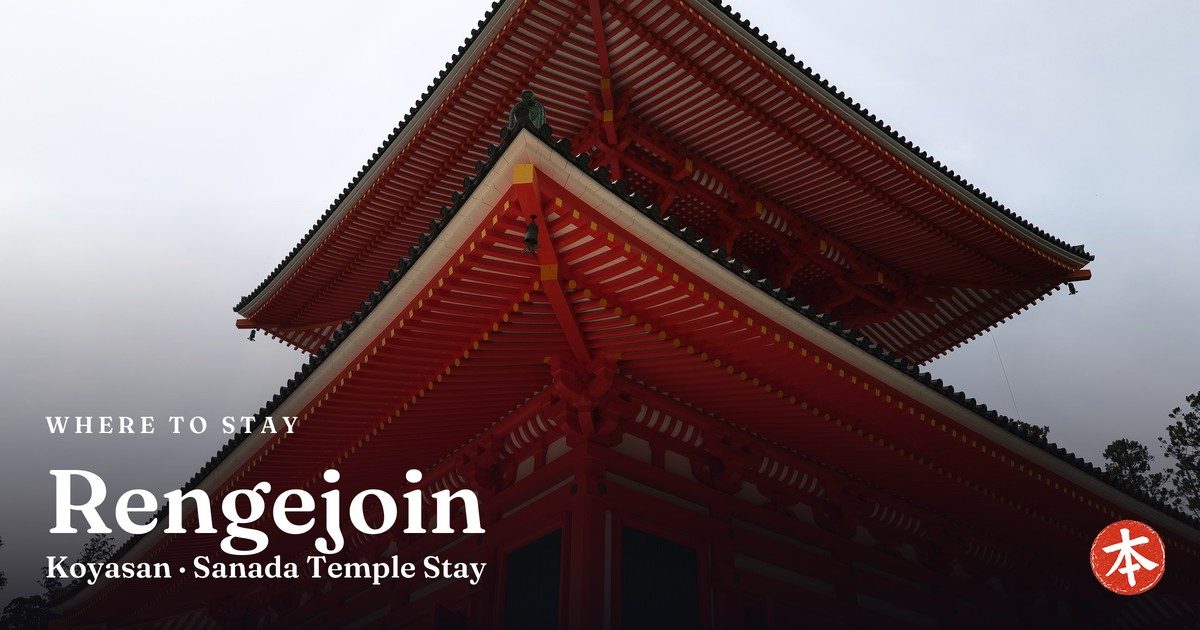
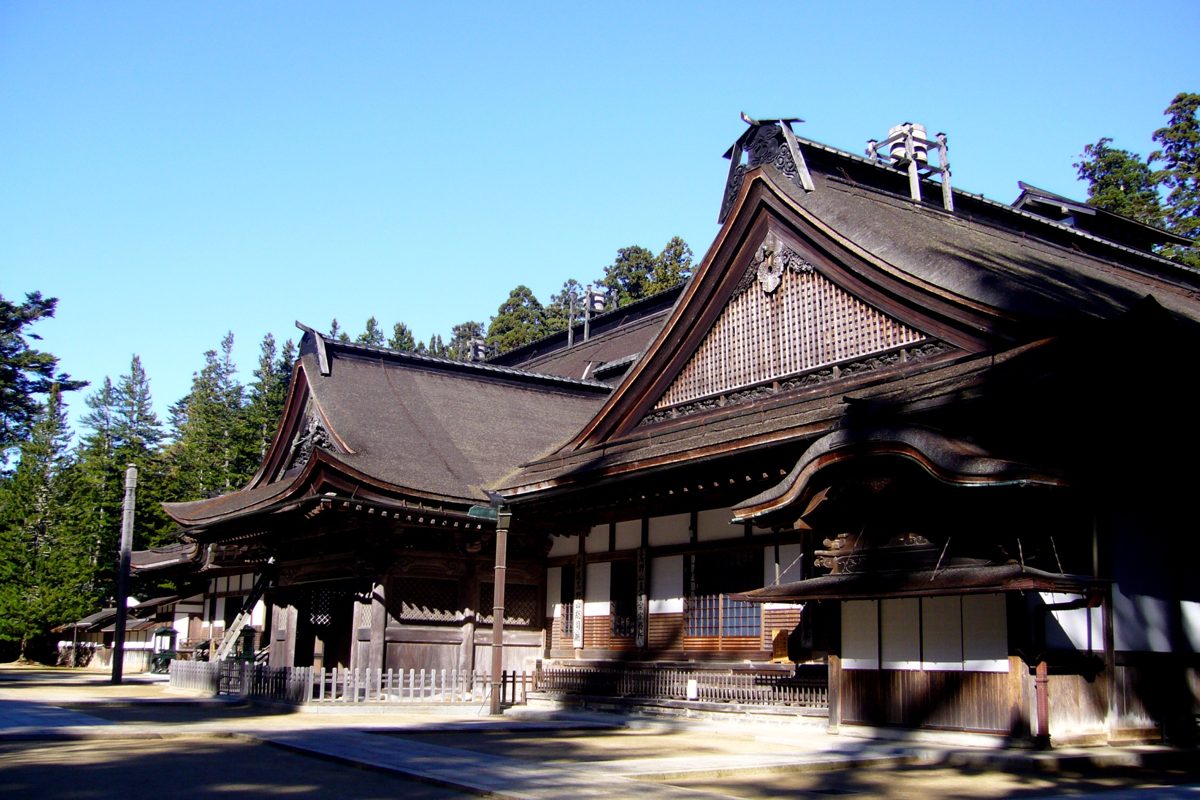
Rengejoin (Sanada-bo Rengejoin) is a temple of Koyasan Shingon Buddhism on Mount Koya, Wakayama, founded in the early Kamakura period. After the Battle of Sekigahara, the Sanada lord Masayuki and his son Nobushige (Yukimura) stayed here, which is why it is called Sanada-bo. It takes overnight guests as a shukubo, or temple lodging. Before you book, three things matter: buses no longer stop near the gate, so plan on a 15-minute walk; meals are vegan-friendly shojin ryori, but gluten-free is not possible; and the gate closes after 19:00, so arrive in daylight.
Rengejoin, Koyasan, at a glance
| Item | Official information |
|---|---|
| Address | 700 Koyasan, Koya-cho, Ito-gun, Wakayama 648-0211 |
| Phone (lodging) | +81-736-56-2231 |
| Check-in / out | 15:00–17:00 / 10:00 |
| Gate and curfew | Gate closes after 19:00; curfew basically 21:00 |
| Meals | Shojin ryori dinner 18:00, breakfast 7:00, in the main hall |
| Bath | Large bath 18:30–21:30; paid private bath |
| Prices | From 38,000 yen for 2 people with 2 meals |
| Cards | VISA, UC, DC, Mastercard |
| Parking | 8 cars |
From the official site and booking page, read October 16, 2026.
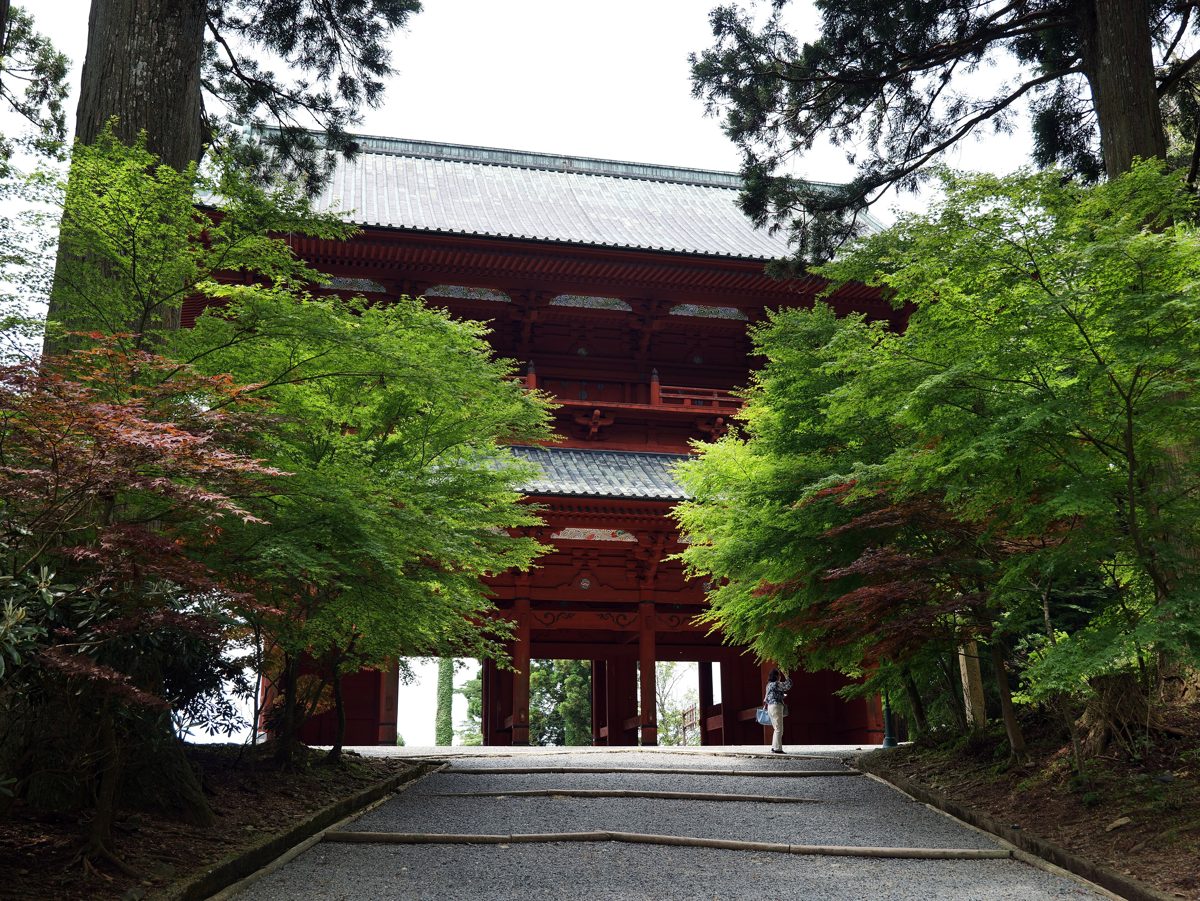
In July 2025, four of its buildings, the main hall and goma hall, the guest hall and priests’ quarters, the gate, and the wall, were registered as national tangible cultural properties. The temple sits near Nyonindo, at the edge of the Koyasan town area; our Koyasan guide covers the rest of the mountain.
Getting to Rengejoin after the 2024 bus change
Which bus stop should I use?
Since August 26, 2024, Nankai Rinkan buses no longer run along the road past the temple. Get off at Kongobuji-mae (stop 16) or Senjuin-bashi (stop 15) and walk about 15 minutes. Older directions that name a stop at the gate are out of date.
Is there a pickup or parking?
There is no pickup service. Guests who drive can use the temple’s parking, which holds 8 cars. The official pages do not say whether parking costs extra, so ask when you book.
Can I bring a suitcase?
Yes, but the Japanese booking page asks guests to lift suitcases and carry them inside the temple, to protect the cultural property. Bags can be left before check-in and after checkout.
A day at Rengejoin: the temple schedule
| Time | What happens |
|---|---|
| 15:00–17:00 | Check-in; you can see the “Jodan-no-ma” room linked to the Sanada family |
| 17:00 | Ajikan meditation with the monks in the main hall (free) |
| 18:00 | Shojin ryori dinner in the main hall |
| 18:30–21:30 | Large bath open; the gardens are lit up at night |
| 21:00 | Curfew (basically) |
| 6:00 | Morning service (sutra chanting) in the main hall |
| 7:00 | Breakfast after the service |
| 10:00 | Checkout |
From the official Japanese pages, read October 16, 2026.
Can I join the meditation and morning service?
Yes. The monks practice ajikan meditation in the main hall every evening at 17:00 and invite guests to join. At the 6:00 service, if you apply the day before, the monks will read out the name of someone who has died. Preschool children cannot enter the main hall for meditation or join the morning service, and the temple asks guests not to attend services in yukata.
What does sutra copying cost?
Sutra copying (shakyo) is 1,500 yen and can be done at any time you like during your stay.
Meals at Rengejoin
What is shojin ryori like here?
Meals are shojin ryori, Buddhist temple food made with no animal ingredients and seasonal produce. Koyasan shojin ryori also leaves out strong-smelling vegetables such as green onion, garlic and onion. Monks serve the food in the large hall where the Sanada father and son once lived. Dinner is about 13 dishes in suites and deluxe rooms, about 11 in superior rooms and about 8 in standard rooms; breakfast is about 6 dishes for everyone.
Can the temple handle vegan, allergy or gluten-free diets?
The temple says vegetarians can eat with peace of mind and that it can cater for vegans. Allergies are handled as far as possible if you tell the temple by the day before. Gluten-free is not possible with shojin ryori, and the temple suggests staying without meals.
The baths at Rengejoin
When is the bath open, and is it an onsen?
The large bath is open 18:30 to 21:30. The temple describes it as mineral-rich water that springs from Koyasan, heated; it is not described as an onsen. Shampoo, conditioner, body soap and hair dryers are provided. There is also a paid private bath; the official pages do not give its price or hours.
Can I bathe with a tattoo?
The official pages do not mention tattoos. Ask the temple before you book; our tattoo and bathing guide explains what to ask.
Rooms, prices and rules at Rengejoin
What rooms are there, and how much is a stay?
The official booking page lists garden-side suites with bath and toilet, deluxe rooms with shower and toilet, superior rooms with a toilet, and standard rooms that share the bath and toilet. In standard rooms, you are separated from the next room only by locked sliding fusuma doors painted with Japanese art. All plans include dinner and breakfast. For 2 people per night, prices start at:
| Room type | From (2 people, 2 meals) |
|---|---|
| Standard (fusuma partition) | 38,000 yen |
| Superior | 46,000 yen |
| Deluxe (three rooms) | 66,000–74,000 yen |
| Suite | 84,000 yen |
| Premium Suite | 154,000 yen |
Official booking page, read October 16, 2026. Prices change by date.
The official pages differ on room sizes, so check the room you want on the booking page or ask the temple.
Can children stay?
Yes. Because some rooms are divided by fusuma and others by walls, the temple asks families to talk to it beforehand about which room to use. The official pages do not explain child rates.
What is the cancellation policy?
The Japanese FAQ lists 10 percent from 14 to 9 days before, 20 percent from 8 to 6 days, 30 percent from 5 to 2 days, 50 percent the day before and 100 percent on the day. See our hotel cancellation guide for how these fees work in Japan.
How do I pay?
The Japanese FAQ lists VISA, UC, DC and Mastercard. The official pages differ on whether you pay in advance or at check-in, so confirm when you book.
What foreign guests should know before staying at Rengejoin
- Plan to arrive between 15:00 and 17:00. The gate closes after 19:00; if you may be late, contact the temple and confirm the rule for your booking.
- Walk about 15 minutes from Kongobuji-mae or Senjuin-bashi; the bus no longer passes the gate.
- Standard rooms share toilets and the bath, and only fusuma doors separate you from neighbors.
- There is a vending machine but no shop. Wi-Fi is available, and the building is non-smoking with a smoking corner.
- The temple has English pages, and the official booking page works in English.
Frequently asked questions
What time is check-in at Rengejoin?
Is the food at Rengejoin vegan?
Is the bath at Rengejoin an onsen?
What is the cancellation policy at Rengejoin?
How do I get to Rengejoin by bus?
Bottom line (2026): Rengejoin is a Sanada-linked temple lodging on Koyasan with free evening meditation, a 6:00 morning service and vegan-friendly shojin ryori. Walk 15 minutes from the bus, arrive before the gate closes, and book on the official booking page.
Sources
Every fact on this page is from Rengejoin’s official pages: home (Japanese), about the temple, a day at the temple, lodging, shojin ryori, FAQ, access and news, the English site, and the official English booking page. All were read on October 16, 2026. Prices and rules change; check the official site before you book.
Tokyo to Osaka, Tokyo to Kyushu, Tokyo to Hokkaido — day by day — plus seven places most visitors never reach.
- 12 pages, 80 photographs, every stop linked to its guide
- Every price and opening hour read from the official page
- Re-issued monthly, so it does not go stale in your inbox
Free. One email a month, plus the rare change that matters. Unsubscribe with one click in any email. By subscribing you agree to our privacy policy.