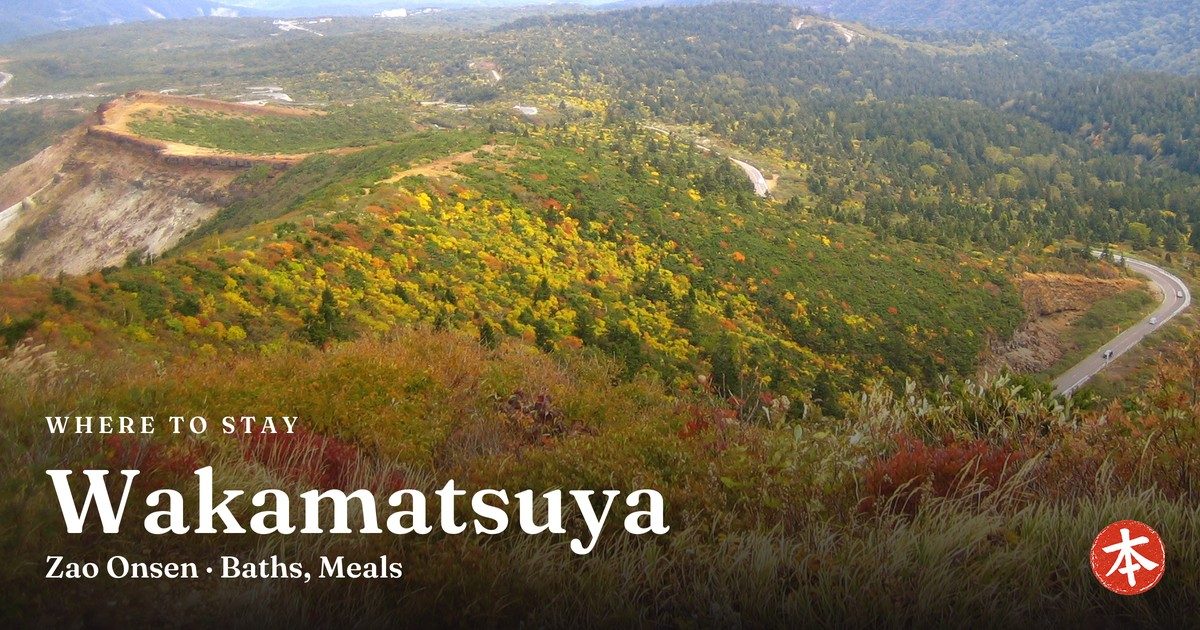
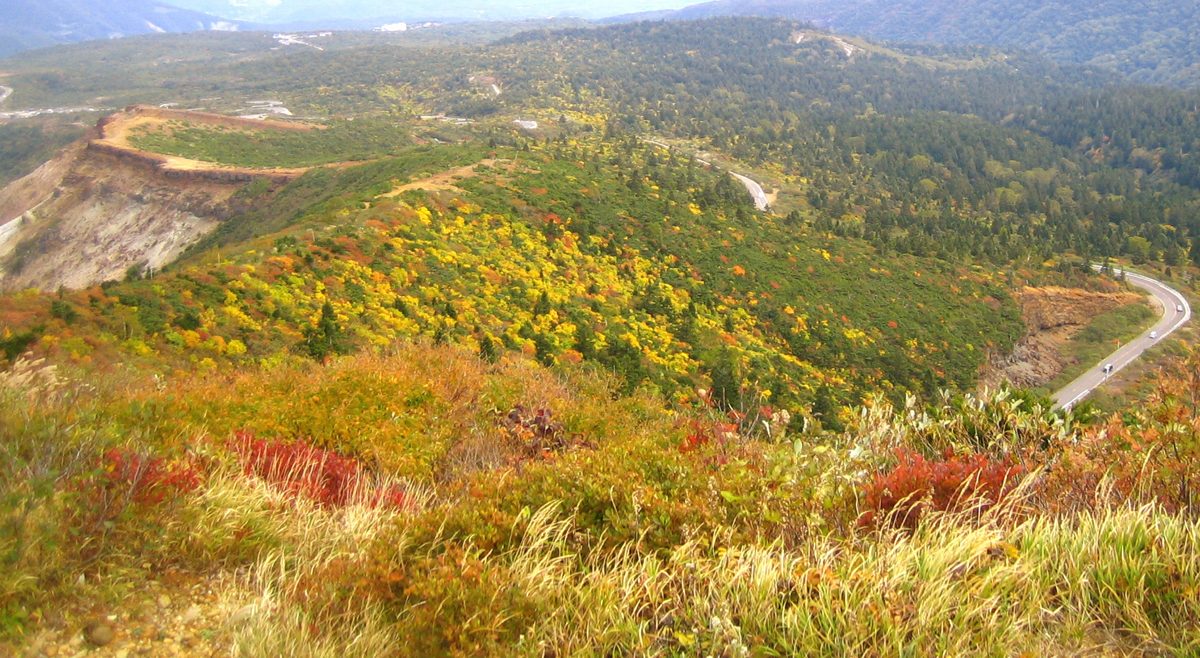
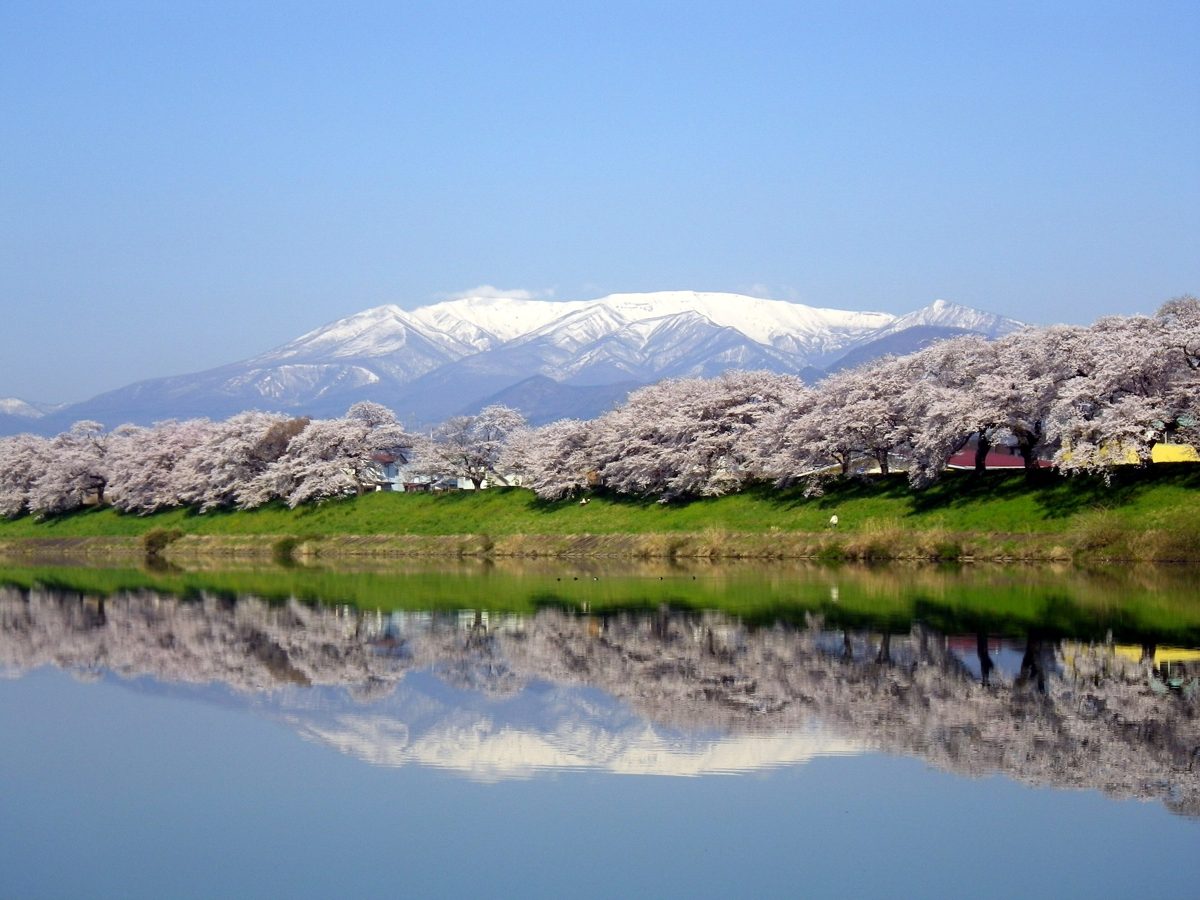
Wakamatsuya is a ryokan on the high ground of Zao Onsen, Yamagata, at about 880 m on the slopes of the Zao mountains. It traces its founding to 1655 and calls itself the “inn of waka poetry,” for its ties to the Yamagata-born poet Saito Mokichi. Before you book, three things matter: every bath is the inn’s own strongly acidic sulfur spring, open 24 hours; the two private baths are free and cannot be booked; and on dinner plans you need to arrive by 18:00.
Wakamatsuya at a glance
| Item | Official information |
|---|---|
| Address | 951-1 Zao Onsen, Yamagata City, Yamagata |
| Phone | +81-23-694-9525 |
| Founded | 1655 (now in a newer building on a new site) |
| Check-in / out | 15:00 (last 18:00 with dinner, 22:00 without) / 10:00 |
| Baths | Large baths, open-air bath, two free private baths; all 24 hours |
| Meals | Japanese multi-course dinner, Japanese set breakfast |
| Bathing tax | 150 yen per adult per night |
| Parking | Free, first come, in front of the building |
| Smoking | Non-smoking indoors; outdoor smoking area |
From the official site, read October 14, 2026.
Why is Wakamatsuya called the inn of poetry?
Saito Mokichi (1882–1953) was born in what is now Kaminoyama, just below Zao, and became a leading tanka poet. The inn says his life was closely linked to the owner’s ancestors, and it displays works in his own hand along with old records of Zao Onsen. Mokichi called the water here a “sacred spring.” Every room has paper strips and a brush pen so guests can write a poem of their own, and poems left by past guests hang in the Yukoji Gallery and around the building.
Rooms at Wakamatsuya
Which room types are there?
| Room type | What the official room page says |
|---|---|
| Suite with semi-open-air bath | Top (4th) floor; tatami living room plus a bedroom with two semi-double Simmons beds; 2–4 guests |
| Japanese-Western room with private dining | 2nd floor; breakfast and dinner served in the room; main room of 10–18 mats plus a 10-mat dining room |
| Japanese-Western room, 15 mats | 3rd and 4th floors; faces the Kaminoyama side; Simmons mattresses |
| Japanese-Western room, 10 mats | 3rd and 4th floors; 2 guests; adults only |
| Japanese room | 2nd to 4th floors; 10–18 mats depending on group size; up to 5–6 guests |
From the official room page, read October 14, 2026.
All rooms have a bath and a washlet toilet, free Wi-Fi, yukata and towels. The room bath is tap water, not hot spring water, and that includes the semi-open-air bath in the suites; for the spring, use the large baths or the private baths on another floor. You cannot choose a specific suite. Groups of three or more in the Japanese-Western rooms get an extra bed or futon. Pets are not allowed.
What are the onsen baths like at Wakamatsuya?
What is the water like?
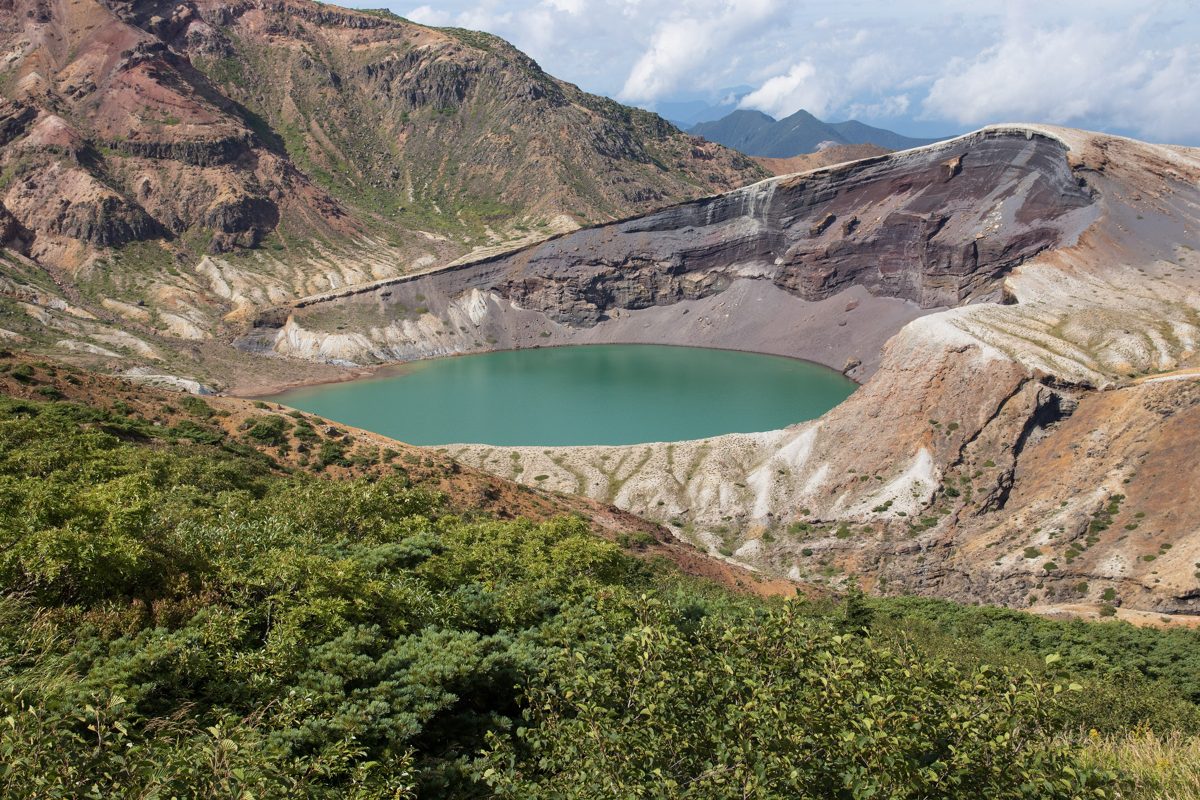
The inn has its own source, about 5,700 liters a minute, and all its hot spring baths use it straight from the source. The water is a strongly acidic sulfur spring, which the inn says is rare in Japan. The open-air bath is carved from a single 18-ton Zao boulder. Because of the acidity, the floor is slippery and metal rusts, so take off your watch and jewelry before you get in (gold and platinum are fine). The FAQ suggests short soaks at first for children.
When are the baths open, and how do the private baths work?
All baths are open 24 hours, with no switch between men’s and women’s sides. The two private baths, Sanpo and Fubo, are free and cannot be booked: if one is empty, lock the door and use it. Each fits four to five people. You can also bathe free after checkout; towels are charged. The inn notes the washing area is not large, so it asks guests to share at busy times.
Can I bathe with a tattoo?
The official pages do not mention tattoos. The private baths are used by your group alone, but ask the inn before you book. Our tattoo and onsen guide explains what to ask.
Meals at Wakamatsuya
What are dinner and breakfast like?
Dinner is a Japanese multi-course meal of Yamagata ingredients, with Yamagata beef as a main dish and Tsuyahime rice. Grilled, fried and steamed courses are cooked after you sit down. From autumn to spring there are also hot-pot dinners. Depending on the plan, you eat in a private dining room or in your room. Breakfast is a Japanese set meal. Dinner starts at 18:00 or 18:30 and breakfast at 7:30, 8:00 or 8:30; you choose at check-in. Elementary school children get a meal like the adults’, and younger children a kids’ meal.
Can the inn handle allergies?
Tell the inn about food allergies when you book; it says it cannot respond on the day, and it may call you to ask for details. The official pages do not mention vegetarian, vegan or halal meals, so ask first. The vending machines sell no alcohol; you may bring drinks to your room for free, but there is a charge to bring them to the dining area.
Getting to Wakamatsuya in Zao Onsen
From Tokyo, take the Yamagata Shinkansen to Yamagata Station, about 2 hours 27 minutes, then the bus to Zao Onsen Bus Terminal, about 45 minutes. The inn is about 3 minutes on foot from there, or call on arrival for a free pickup. The FAQ puts a taxi from Yamagata Station at about 6,000 yen. By car, it is about 25 minutes from the Yamagata-Zao interchange, and parking is free with no booking. In winter, the FAQ says most two-wheel-drive cars manage with studless winter tires.
The inn also runs shuttles to the Zao Onsen ski area’s ropeways within their operating hours. Its November 2025 notice says it does not drive guests to restaurants or convenience stores.
Prices and rules at Wakamatsuya
What do children cost?
The FAQ and the accommodation terms list elementary school children at 70 percent of the adult rate, and younger children with meals and bedding at 50 percent. Even with no meals or bedding, young children are charged a 2,200-yen entry fee; the official pages differ on the exact age this starts, so confirm with the inn. The 10-mat Japanese-Western rooms are adults only.
What is the cancellation policy?
The room page lists 20 percent from 3 days before, 30 percent from 2 days before, 50 percent the day before, and 100 percent on the day or for a no-show. Some plans and dates have their own rule, so check the plan page. Our hotel cancellation guide explains how these fees work.
How do I pay, and what are the extra charges?
Pay in cash or by card; both the room page and the FAQ list Visa, JCB, American Express and Diners Club, and some plans do not accept cards. Yamagata City’s bathing tax is 150 yen per adult per night, charged separately except on some plans. The city has also set a lodging tax of 3 percent of the room charge, starting April 1, 2027. See our onsen bathing tax guide.
What foreign guests should know before staying at Wakamatsuya
- The official site and booking page are in Japanese only. The contact form says you may write in your own language, and the inn asks you to call if you get no reply in 3 days.
- Arrive by 18:00 on a dinner plan; well after 18:30, dinner may not be served, with no refund.
- Tell the inn about food allergies when you book, not on the day.
- Take off metal jewelry before bathing; the acidic water rusts it.
- Keep 150 yen per adult per night for the bathing tax.
Frequently asked questions
Are the baths at Wakamatsuya real hot springs?
Do I need to book the private bath at Wakamatsuya?
What time is check-in at Wakamatsuya?
What is the cancellation policy at Wakamatsuya?
How do I get to Wakamatsuya from Yamagata Station?
Bottom line (2026): Wakamatsuya is a Zao Onsen ryokan from 1655 with its own acidic sulfur spring, baths open 24 hours and two free private baths. Arrive by 18:00 on dinner plans, tell the inn about allergies when you book, and use the official Japanese booking page or the contact form.
Sources
Every fact on this page is from Wakamatsuya’s official pages: home (Japanese), onsen, rooms, cuisine, access, FAQ, history, contact, shuttle notice and accommodation terms (PDF); and Yamagata City’s pages on the bathing tax and the lodging tax. All were read on October 14, 2026. Prices and rules change; check the official site before you book.
Tokyo to Osaka, Tokyo to Kyushu, Tokyo to Hokkaido — day by day — plus seven places most visitors never reach.
- 12 pages, 80 photographs, every stop linked to its guide
- Every price and opening hour read from the official page
- Re-issued monthly, so it does not go stale in your inbox
Free. One email a month, plus the rare change that matters. Unsubscribe with one click in any email. By subscribing you agree to our privacy policy.