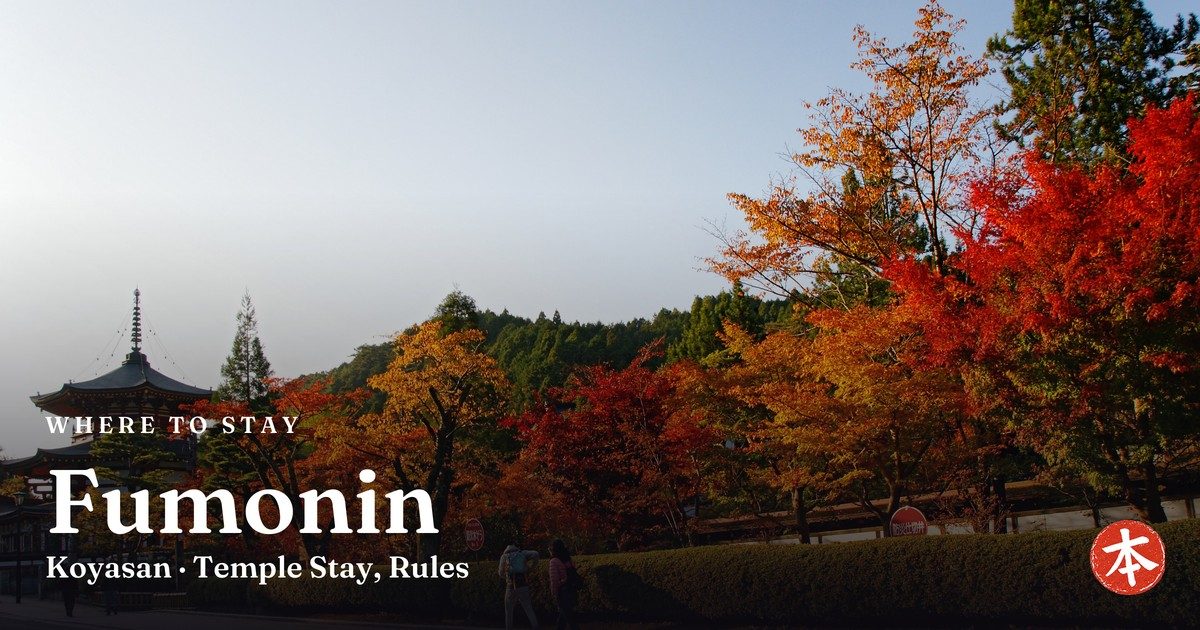
Fumonin is a temple lodging, or shukubo, on Koyasan in Wakayama, which welcomes guests as a place of history and stillness: you wake to the bell of the early service, eat shojin ryori and walk among old buildings. Before you book, three things matter: you must check in by 16:30; children cannot stay; and the entrance closes at 21:00, with no coming or going after that.
A night at Fumonin, hour by hour
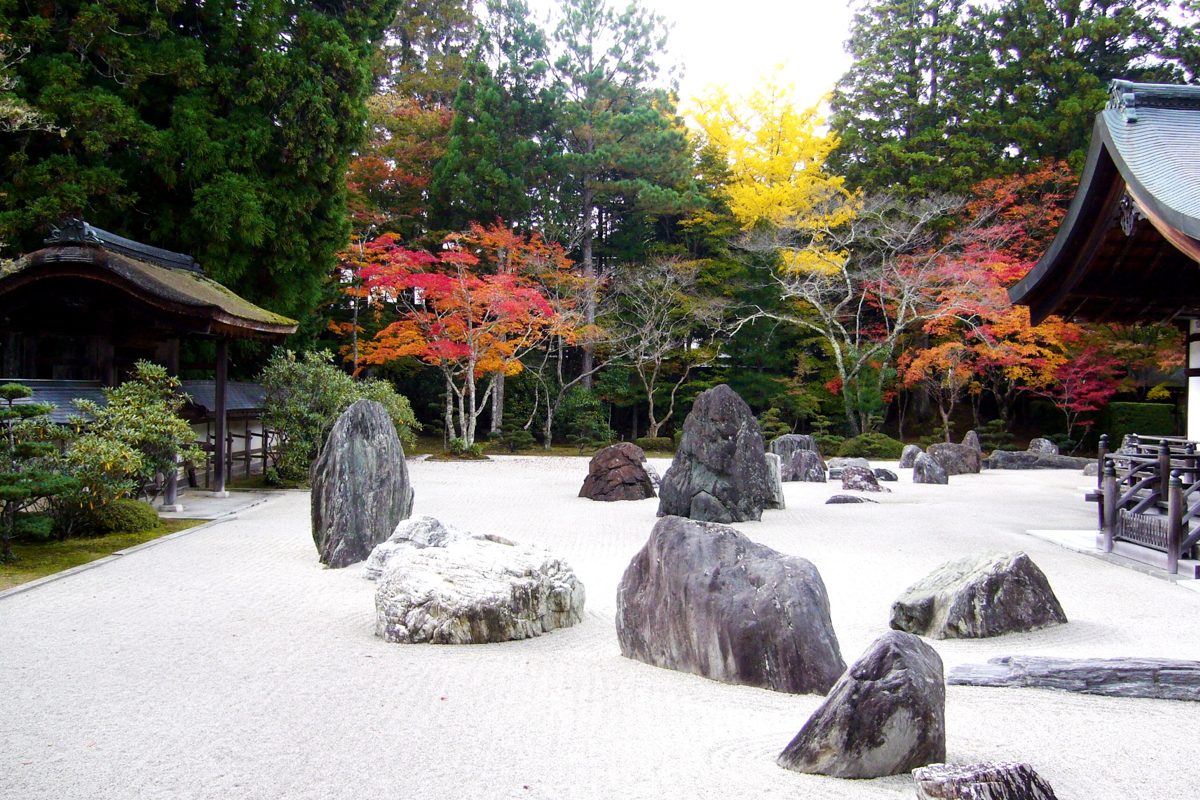
A temple stay runs on a fixed timetable. This is the day at Fumonin as the official booking page and site lay it out.
| Time | What happens |
|---|---|
| 15:00–16:30 | Check-in (late arrival = automatic cancellation) |
| 17:30 | Shojin dinner (one sitting only) |
| 18:00–21:00 | Shared baths open |
| 20:00 | Last requests to staff |
| 21:00 | Curfew; the entrance closes |
| 6:30 | Morning service in the main hall |
| From 7:00 | Japanese breakfast |
| 9:00 | Check-out |
From the official booking page and site, read October 16, 2026.
If you reach the temple before 15:00, the booking page says you can check in and leave your luggage, but the room is yours from 15:00.
Fumonin at a glance
| Item | Official information |
|---|---|
| Name | Koyasan Bekkaku Honzan Fumonin (Koyasan Shukubo Fumonin on the booking page) |
| Address | 608 Koyasan, Koya-cho, Ito-gun, Wakayama 648-0211 |
| Rooms | 20 (3 Western, 15 Japanese, 2 Japanese-Western) |
| Guests | No children |
| Meals | Shojin ryori dinner and breakfast; no ingredient changes |
| Prices | From 15,000 yen per person, two meals, prepaid (booking page) |
| Parking | 5 cars, free, reservation needed |
| Phone | +81-736-56-2224 |
What makes Fumonin worth a night
What is the history of the temple?
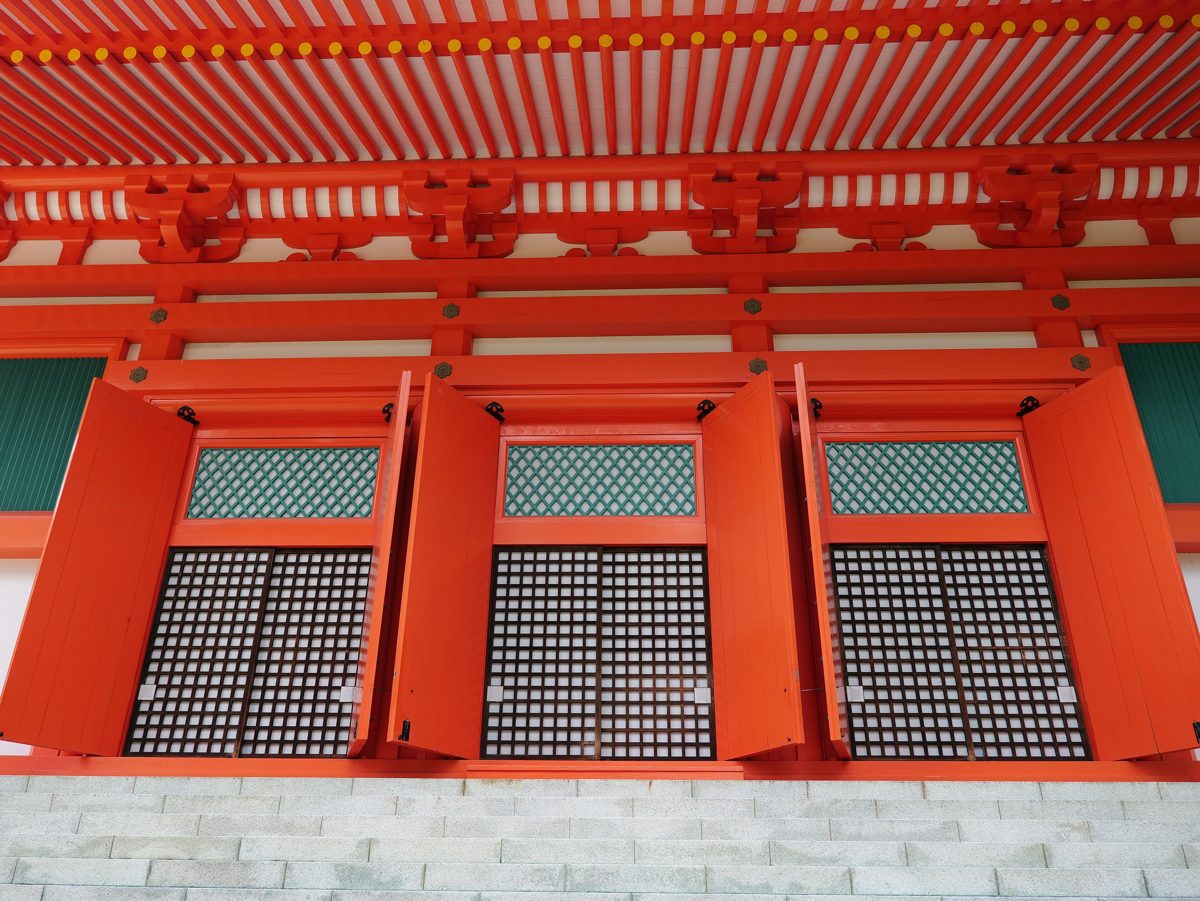
According to the temple, it was founded by a disciple of Gonzo, the priest who shaved the head of Kobo Daishi Kukai, in celebration of Kukai opening Koyasan. It burned down in the great Koyasan fire of 1888. The priest of the time then received the main building of the Tokugawa family mausoleum from Kongobuji and moved it here; that is the current main hall. The temple says it was built around 1650 with Nikko Toshogu as a model, and its pillars are coated in gold with bright colors still visible.
What else is there to see?
The garden is attributed to Kobori Enshu, the former lord of Bitchu Matsuyama Castle, and the booking page calls it one of the finest on Koyasan. In February 1948, the room called Shinzo hosted the shogi match between Kozo Masuda and Yasuharu Oyama known as the “Koyasan decisive battle.” In the same year, the temple says, the novelist Yasushi Inoue, then a Mainichi Shimbun reporter, wrote his first work, Togyu (The Bullfight), here.
Can guests join the morning service?
Yes. Guests staying the night can attend the morning service in the main hall from 6:30. There is also a tea room; the temple lends a full set of tea utensils and recommends morning tea on Koyasan.
Rooms and prices at Fumonin
Which rooms are there?
The five special rooms on the 2nd floor face the garden. They are Western-style or Japanese-Western, all with twin beds, and there is an elevator on that side. Rindo is a suite of twin beds and a 10-mat Japanese room, and Shoin is two 8-mat rooms; these two have their own baths. The standard rooms in the new guest hall are 10-mat Japanese rooms with a key, and the site says they have no toilet, sink or bath inside. A 20-mat family room is also listed.
How much does a stay cost?
The official booking page shows these starting prices per person, with dinner and breakfast, paid in advance, as of October 16, 2026:
| Room | From (per person) |
|---|---|
| Standard Japanese room, new guest hall | 15,000 yen |
| Yamabuki / Ajisai (twin) | 23,000 yen |
| Kikyo (twin + tatami) | 24,000 yen |
| Suisen (twin, corner) | 28,000 yen |
| Rindo (suite, private bath) | 39,000 yen |
Prices change by date. The price table on the temple’s own site differs from the booking page, so check the price for your dates on the booking page.
Shojin meals at Fumonin
What are dinner and breakfast like?
Dinner is shojin ryori, the temple’s vegetarian cuisine, made with seasonal vegetables. It starts at 17:30 only, in the large hall called Shutokuden on the standard plan; special-room guests eat in a separate dining room. Breakfast is a Japanese meal from 7:00. Guests who miss the 16:30 check-in cannot be served dinner. The site says lunch is not being offered for now.
Can the temple change the food for allergies?
The booking page says ingredient changes cannot be made. It does not say more about allergies or other diets, so contact the temple before booking if this matters to you.
The baths at Fumonin
What are the shared baths like?
There is one large bath for men and one for women. The official pages do not call them a hot spring. The tubs are shallow for safety, the floor is Towada stone, each shower has a partition, and there are handrails. The baths are open from 18:00 to 21:00.
Is there a private bath?
Only the special rooms Rindo and Shoin have a family bath of their own, made entirely of cypress. All other rooms use the shared baths.
Can I bathe with a tattoo?
The official pages do not mention tattoos. Ask the temple before you book; our tattoo and onsen guide explains what to ask.
Children, cancellation and payment at Fumonin
Can I bring children?
No. The site says children are not accepted as guests.
What happens if I arrive late?
This is the rule to plan around. The official booking page says check-in is from 15:00 to 16:30, and if you arrive after that, your booking is canceled automatically that day with a 100 percent fee and no refund. It also says meals canceled on the day are not refunded for any reason. The day-by-day cancellation schedule differs between the official pages, so confirm it with the temple or on the booking page when you book; our hotel cancellation guide explains the terms.
How do I pay?
Every plan on the booking page is prepaid online. The site lists cards such as JCB, Visa, Mastercard and Diners, and notes that the cards accepted online may be different.
Getting to Fumonin on Koyasan
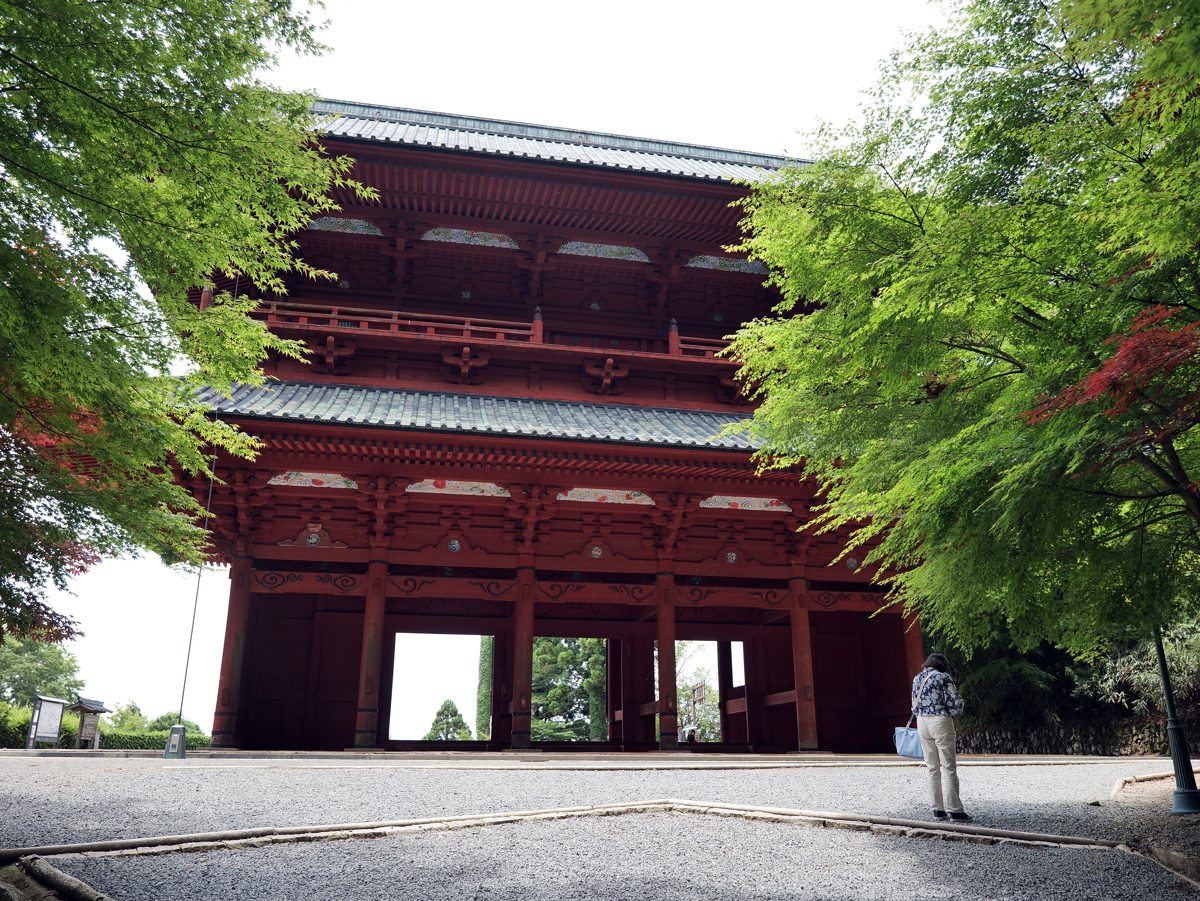
Take the Nankai Koya Line to Gokurakubashi, the cable car to Koyasan Station, then the bus to the Keisatsu-mae stop; the temple is 2 minutes on foot. Train times differ between the official pages, so check them when you plan. A pickup service is not mentioned. From the temple, Kongobuji is about 3 minutes on foot, Danjo Garan about 10 minutes and Ichinohashi about 13 minutes, with Okunoin about 30 minutes beyond. Our Koyasan guide covers the mountain.
What foreign guests should know before staying at Fumonin
- Leave a margin: arriving after 16:30 cancels the booking with a 100 percent fee.
- The entrance closes at 21:00; plan evening walks around it.
- Standard rooms have no toilet or bath inside; the shared baths open only from 18:00 to 21:00.
- The site says the rooms are wheelchair accessible, but the booking page says the temple is not barrier-free although it has elevators for the special rooms and the parking area. Ask the temple directly.
- As a working temple, it may close at short notice, the booking page says.
- For questions, the site gives info@fumonin.net and a contact form in Japanese.
Frequently asked questions
What time must I check in at Fumonin?
Can children stay at Fumonin?
Is the bath at Fumonin an onsen?
Can I join the morning service at Fumonin?
Can Fumonin change the shojin meals for allergies?
Bottom line (2026): Fumonin is a Koyasan temple lodging with a main hall moved from the Tokugawa mausoleum, a garden attributed to Kobori Enshu, shojin meals at 17:30 and a 6:30 morning service. It is adults only; check in by 16:30, be back by 21:00, and book on the official booking page.
Sources
Every fact on this page is from Fumonin’s official pages: home (Japanese), history, prayers and morning service, precincts, meals, rooms, access and sightseeing, and the official booking page in English and Japanese. All were read on October 16, 2026. Prices and rules change; check the official site before you book.
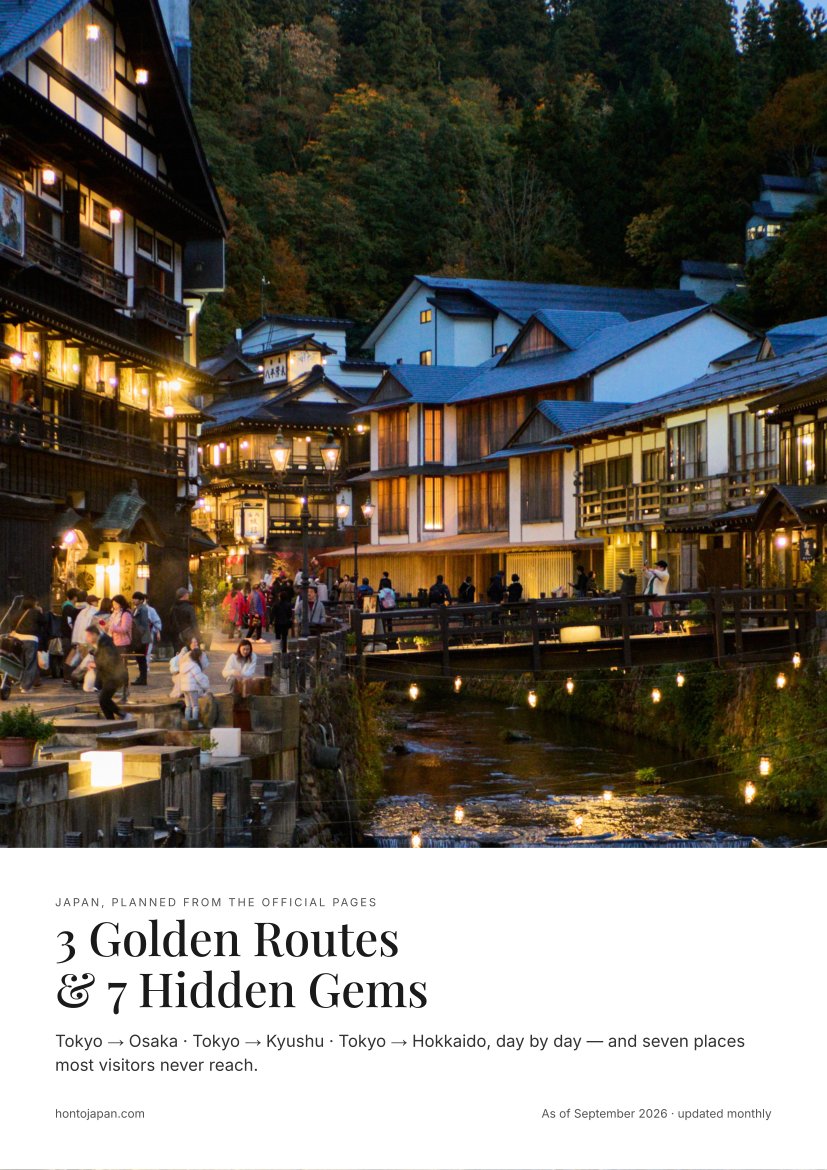
Tokyo to Osaka, Tokyo to Kyushu, Tokyo to Hokkaido — day by day — plus seven places most visitors never reach.
- 12 pages, 80 photographs, every stop linked to its guide
- Every price and opening hour read from the official page
- Re-issued monthly, so it does not go stale in your inbox
Free. One email a month, plus the rare change that matters. Unsubscribe with one click in any email. By subscribing you agree to our privacy policy.