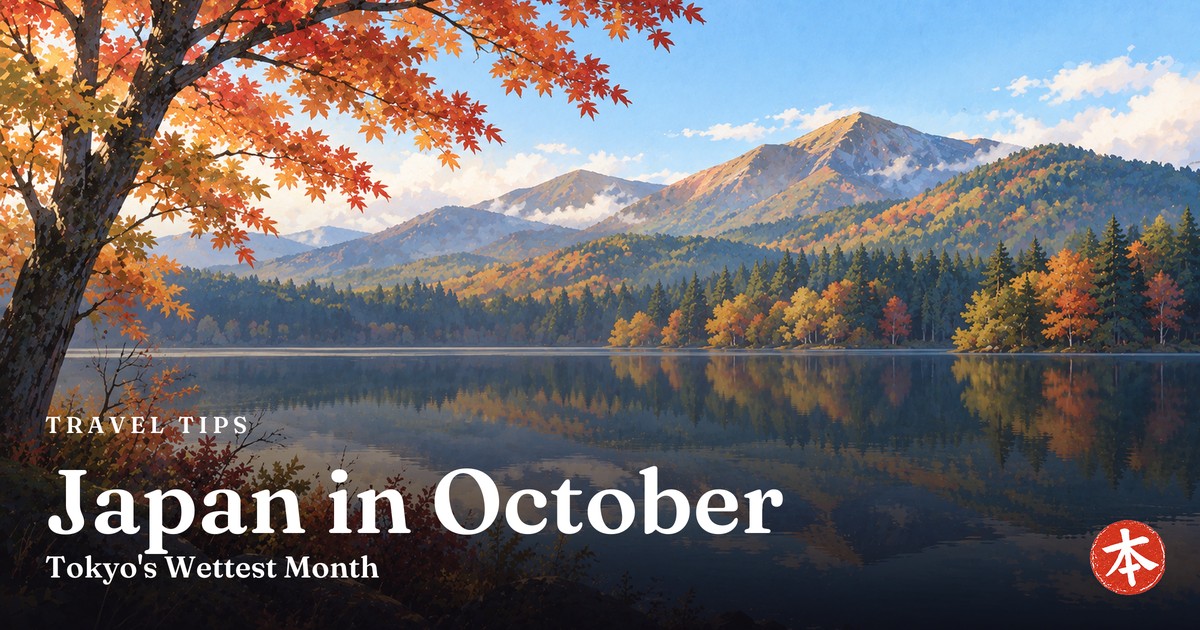
There is a version of Japan in October that lives in brochures: crisp air, dry skies, maples on fire. The numbers say something more useful. On the Japan Meteorological Agency’s 30-year normals, October is Tokyo’s wettest month of the year, at 234.8 mm — more than June’s rainy season, more than September. The maples have colored only in Hokkaido. And typhoons still approach the country 1.7 times on average.
None of that makes October a bad month. Temperatures are the most comfortable of the year almost everywhere, from 18.0 C in Tokyo to 19.6 C in Fukuoka, with Sapporo at 12.1 and Naha at 25.5 marking the two ends. It just means planning for the October that exists rather than the one in the photographs. Here it is, eight cities at a time.
Japan in October at a glance
| City | Avg temp (C) | Daily high / low (C) | Rain (mm) | Sunshine (h) |
|---|---|---|---|---|
| Sapporo | 12.1 | 16.4 / 8.0 | 110 | 146 |
| Tokyo | 18.0 | 22.0 / 14.8 | 235 | 129 |
| Nagoya | 18.6 | 23.3 / 14.8 | 165 | 169 |
| Kyoto | 18.4 | 23.4 / 14.4 | 143 | 156 |
| Osaka | 19.5 | 23.7 / 16.0 | 136 | 166 |
| Hiroshima | 18.8 | 23.7 / 14.9 | 109 | 179 |
| Fukuoka | 19.6 | 23.7 / 16.0 | 94 | 176 |
| Naha | 25.5 | 28.1 / 23.5 | 179 | 163 |
October: Japan Meteorological Agency 30-year normals (1991–2020), read on September 14, 2026.
The rain: why October is Tokyo’s wettest month
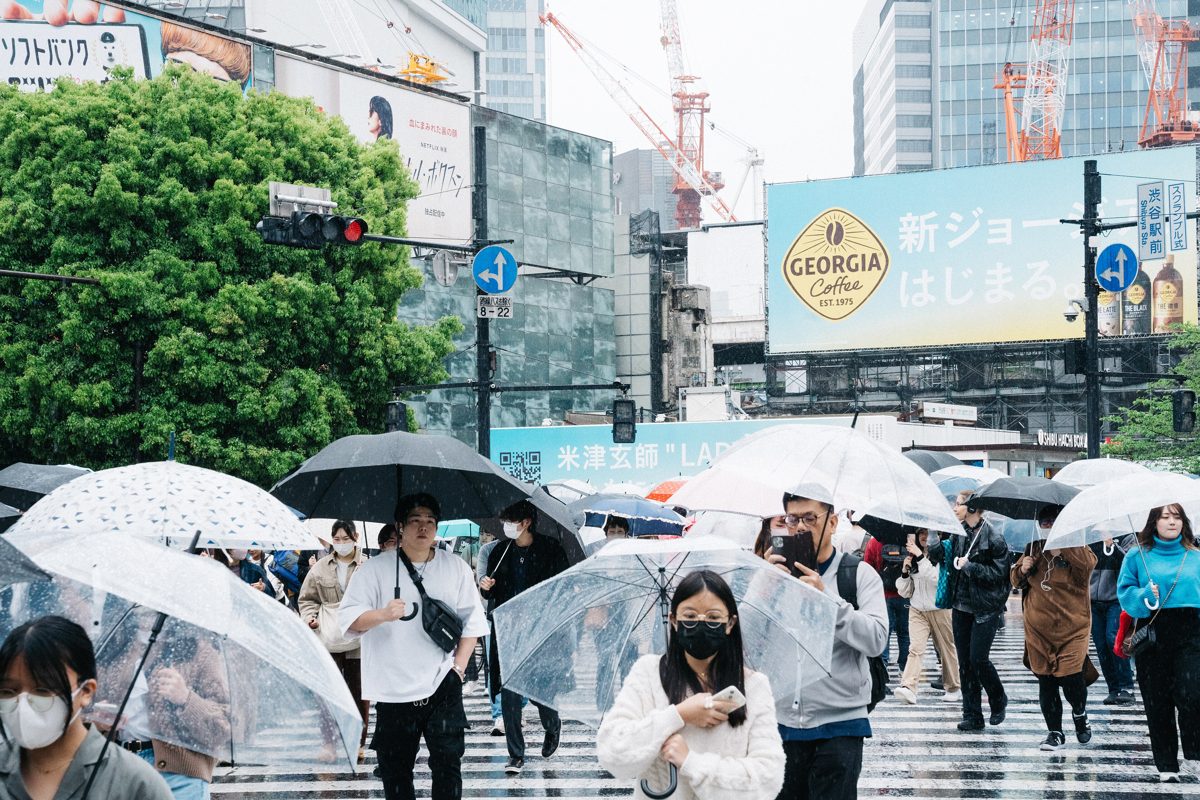
Most people file Japanese rain under June. The normals disagree for the east of the country. Tokyo’s October total of 234.8 mm beats September (224.9) and June (167.8), and is four times its January figure. Nagoya (164.7) and Naha (179.2) are also wetter in October than most of the year. The cause is the overlap of the autumn rain front with late typhoons.
Which cities are dry in October?
The west and the north. Fukuoka has 94.5 mm, its driest month of the second half of the year; Hiroshima 109.2; Sapporo 109.9. Kyoto and Osaka sit in between at 143.2 and 136.0. If you have flexibility, an October route weighted toward Kyushu and the Seto Inland Sea is drier on the record than one centered on Tokyo.
Does it rain all day, or in bursts?
The monthly total does not say, and we will not invent a pattern. What the sunshine normal does say is that Tokyo gets 129.4 hours in October, its third-dullest month after June and September, while Hiroshima gets 178.6 and Fukuoka 175.9. The west is brighter as well as drier.
Is October wetter or drier than November?
Much wetter. The drop from October to November is the sharpest of the year in Tokyo: 234.8 mm to 96.3 mm. Kyoto goes from 143.2 to 73.9, Osaka from 136.0 to 72.5. If the choice is between the two months and rain is your concern, our December guide shows the dry season continuing from there.
Typhoons in October, by the JMA’s own count
| Month | Typhoons formed | Approached Japan | Made landfall |
|---|---|---|---|
| August | 5.7 | 3.3 | 0.9 |
| September | 5.0 | 3.3 | 1.0 |
| October | 3.4 | 1.7 | 0.3 |
| November | 2.2 | 0.5 | — |
| Whole year | 25.1 | 11.7 | 3.0 |
JMA typhoon normals, 1991–2020 averages. A dash means no case occurred in the 30-year period.
How likely is a typhoon to hit my October trip?
On average 1.7 approach and 0.3 make landfall in the month, roughly half the September figures. The early part of the month carries most of that risk. By November the approach count is 0.5 and there was no landfall at all in the 30-year record. Our typhoon guide explains why the practical problem is trains suspending in advance rather than the storm itself.
Does Okinawa see more?
Naha’s rainfall stays high in October at 179.2 mm and its temperature at 25.5 C, which is consistent with the islands being on the typhoon track later than the main islands. The JMA national normals do not split approaches by region, so we are not going to put a number on Okinawa alone.
Autumn leaves in October: only Hokkaido, and only just
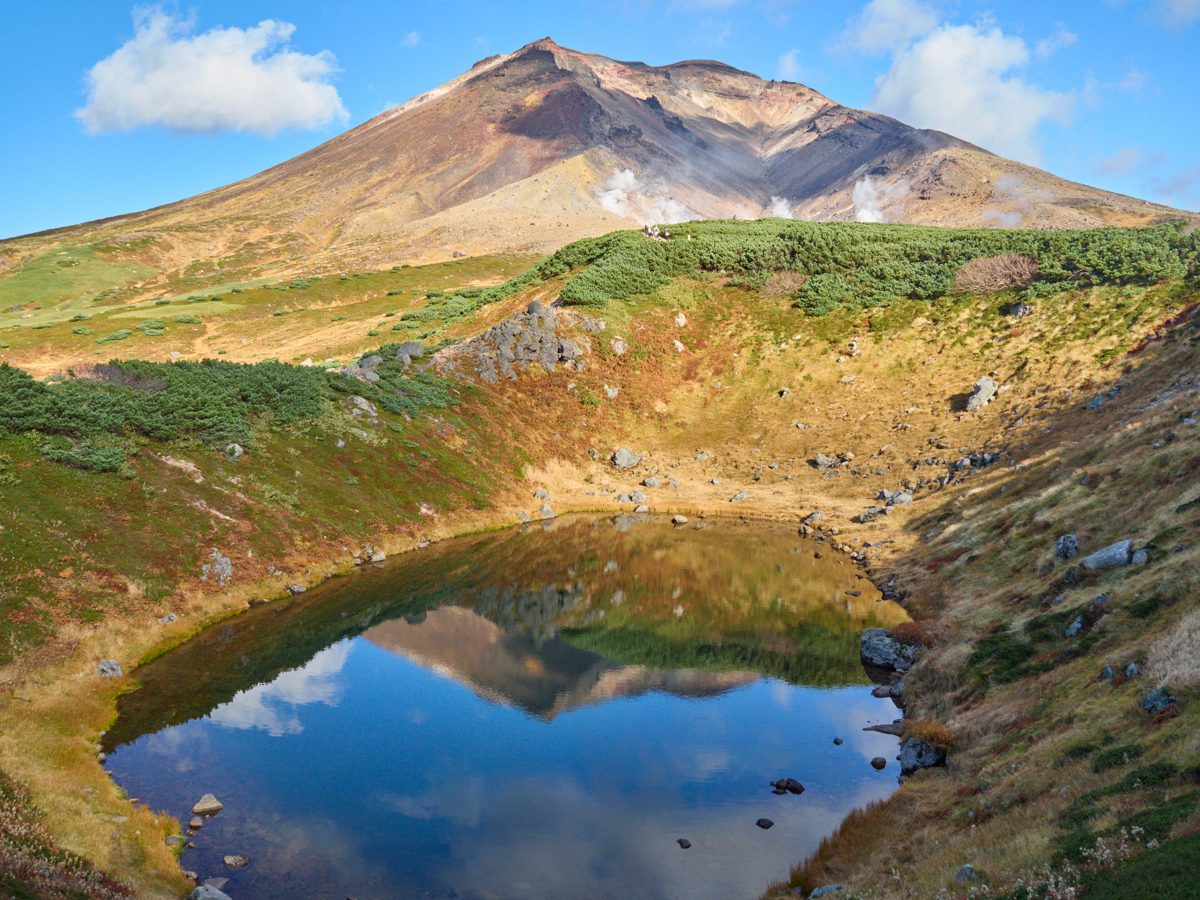
So where can I see color in October?
Hokkaido, and mountain areas that sit above the lowland stations the JMA measures. Everywhere else the normals put maple color in late November or December. An October trip built around Kyoto’s gardens will find them green.
Is the timing the same every year?
No. These are 30-year averages, and the JMA publishes its observed dates each year, sometimes a week or more either side of the line. The map is the right tool for choosing a month; it is not a promise about a week, and a warm autumn pushes every date on it later. Check the current-year observations before locking a non-refundable booking to a color forecast.
What does October look like in Tokyo, then?
Mild, damp, and green. Average 18.0 C, highs of 22, lows of 14.8. For the month-by-month picture of the capital, including which months are dry, our best time to visit Tokyo guide uses the same JMA table.
North to south: eight Octobers
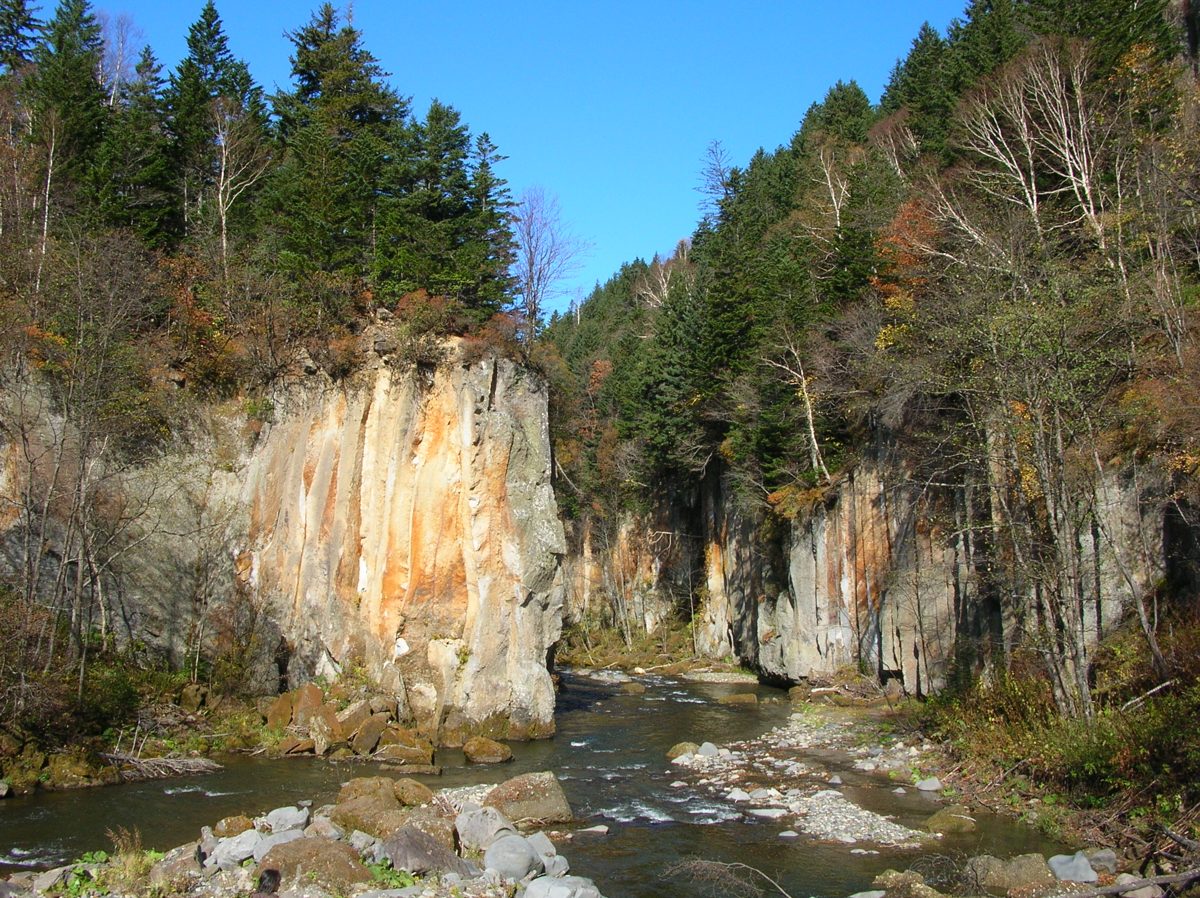
Sapporo
12.1 C average, lows of 8.0, 109.9 mm. This is the one city where October means autumn in the visual sense, and the one where a jacket is not optional in the evening. Sunshine is modest at 145.9 hours.
Tokyo, Nagoya, Kyoto, Osaka
All between 18.0 and 19.5 C. Rain separates them: Tokyo 234.8 mm, Nagoya 164.7, Kyoto 143.2, Osaka 136.0. Osaka is the driest and, at 166.1 sunshine hours, brighter than Tokyo by more than a working week.
Hiroshima and Fukuoka
The driest pair: 109.2 and 94.5 mm, with 178.6 and 175.9 hours of sun. Average temperatures of 18.8 and 19.6. On the record, this is the corner of the country where October behaves most like the brochure.
Naha
25.5 C average with lows of 23.5: still summer by any mainland standard, humid at 72 percent, and wet at 179.2 mm. October in Okinawa is beach weather with a typhoon caveat, and the far south of the country is reached from Kagoshima by a long ferry or a short flight.
The one October holiday, and what it does to prices
The Cabinet Office list has one October holiday: Sports Day, the second Monday of the month. In 2026 that is Monday, October 12; in 2027, October 11. It creates a three-day weekend, and domestic travel rises around it. Our public holidays guide covers the full calendar. There is no other national holiday in October, which makes the rest of the month one of the quieter windows for hotels between the summer and the autumn-leaf peak.
Should I avoid the Sports Day weekend?
Not necessarily, but book it earlier than the surrounding dates. It is a single three-day weekend, not a week-long block like Golden Week or Obon.
Planning an October week around the numbers
Which direction should the route run?
West and north are the dry ends; the Tokyo side is the wet one. A week that opens in Tokyo and moves toward Kyoto, Hiroshima and Fukuoka is walking out of the rain on the record, from 234.8 mm down to 94.5. The reverse route walks into it. Hokkaido is the exception in both directions: dry at 109.9 mm but already at 12.1 C, which is a different trip from the rest of the country in the same week.
What do the highs and lows mean for a day out?
The gap between the daily high and the daily low is about seven degrees in every mainland city in October — Tokyo 22.0 to 14.8, Kyoto 23.4 to 14.4, Fukuoka 23.7 to 16.0. That is a month where the afternoon and the evening ask for different clothes, and where a day that starts at a temple at eight in the morning and ends at a restaurant at nine at night spans the whole range. Naha stays inside a narrower band, 28.1 to 23.5, which is why it feels like one long warm day.
How should I read a wet forecast?
As a reason to reorder the week rather than to cancel it. The rainfall normal is a monthly total, and it does not fall evenly; in Tokyo it is weighted toward the early part of the month when the autumn front and the late typhoons overlap. If the forecast shows a wet day, that is the day for the museums, the covered arcades and the department-store basements, and the clear day that follows is the one to spend outside. Tokyo’s sunshine normal of 129 hours works out to a little over four hours a day on average, which is enough for the city if you spend the bright ones well.
Is October cheaper than November?
We do not track hotel prices, so we will not claim a figure. What the calendar says is that October has one three-day weekend and no week-long holiday block, while late November is when the maple peak arrives in Kyoto and Tokyo and the gardens fill. On demand alone, the middle of October sits in a quieter pocket between the summer holidays and the leaf season, and the numbers above explain why: the weather is good but the color is not there yet.
What about September versus October?
September is hotter and stormier: Tokyo averages 23.3 C against October’s 18.0, and typhoons approach 3.3 times against 1.7. Rain is similar, 224.9 mm against 234.8. October is the calmer, cooler month by every measure except total rainfall, where the two are close. If the choice is between them, October wins on comfort and loses only on the leaf calendar, which favors neither.
Three things travelers get wrong about October
“The rainy season is June, so October is dry”
June is the named rainy season, tsuyu, and it is real. But the JMA totals put October above June in Tokyo (234.8 against 167.8 mm), in Naha (179.2 against a June figure that is higher still, so Okinawa is the one exception), and close to it in Nagoya. The autumn rain front is less famous than the summer one because it has no name in English guidebooks. It still fills the gauges.
“Autumn leaves are an October thing in Japan”
They are an October thing in Hokkaido and a November-into-December thing everywhere people usually go. The JMA’s isochrone map is unambiguous: the November 30 line runs through Kanto, Tokai, Chugoku, Shikoku and northern Kyushu, and Kyoto sits in the December zone. Booking Kyoto for mid-October in order to see red maples is the single most common calendar mistake in the Japan itineraries we read.
“Typhoon season ends in September”
It peaks in August and September and tails off through October. The normals still show 1.7 approaches and 0.3 landfalls in the month, which is not nothing; it is roughly one approach every three weeks on average, concentrated early. The reason to know this is not to fear it but to keep a day of slack in the first half of an October trip and to check the JMA’s own warnings if a storm is named, because Japanese railways suspend service ahead of a typhoon rather than during it.
Japan in October FAQ
Is October a good month to visit Japan?
Can I see autumn leaves in Japan in October?
Are there typhoons in October?
What is the weather like in Tokyo in October?
How different is Hokkaido from Okinawa in October?
Is there a public holiday in October?
Which city is driest in October?
Is it humid in October?
Bottom line (2026). October is the year’s most comfortable month for temperature in most of Japan — 18 to 19.6 C from Tokyo to Fukuoka — and, in Tokyo, the wettest at 234.8 mm. Maple color has reached only Hokkaido; Kyoto and Tokyo turn in late November. Typhoons approach 1.7 times on average, mostly early in the month. The only holiday is Sports Day, October 12, 2026. Fukuoka and Hiroshima are the driest and sunniest of the eight cities.
Sources
Temperature, rainfall, humidity and sunshine figures are Japan Meteorological Agency 30-year normals (1991–2020) for the Sapporo, Tokyo, Nagoya, Kyoto, Osaka, Hiroshima, Fukuoka and Naha observatories; typhoon counts are the JMA’s typhoon normals for the same period; maple and ginkgo dates are read from the JMA’s isochrone maps of average coloring dates; the holiday date is from the Cabinet Office’s national holiday list for 2026 and 2027. All read on September 14, 2026.
Some links on this page may be affiliate links, which means we may earn a commission if you book or buy through them — at no extra cost to you. See our affiliate disclosure.
Tokyo to Osaka, Tokyo to Kyushu, Tokyo to Hokkaido — day by day — plus seven places most visitors never reach.
- 12 pages, 80 photographs, every stop linked to its guide
- Every price and opening hour read from the official page
- Re-issued monthly, so it does not go stale in your inbox
Free. One email a month, plus the rare change that matters. Unsubscribe with one click in any email. By subscribing you agree to our privacy policy.