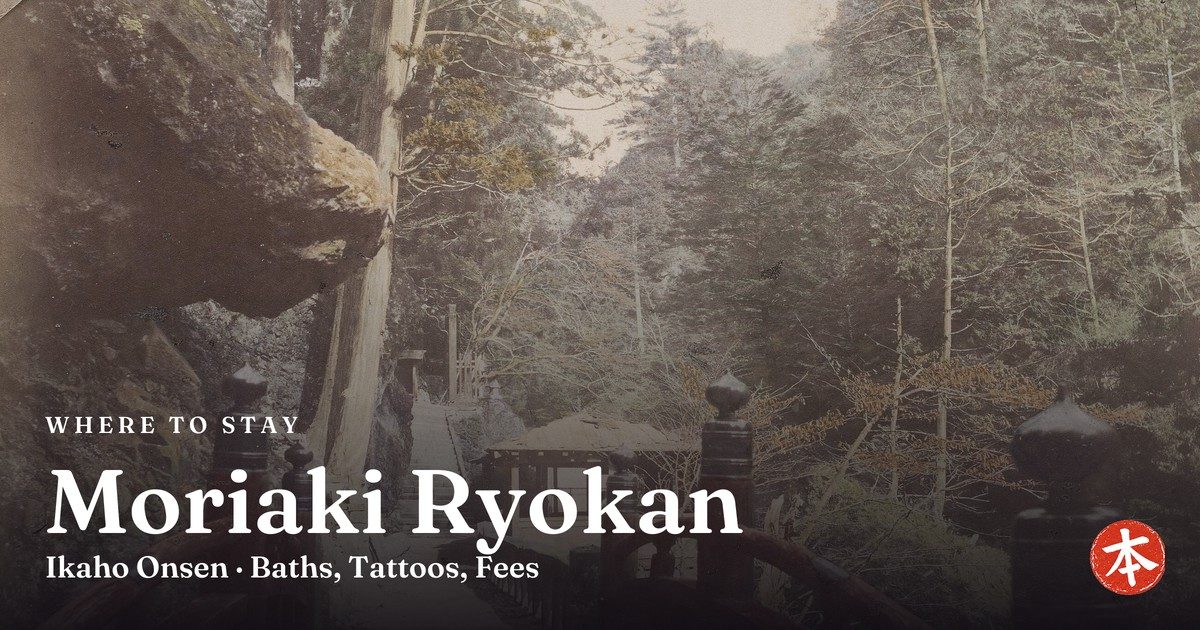
Moriaki Ryokan (its full name is Ikaho Onsen Ujono-yu Moriaki Ryokan) is an inn in Ikaho Onsen, Gunma, founded in 1868. It is one of nine inns that own a share of Ikaho’s Golden Water (Kogane no Yu), and every bath runs it straight from the source. Before you book, three things matter: guests with tattoos use the private bath or a room with its own hot-spring bath, not the shared baths; allergy requests are due 3 days before your stay, and breakfast has no allergy handling; and the official pages show no prices until you pick a date.
Moriaki Ryokan at a glance
| Item | Official information |
|---|---|
| Address | 60 Ikaho, Ikaho-machi, Shibukawa, Gunma |
| Founded | 1868, first as Morita-kan on the Ishidan stone steps |
| Hot spring | Golden Water, source-flowing, heated, no water added |
| Check-in / out | 15:00 / 10:00 |
| Rooms | Japanese-style rooms, twin rooms, suites; 7 rooms with a hot-spring bath; all non-smoking |
| Prices | Not listed; choose dates on the booking page |
| Bathing tax | 150 yen per person per night (Shibukawa City), paid at the inn |
| Languages | Some staff speak English and Chinese |
| Parking | Free, about 150 spaces |
From the official site, booking page and Shibukawa City, read October 20, 2026.
The inn’s name joins the family name Morita with Akisaburo, the third head of the house, who built an annex on the present site. The children’s song poet Ujo Noguchi stayed here in 1928 and 1939, and his handwritten work is shown in a gallery corridor on the 5th floor that guests can visit freely. The inn stands near the Ishidan stone steps. Every room has its own bath and toilet, Wi-Fi, a fridge, a TV and air conditioning.
The baths at Moriaki Ryokan
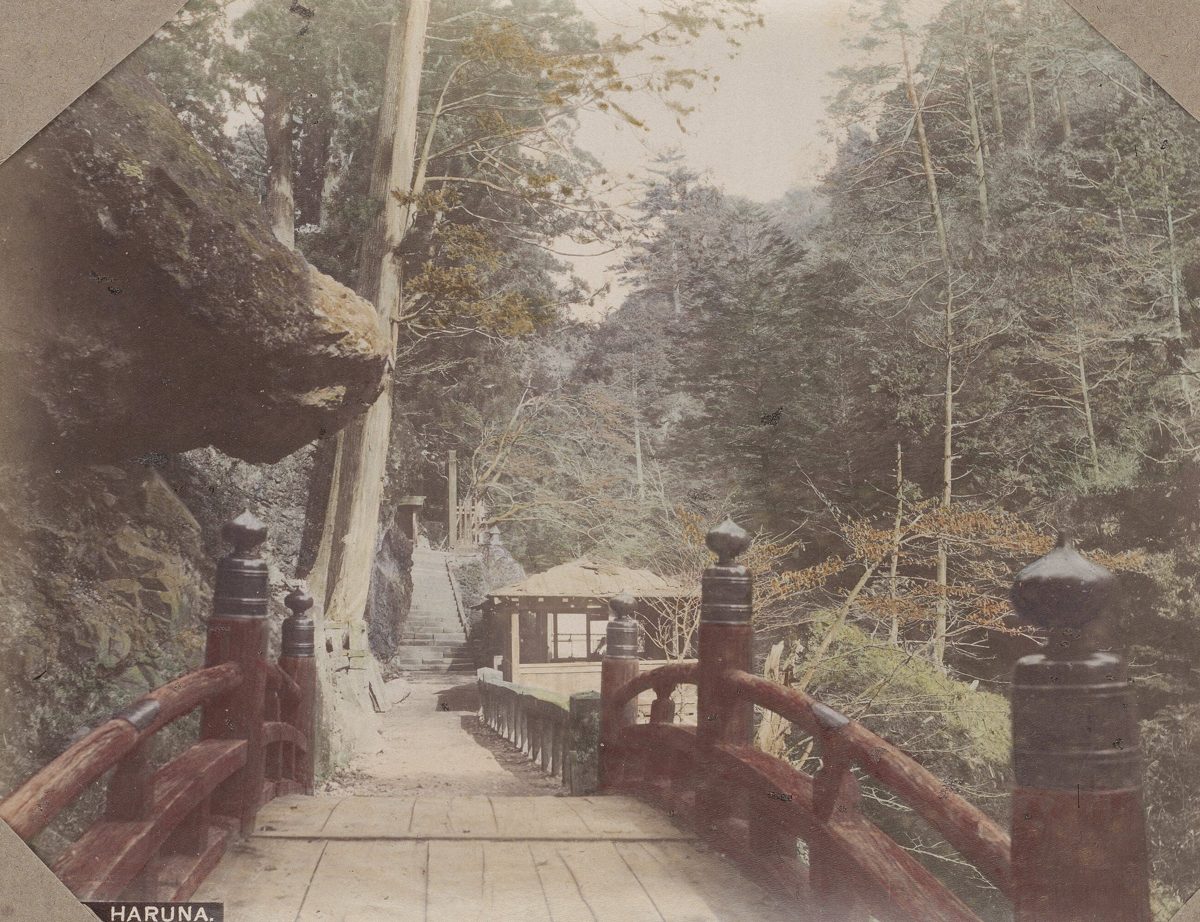
All baths use the Golden Water, a sulfate spring with a pH of about 6.4 that leaves an iron-brown tint. It comes out of the ground at 40 to 42°C and reaches the inn at 38 to 39°C, so it is heated, but no water is added.
| Bath | What it is | Cost |
|---|---|---|
| Ujo-no-yu | Open-air bath with an indoor bath and washing area; men and women swap around midnight | Included |
| Jizo-no-yu | Large indoor bath with stonework, separate for men and women | Included |
| Keyaki-no-yu | Private bath built around a 400-year-old zelkova tree; 50 minutes, booked first come, first served | 3,850 yen incl. tax |
| Room baths | 7 rooms have their own Golden Water bath | Room plan |
From the official hot spring page and FAQ, read October 20, 2026.
When are the baths open?
The shared baths open from 15:00 to 9:00 the next morning; they are drained and cleaned from 9:00. The open-air bath switches between men and women around midnight, so check the sign before you go in. The large bath and the open-air bath are on the same floor but apart. Day visitors can bathe from 15:00 to 18:00 for 1,100 yen, or 1,500 yen with a towel. Photos are not allowed in the baths or changing rooms.
Can I bathe with a tattoo?
Not in the shared baths. The Japanese FAQ asks guests with tattoos, including fashion tattoos and stickers, not to use the large bath or the open-air bath, and suggests the private bath or a plan with a hot-spring bath in the room. Book one of these when you reserve. Our tattoo and onsen guide explains how these rules work across Japan.
Can babies use the bath?
Yes. The inn suggests about 2 to 3 minutes for small children and has baby shower chairs, baby baths and a baby bed in the changing room.
Prices, children and cancellation at Moriaki Ryokan
How much does a stay cost?
The official pages do not list room rates; the inn uses date-based pricing, and you see a price only after choosing dates on the booking page. The calendar shows the adult rate of the cheapest plan, without children. Under the inn’s terms, a 10 percent service charge on the basic rate is added, plus consumption tax and the bathing tax. Free members get a discount on online bookings, not phone bookings, and the inn promises its own site has the lowest rate. Online booking opens about 6 months ahead.
What is the bathing tax?
Shibukawa City charges 150 yen per person per night, or 100 yen when the basic rate is 6,000 yen or less; children under 12 do not pay. The inn collects it at checkout even if you prepaid. The official pages do not mention any accommodation tax. See our onsen bathing tax guide.
What do children cost?
Guests from 13 pay the adult rate, and children aged 6 to 12 pay 70 percent of it. Younger children are charged by whether they take meals and bedding; the FAQ lists the amounts. Baby food is not provided, but you can bring your own and staff will warm it. The inn lends bouncers, Bumbo seats and children’s yukata in three sizes.
What is the cancellation policy?
For 1 to 14 guests, the terms list 30 percent from 3 days before, 50 percent the day before, and 100 percent on the day or for a no-show; groups of 15 or more pay from earlier dates. If you have not arrived or called by 20:00, the booking can be canceled. Bad weather is free only when major transport is stopped or roads are closed. Cancel where you booked. See our hotel cancellation guide.
How do I pay?
The official pages list cards and other methods, but the lists differ between pages, so ask the inn which ones it accepts for your stay.
Meals at Moriaki Ryokan
What is dinner like?
Dinner is a kaiseki of about 10 courses served to each guest, built around Joshu beef, Gunma’s brand of wagyu. It starts at 17:30, 18:00 or 18:30. Where you eat, in a dining hall, a private room or your room, is set by the plan and room type; a note in the request box cannot change it. Extra dishes such as Joshu beef steak can be ordered, and there are no dinner-only plans.
What is breakfast like?
Breakfast is a buffet in the Kanzan dining hall from 7:30 to 9:00. Plans with both meals in the room serve breakfast in the room too.
Can the inn handle allergies or a special diet?
Only in part. The cuisine page says the kitchen cannot fully prevent traces of allergens. Solid items such as shrimp, crab or shellfish can be swapped, but stock and seasonings cannot be removed, and breakfast has no allergy handling. Send requests at least 3 days before your stay. Vegetarians can have Buddhist temple-style shojin cooking, and a “soft halal” meal without pork or alcohol is offered, without certification. Vegan meals are not offered.
Getting to Moriaki Ryokan in Ikaho Onsen
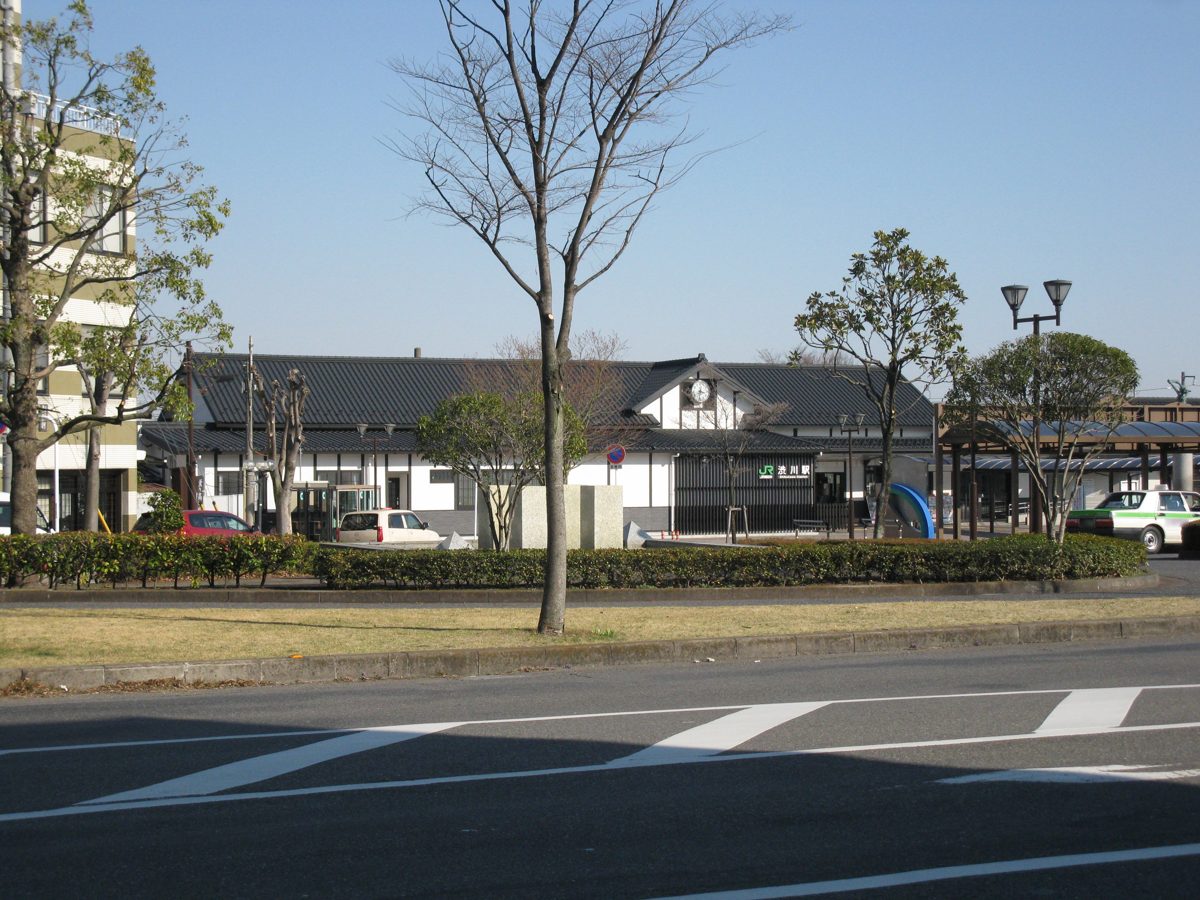
The nearest station is JR Shibukawa Station. Local buses run by Kan-etsu Kotsu and Gunma Bus leave from stop 3 for the Ikaho Onsen stop, and the inn runs a free pickup from the bus stop from 13:00: call when you arrive; it cannot be booked ahead. A highway bus, the Joshu Yumeguri, runs from JR Shinjuku Station. Drivers leave the Kan-etsu Expressway at Shibukawa-Ikaho IC; car navigation can pick narrow roads, so the inn gives the map code 94 875 314*71. Parking is free, and staff move most cars to a lot 300 to 500 m away. There is one paid EV charger.
What foreign guests should know before staying at Moriaki Ryokan
- The English website is a single page; the tattoo, allergy and cancellation rules are on the Japanese FAQ and terms. The terms say the Japanese text prevails.
- Book the private bath or a room with its own bath if you have a tattoo.
- Breakfast is a buffet with no allergy handling.
- Keep cash or a card for the bathing tax at checkout.
- The terms set a midnight curfew, and the front desk is staffed from 7:00 to 22:00.
Frequently asked questions
Can I use the bath at Moriaki Ryokan with a tattoo?
What time is check-in at Moriaki Ryokan?
What is the cancellation policy at Moriaki Ryokan?
Does Moriaki Ryokan handle food allergies?
How do I get to Moriaki Ryokan?
Bottom line (2026): Moriaki Ryokan is an Ikaho Onsen inn from 1868 with source-flowing Golden Water in every bath. With a tattoo, book the private bath or a room with its own bath; send allergy requests 3 days ahead; and pick your dates on the official English booking page to see the price.
Sources
Every fact on this page is from Moriaki Ryokan’s official pages: home (Japanese), English page, FAQ, hot spring, cuisine, access and terms of stay (PDF); the official English booking page; and Shibukawa City on the bathing tax. All were read on October 20, 2026. Prices and rules change; check the official site before you book.
Tokyo to Osaka, Tokyo to Kyushu, Tokyo to Hokkaido — day by day — plus seven places most visitors never reach.
- 12 pages, 80 photographs, every stop linked to its guide
- Every price and opening hour read from the official page
- Re-issued monthly, so it does not go stale in your inbox
Free. One email a month, plus the rare change that matters. Unsubscribe with one click in any email. By subscribing you agree to our privacy policy.